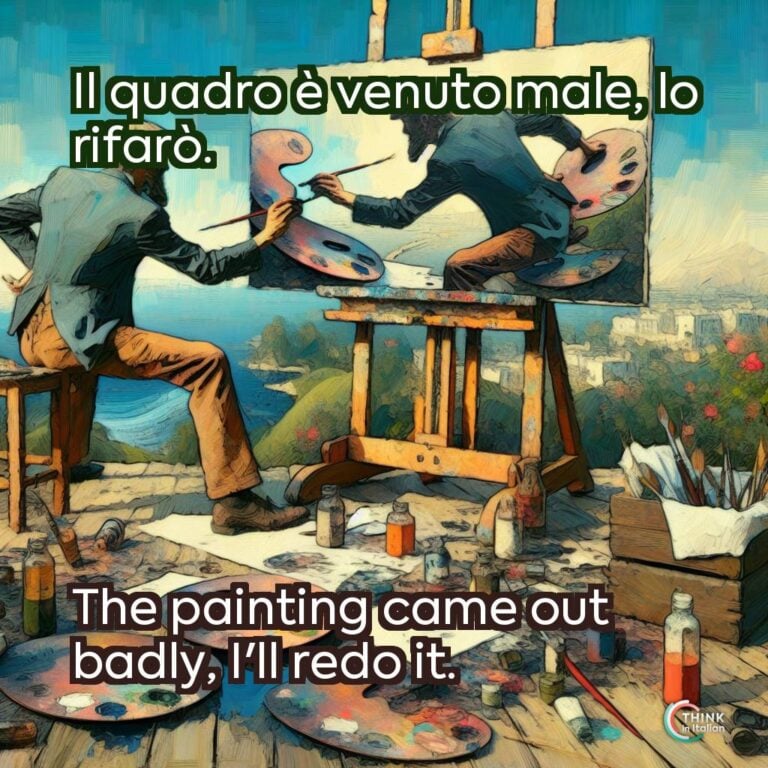

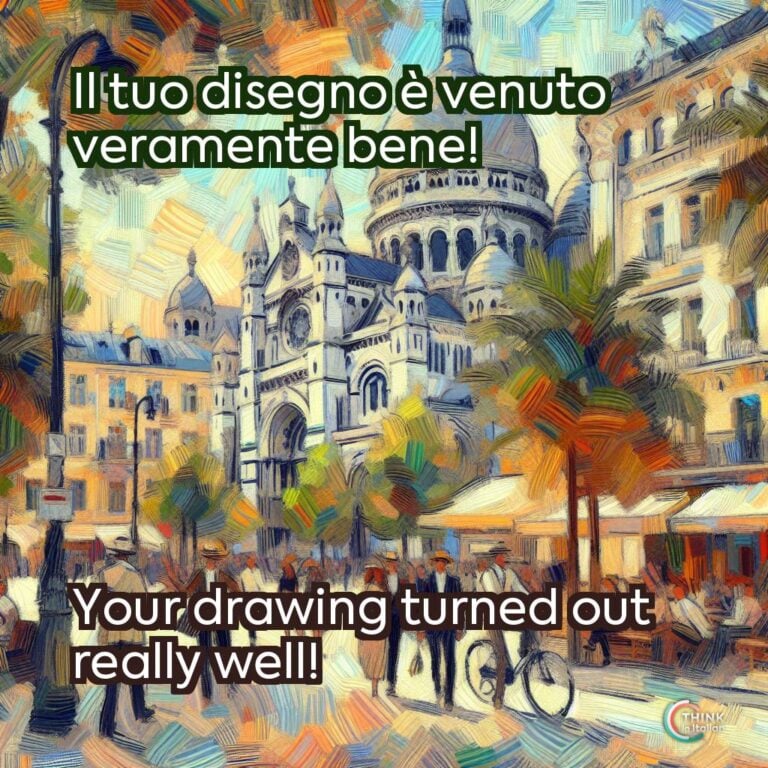
“Venire Bene” and “Venire Male” in Italian
The construction venire (to come) followed by the adverbs bene (well) and male (badly) is a common grammatical structure in Italian used to describe the outcome or result of an action.
These expressions are very commonly used in Italian, as they are essential to describe how something turns out, especially in terms of quality or final results.
I use them quite frequently, especially in casual conversations to express my satisfaction or dissatisfaction of an outcome.
Ho fatto una foto, ma è venuta male!
I took a picture, but it came out badly!
Ho fatto una foto, ed è venuta molto bene!
I took a picture, and it came out really well!
Venire Bene/Male: Meaning
“Venire Bene”
The phrase venire bene literally translates to “come out well” or “turn out well”. It is a simple and effective way to convey that things worked out as planned, or even exceeded expectations, therefore it is used when something has a good or favorable outcome.
I love baking, so I will give you a personal example: imagine you’ve just baked a cake, and when you take it out of the oven, it’s perfectly golden and delicious. In that case, you would say:
Il dolce è venuto bene.
The dessert turned out well.
The phrase conveys that you’re happy with the final result, whether it’s food, a picture, a task, or any project where results matter.
“Venire Male”
On the other hand, venire male is used to express disappointment with the outcome. It translates to “come out badly” or “turn out poorly”.
Imagine you organized a surprise party to you best friend, but she or he found it out. Then you would say:
La sorpresa è venuta male.
The surprise came out badly.
So, if something doesn’t meet expectations you can sue venire male to describe that result.
How to use “Venire Bene” and “Venire Male” in Italian
In everyday Italian life, these expressions are used frequently and casually. They are versatile phrases that can apply to a wide range of situations in which the quality or result of something is being evaluated.
To add nuance to these expressions, you can combine them with adverbs for more specific judgments. This allows you to adjust the intensity of your statement, allowing you to express more detail about how well or poorly something turned out.
La festa è venuta davvero bene!
The party came out really well!
L’esibizione è venuta piuttosto male.
The show came out rather poorly.
Alternative Expressions
Other Expressions With “Venire”
The verb venire is incredibly versatile in Italian and appears in various idiomatic expressions. For example:
- Venire fuori: this phrase translates to “to come out” or “to emerge”. It is often used when something is revealed or becomes apparent over time, as in:
Alla fine è venuta fuori la verità.
In the end, the truth came out.
- Venire a galla: this expression means “to come to the surface” and is frequently used metaphorically, particularly to talk about problems or secrets that were once hidden but have now become visible.
I problemi sono venuti a galla.
The problems have surfaced.
Other Expression With “Andare”
In addition to venire beneand venire male, Italian has other similar expressions that convey how something turned out, like andare bene and andare male.
While venire focuses more on the result or appearance of something, andare(to go) is more focused on the overall process and development of an event, be it successful or not. For example:
L’esame è andato bene.
The exam went well.
La riunione è andata male.
The meeting went poorly.
As you can see, these expressions often imply a more subjective evaluation based on how things unfolded rather than the final outcome.
Other Expressions With “Uscire”
Another pair of related expressions is uscire bene and uscire male, which are also used to describe outcomes, particularly in contexts where something has been produced. As a matter of facts, uscire means to come out.
La foto è uscita bene.
The photo came out well.
Il video è uscito male.
The video turned out poorly.
Uscire emphasizes the process of something coming into being, whereas venire is more about the final state of what has been created.