


Can I Move to Italy Without Speaking Italian?

An interactive lesson guiding you from key takeaways to expert insights. Comes with Q&A, useful vocabulary, interactive audio, quizzes and games.

Voglio imparare l'italiano per vivere qui.
Published Mar 14, 2021
Updated Nov 30, 2024
Reviewed by
Italian language tutor, course author. MEng, MBA. Member of the International Association of Hyperpolyglots (HYPIA). After learning 12 languages, I can tell you that we all master languages by listening and mimicking. I couldn’t find an app to recommend to my students, so I made my own one. With my method, you’ll be speaking Italian from Lesson 1.
Written by
No data was found

Key Takeaways

  • You can move to Italy without speaking Italian, but it may present challenges in daily life and interactions.
  • Many Italians, especially younger generations, speak English, making it easier to communicate initially.
  • Learning some basic Italian phrases can enhance your experience and help you connect with locals.
  • Consider total immersion by living with Italians or engaging in local activities to learn the language effectively.
  • Using tools like Google Translate and body language can help bridge communication gaps until you learn more Italian.

Stefano's Insights

Play to see captions...
Visitare l'Italia senza parlare italiano? Certo, si può! Ma perché perdersi il piacere di immergersi nella cultura locale? Conoscere un po' di italiano può trasformare il tuo viaggio, permettendoti di interagire con i locali e scoprire gemme nascoste. Ricordo quando ho ordinato un espresso perfetto a Roma solo perché ho chiesto in italiano! Anche trasferirsi in Italia è possibile senza la lingua, ma impararla rende tutto più facile. L'immersione totale è la chiave: vivi con una famiglia italiana, guarda film, ascolta radio. Il tuo cervello farà il resto, fidati! Con un po' di sforzo, l'Italia diventerà la tua seconda casa.
Visiting Italy without speaking Italian? Sure, you can! But why miss out on the joy of immersing in the local culture? Knowing some Italian can transform your trip, allowing you to interact with locals and discover hidden gems. I remember ordering a perfect espresso in Rome just because I asked in Italian! Moving to Italy is also possible without the language, but learning it makes everything easier. Total immersion is key: live with an Italian family, watch movies, listen to radio. Your brain will do the rest, trust me! With a bit of effort, Italy will become your second home.

Quick facts

Do you need to speak Italian to enjoy Italy?

No, English is widely spoken, especially by younger Italians.

Is learning Italian beneficial for an authentic Italian experience?

Yes, learning Italian enhances cultural immersion and shows respect for locals.

Can simple Italian phrases improve your travel experience?

Absolutely, basic phrases like "thank you" and "hello" make interactions smoother and more enjoyable.

Is it possible to move to Italy without knowing Italian?

Yes, but learning Italian eventually is essential for daily life and integration.

How does total immersion help in learning Italian?

Total immersion accelerates language acquisition by surrounding you with native speakers and real-life contexts.

Does speaking Italian help avoid tourist traps?

Yes, it can help you get better prices and authentic local recommendations.

Are English speakers common in rural Italy?

Less so. Knowing Italian is crucial in small towns and remote areas.

How can non-native speakers effectively learn Italian before a trip?

Use online resources, language apps, and practice speaking basic phrases for a head start.

Why is staying with a host family beneficial for learning Italian?

Living with native speakers provides constant practice and cultural immersion, accelerating language learning.

Are there unconventional ways to learn Italian in Italy?

Watching Italian TV, listening to radio, and reading newspapers enhance language skills through daily exposure.

Audio images

🔊
Imparare l'italiano è una dimostrazione di rispetto.
🔊
Voglio imparare l'italiano per vivere qui.
🔊
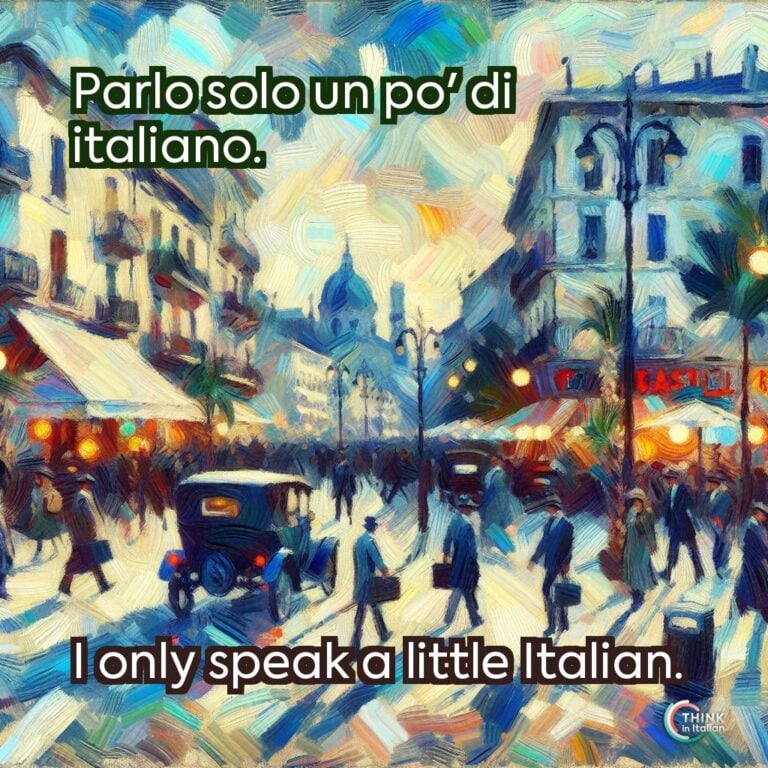
Parlo solo un po' di italiano.
🔊
Parli inglese?
🔊
Posso avere il conto, per favore?
🔊
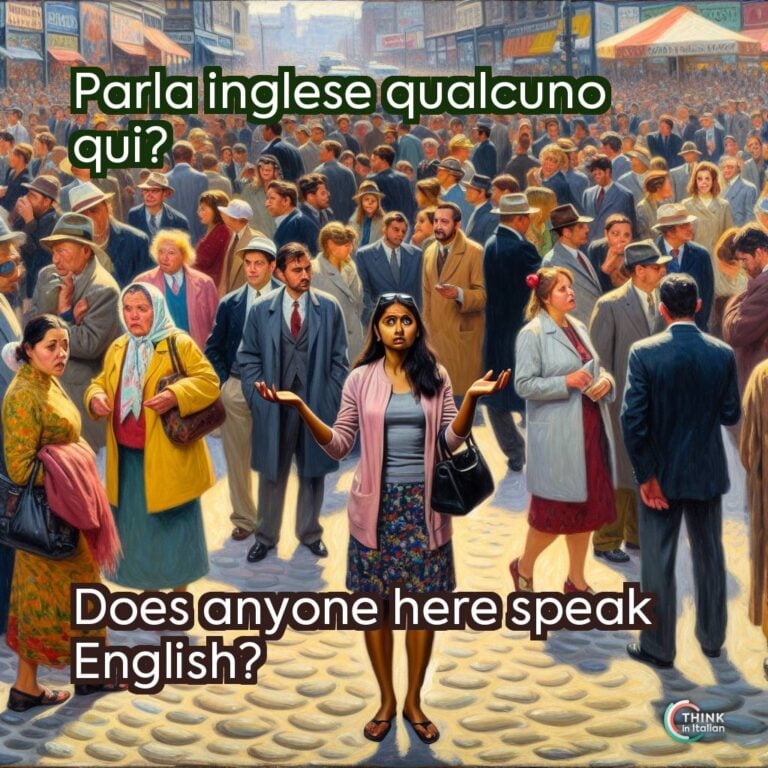
Parla inglese qualcuno qui?
🔊
Buongiorno, come stai?
🔊
Imparare alcune frasi italiane facilita il viaggio.
Learn on the go
Install the FREE Think In Italian app for faster loading, offline mode, and quick access anytime.
No registration needed. Works on all devices. Ready in 1 click and 3 seconds.

Main Article

Can you Live in Italy Without Speaking Italian?

As simple as it is, yes! Moving to Italy without knowing Italian is entirely possible, and thousands of expats do it successfully every year, but it depends on where.

Italy’s main cities like Rome, Milan, and Florence have big international communities and areas where English is commonly spoken, especially among youths, and people who work in the service industry or tourism.

However, if you speak no Italian at all, you might face some challenges when it comes to administrative tasks, social interactions, and daily errands in less touristy areas.

Italian bureaucracy is known for its complexity, so preparing for potential language obstacles can make a difference in how easily you settle in.

In this article I will tell you what you need to know about moving to Italy without Italian, including tips for managing daily life, understanding local culture, and using resources to make the transition easier.

Moreover, I will give you insights into how learning even a little Italian can enrich your experience, helping you connect more deeply with the culture and feel more at home in Italy.
Daily Life Challenges Without Italian

Living in big Cities vs Small Cities

As I mentioned already, if you’re settling in big cities like Rome, Milan, or Florence, you’ll find more English speakers, especially among younger Italians and in tourist areas.

However, outside these zones and in smaller towns, English fluency diminishes significantly. For everyday tasks like grocery shopping, ordering food, or asking for directions, knowing basic Italian phrases can make a world of difference.

Learn at least basic Italian sentences like:

Quanto costa questo?

How much does this cost?

Dov’è il bagno?

Where is the bathroom?

While you can get by without Italian in some areas, in more rural or suburban settings, knowing essential phrases can smoothen your day-to-day experience.

Navigating Italian Bureaucracy

Italian bureaucracy has a reputation for being slow and complex, and I, as an Italian who was born and raised in Italy, I can confirm.
If you’re planning a longer stay, you’ll likely encounter administrative tasks like applying for a residency permit, setting up utilities, or opening a bank account.

In these cases, speaking Italian can be a tremendous help, as many government offices may not have English-speaking staff. If you’re nervous about handling this on your own, consider hiring a relocation consultant or an English-speaking lawyer.

Social Life and Connecting With Locals

Italians are known for their friendliness and openness. In cities, I am sure you will meet Italians who are interested in practicing their English with you, especially younger people who have worked or studied in international environments.

However, learning a few Italian phrases can help you build more genuine connections and show that you’re making an effort to integrate.

Learn the most common words, especially greetings, like buongiorno (good morning) or grazie (thank you). You will show respect for the local culture and your interactions will feel warmer.

Italy has a thriving expat community, especially in larger cities, so if you’re feeling isolated, consider joining language exchange meetups or expat groups to meet both Italians and fellow expats.

Learn Italian in Italy

Immersion and Local Schools

So we established that it is possible to live in Italy without Italian. However, learning the language can profoundly improve your experience.

If you’re wondering “why should I learn Italian?“, I could list you plenty of reasons, but since your goal is living in Italy, having the possibility to deeply connect with the culture should be enough already.

Imagine being able to understand idiomatic expressions, regional dialects, or the Italian humor. This will help you appreciate the diversity within Italian culture.

Consider living with Italian roommates, joining community clubs to practice conversational Italian, or consuming Italian media – from podcasts to newspapers – to further strengthen your comprehension and familiarity with Italian slang.

In many Italian cities, language schools offer courses tailored to foreigners. These courses often focus on practical language skills, helping you handle real-life situations more comfortably.

The best part of enrolling in these classes is that it can introduce you to other expats in similar situations, helping you establish a support network.

Embracing the Italian Culture

Free Guide
How to Learn Languages Fast

Language is only one part of Italian culture. Italians are expressive communicators who often use gestures and intonation to convey meaning.

Learning a few Italian gestures and adopting a bit of expressive intonation can help you blend in even if you’re still learning the language.

Understanding cultural norms and customs can also help you integrate. For instance, Italians take pride in regional traditions, from local cuisines to dialects. Meal times vary across the country, and participating in these customs can help you feel like a local.

Is Learning Italian Worth it?

Moving to Italy without Italian is absolutely possible, especially if you stick to urban areas. However, investing time in learning the language opens doors to deeper cultural experiences, warmer connections, and a more enriching daily life.

Even knowing just a few phrases shows respect and a willingness to adapt, which Italians appreciate. If you’re visiting Italy for a short stay, consider learning Italian for travel. If you’re making a permanent move, focus on your goals.

I promise it will enhance your experience, foster meaningful relationships, and allow you to engage with Italian culture on a personal level.

So, buona fortuna (good luck) on your Italian journey!

Key Terms and Concepts

Total immersion

A method of learning a language by living in a country where it is spoken, allowing for organic acquisition through daily interactions and experiences.

Piazza

An open public square, usually found in the center of Italian towns and cities, often surrounded by cafes and shops.

Romance languages

A group of languages derived from Latin, including Italian, French, Spanish, Romanian, and Portuguese, sharing common structural and lexical elements.

Italian lifestyle and culture

The set of practices and habits inherent to Italy, characterized by a strong emphasis on family, food, art, and tradition.

Gesticulate

To communicate using gestures, a common aspect of Italian communication, especially when words fail to convey meaning.

Pizza Napoletana

A traditional style of pizza originating from Naples, Italy, known for its thin crust, fresh ingredients, and simple toppings.

Test your knowledge in 10 quick questions

Words

ciaohello
per favoreplease
scusaexcuse me
dovewhere
comehow
quantohow much
aiutohelp
parlaspeak
ingleseEnglish
numeronumber

Phrases

ciaohello
per favoreplease
mi scusiexcuse me
quanto costa?how much does it cost?
dov'è il bagno?where is the bathroom?
parli inglese?do you speak English?
non capiscoI don't understand
posso avere...?can I have...?
aiutohelp
sono persoI am lost

Sentences

Posso trasferirmi in Italia senza parlare italiano?

Can I move to Italy without speaking Italian?

Sarebbe utile imparare almeno alcune frasi fondamentali in italiano.

It would be helpful to learn at least some basic Italian phrases.

Parlare un po' di italiano ti aiuta a comunicare meglio con la gente del posto.

Speaking some Italian helps you communicate better with the locals.

Nei piccoli paesi, è meno probabile che la gente parli inglese.

In smaller towns, it's less likely that people will speak English.

L'immersione totale è il modo migliore per imparare una nuova lingua.

Total immersion is the best way to learn a new language.

Match the Phrases

Memory game

Flip the cards to find matching pairs!

Crossword

Across
Down
Answers

FAQs

Do I need to speak Italian to visit Italy?

No, you don't need to speak Italian to visit Italy. Many people in Italy speak English, especially younger generations. However, learning a few basic words shows respect for the locals and allows you to communicate better with them.

Can I move to Italy without speaking Italian?

Yes, you can move to Italy without speaking Italian. However, it is recommended to learn the language at some point, especially for work purposes.

How can I learn Italian in Italy?

Total immersion is the best way to learn Italian, such as staying with a host family or living with Italians. Additionally, watching Italian TV shows and movies, listening to Italian radio and podcasts, and reading local newspapers can be helpful.

think in italian reddit

The comments section has moved to the Think In Italian Reddit community. Join today!

Italian word of the day
d’oliva
È finito l’olio d’oliva. Dovremo comprarne ancora.
We ran out of olive oil. We’ll have to buy some more.

What's new

stefano lodola italian teacher (1)
30 Free Courses to Get You Started ($40 Value)
italian audio lesson preview
italian audio reading preview
italian ai tutor preview
"I've tried other apps like Babbel and Memrise. None made me fluent or made me feel like I was making much meaningful progress in learning a language."
testimonial 2
Ecem Topcu
Aug 7, 2025