Is Italian the Most Beautiful Language?

An interactive lesson guiding you from key takeaways to expert insights. Comes with Q&A, useful vocabulary, interactive audio, quizzes and games.

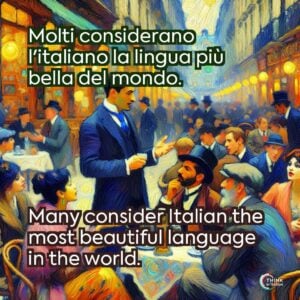
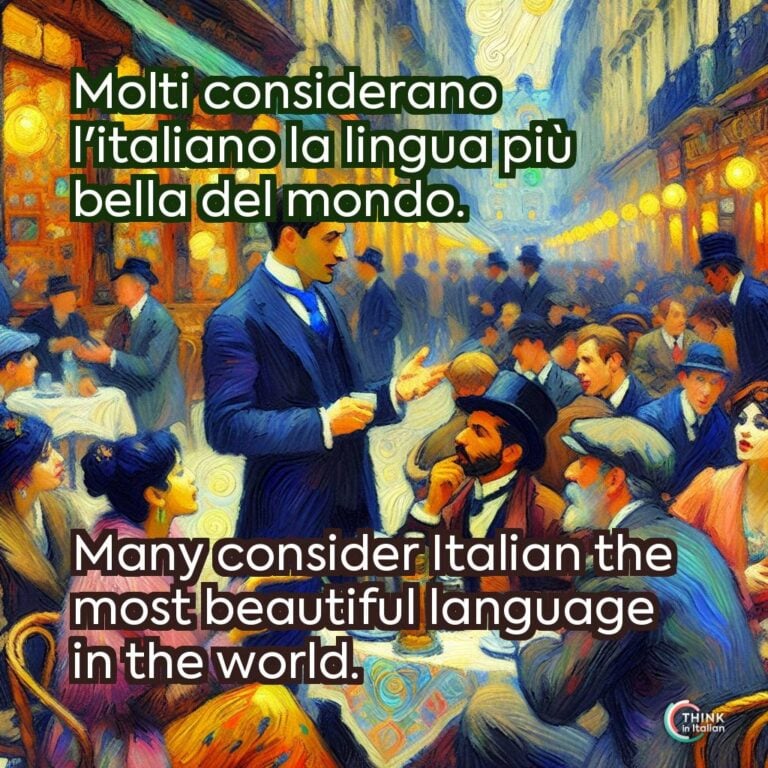
Molti considerano l'italiano la lingua più bella del mondo.
Published Feb 7, 2021
Updated Nov 7, 2024
Reviewed by
Italian language tutor, course author. MEng, MBA. Member of the International Association of Hyperpolyglots (HYPIA). After learning 12 languages, I can tell you that we all master languages by listening and mimicking. I couldn’t find an app to recommend to my students, so I made my own one. With my method, you’ll be speaking Italian from Lesson 1.
Written by
No data was found

Key Takeaways

  • Phonetic Structure: Italian features a high ratio of vowels to consonants, creating a fluid and musical sound that appeals to many.
  • Open Vowels: The presence of open vowels gives Italian a sing-song quality, making phrases like ti amo easy to pronounce and melodious.
  • Expressive Grammar: Italian grammar is rich and flexible, allowing speakers to convey complex emotions and thoughts through structures like the subjunctive mood.
  • Evocative Vocabulary: The language's precise and evocative vocabulary enables clear communication of both practical and emotional nuances.
  • Cultural Legacy: Italian's evolution from Latin and regional dialects reflects Italy's history, art, and culture, enriching its beauty and depth.

Stefano's Insights

Play to see captions...
Ah, l'italiano! Definire la bellezza è complicato, e ammettiamolo, siamo un po' di parte. Ma c'è un motivo se molti considerano l'italiano la lingua più bella. Pensate a Dante, Boccaccio e Petrarca: tre giganti che hanno plasmato la lingua con poesia e prosa. E poi, chi non associa l'Italia a paesaggi mozzafiato, cibo delizioso e arte sublime? Personalmente, ricordo di aver sentito per la prima volta un'aria di Verdi: era come ascoltare un dipinto prendere vita! Certo, la grammatica può essere un po' complessa, ma è proprio questa complessità che rende l'italiano così melodioso. Ecco perché, secondo molti, sembra che cantiamo quando parliamo. Quindi, se volete suonare come un italiano, mettete su un po' di opera e lasciatevi trasportare!
Ah, Italian! Defining beauty is tricky, and let's be honest, we're a bit biased. But there's a reason many consider Italian the most beautiful language. Think of Dante, Boccaccio, and Petrarch: three giants who shaped the language with poetry and prose. And who doesn't associate Italy with breathtaking landscapes, delicious food, and sublime art? Personally, I remember hearing a Verdi aria for the first time: it was like listening to a painting come alive! Sure, the grammar can be a bit complex, but it's this complexity that makes Italian so melodious. That's why, to many, it seems like we're singing when we speak. So, if you want to sound like an Italian, put on some opera and let yourself be carried away!

Quick facts

Why is beauty subjective in language perception?

Beauty in language is subjective because it's influenced by personal experiences, cultural background, and individual preferences, much like any form of art.

How do exotic languages capture our interest?

Exotic languages intrigue us because they sound unfamiliar and romantic, often idealized as we don't encounter their complexities regularly.

Why might learning a language reduce its perceived beauty?

Learning a language reveals its grammatical complexities, making it less exotic and more routine, thus diminishing its romantic allure.

What misconception do people have about German?

Many unfairly perceive German as harsh and aggressive due to difficulty in pronunciation and historical media portrayals.

How do historical events influence language perception?

Languages like German are often unfairly judged based on historical events like WWII, impacting their perceived beauty.

Why is Italian often considered the most beautiful language?

Italian is associated with Italy's rich culture, beautiful landscapes, art, music, and cuisine, enhancing its perceived beauty.

What role does Italy's diversity play in language perception?

Italy's diverse landscapes and rich history contribute to the perception of Italian as a colorful and aesthetically pleasing language.

How did Tuscany influence the Italian language?

Tuscany's dialect, chosen for its beauty, became Italy's official language, influenced by literary giants like Dante, Boccaccio, and Petrarca.

What makes Italian phonetics appealing?

Italian phonetics are designed for beauty, with soft consonant clusters and vowel endings, making it smooth and musical.

Why does Italian sound like singing?

Italian's high tonal variation and rhythmic structure give the impression of singing, adding to its melodic charm.

Audio images

🔊
Molte persone considerano l'italiano la lingua più bella del mondo.
🔊
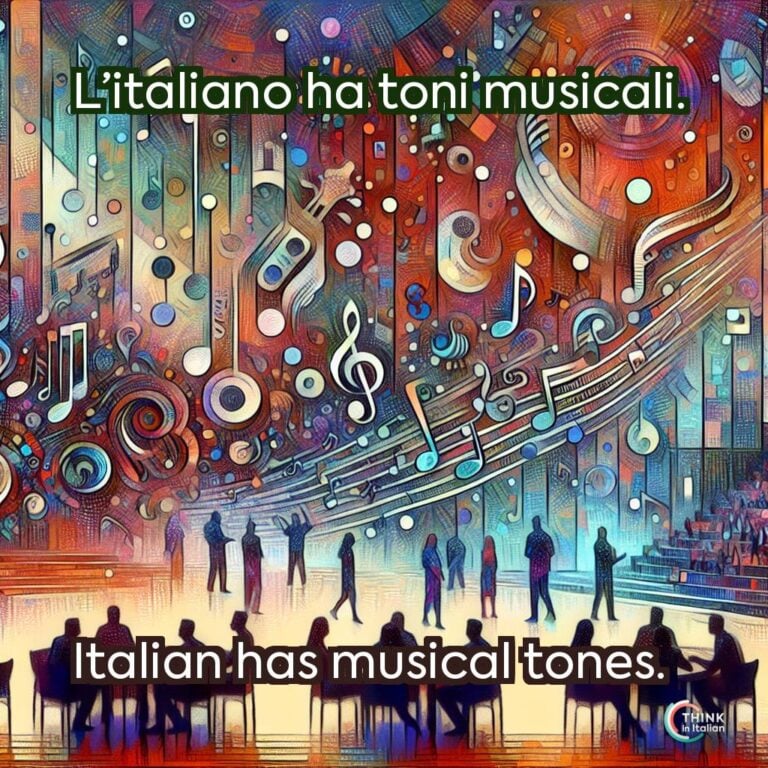
L’italiano ha toni musicali.
🔊
Molti considerano l'italiano la lingua più bella del mondo.
Learn on the go
Install the FREE Think In Italian app for faster loading, offline mode, and quick access anytime.
No registration needed. Works on all devices. Ready in 1 click and 3 seconds.

Main Article

Is Italian the Most Beautiful Language in the World?

Italy enchants the world with its art, history, and scenic beauty, and of course its language reflects it all. Italian is often praised as one of the most beautiful languages, even if opinions on this are as varied.

So, is Italian really the most beautiful language? It is true that beauty is subjective, but there are several objective factors that make Italian uniquely appealing.

If you are wondering “why should I learn Italian?“, read the reasons why Italian is considered a very beautiful language and create your own opinion about it.

Why is Italian so Beautiful?

Phonetic Structure

Italian’s phonetic structure is one of the primary reasons why it sounds so well to people’s ears: it has a high ration of vowel to consonants which makes its sentences sound fluid.

Most words end with a vowel, creating a smooth cadence and limited clusters, which is the main reason why Italian was chosen as the primary language of opera: its musicality.

This musicality has solidified Italian’s reputation as a “beautiful” language, creating a connection that goes beyond mere spoken word to one that resonates in performance and music.

The Power of Open Vowels

Still related to its musicality, another big reason why Italian sounds beautiful is because of its open vowels, which allow air to flow more freely and give the language a sing-song quality.

Consider the phrase ti amo (I love you): each word has an open vowel ending, which makes it easy to pronounce without abrupt stops. The result is a phrase that sounds like it could be sung.

Consonants in Harmony

Learn Italian on the go
Learn in the car with Think in Italian

Italian is a language that balances its consonants and vowels perfectly. As long as my foreign friends say, Italian does have some consonants that stand out – the main example I am given is the rolled r – but these are often well blended with the vowels.

This balance is particularly important in making the language pleasing to the ear: it creates a rhythm that flows naturally.

My Personal Perspective

I know this paragraph will be biased, because I am a native Italian speaker and I might like Italian just because it’s my first language. But I am also a linguist, which gives me the tools to analyze Italian from a more objective point of view.

Linguistically speaking, I believe Italian is captivating for its blend of structure, expressive grammar, and carefully chosen vocabulary, all of which contribute to its poetic reputation.

Italian grammar is both rich and flexible, which provides speakers with a varied set of linguistic tools to express complex thoughts and emotions.

For instance, think of the subjunctive mood, a verb tense that most of my students hate because of its difficulty: it plays a significant role in everyday language as it allows to convey doubt, desire, or hypothetical scenarios.

Just stop for a second and think of it: there is an inherent linguistic structure thanks to which you can express these deep and complex meanings.

Another striking feature for me is Italian’s vocabulary: I find it very precise and evocative, with each term conveying a specific shade. This diversity in vocabulary means that Italian can communicate both practical and emotional information with clarity.

Free Guide
How to Learn Languages Fast

Italian’s sentence structure adds another layer to its beauty, thanks to its flexibility. For instance, you might shift the placement of words to subtly change the tone or emphasis, which allows to add poetic layers to the speech.

Lastly, Italian’s linguistic evolution: stemming from Latin, it developed from the local dialects spoken across Italy. Among these, the Tuscan dialect became the foundation of modern Italian, thanks to influential writers like Dante Alighieri, Petrarch, and Boccaccio.

Today, Italian keeps this blend of formal, literary language and lively regional expressions, making it a language that carries Italy’s history, art, and culture in every phrase.

Undoubtedly a Very Beautiful Language

Ultimately, the question of whether Italian is the “most beautiful language” boils down to personal taste, cultural exposure, and individual experiences.

Italian’s combination of musicality, expressive openness, and historical prestige certainly makes it a global favorite, carrying a legacy of beauty that resonates across languages and cultures.

Key Terms and Concepts

Phonetic Structure

Italian's phonetic structure, with its high vowel-to-consonant ratio, creates a fluid and musical sound that's pleasing to the ear. Most words end with a vowel, enhancing its melodious nature.

Open Vowels

Italian is characterized by open vowels, allowing for free airflow and a sing-song quality. For example, ti amo (I love you) ends in open vowels, enhancing its musicality.

Subjunctive Mood

A verb tense in Italian that expresses doubt, desire, or hypothetical scenarios. Despite its complexity, it plays a crucial role in conveying nuanced meanings in everyday language.

Linguistic Evolution

Italian evolved from Latin through local dialects, with the Tuscan dialect forming the foundation of modern Italian. Influential writers like Dante and Petrarch contributed to its development.

Musicality

The inherent musical quality of the Italian language, due to its phonetic structure and open vowels, that has made it the preferred language for opera and other musical expressions.

Test your knowledge in 10 quick questions

Words

melodiosomelodious
bellezzabeauty
paesaggiolandscape
arteart
culturaculture
lingualanguage
dialettodialect
scrittorewriter
percezioneperception
vocalevowel

Phrases

bellezzabeauty
melodicomelodic
paesaggilandscapes
arteart
cibo deliziosodelicious food
tonalitàtone
cantosinging
dialettodialect
scrittoriwriters
percezione culturalecultural perception

Sentences

La bellezza è negli occhi di chi guarda.

Beauty is in the eye of the beholder.

Molti trovano l'italiano melodioso e piacevole da ascoltare.

Many find Italian melodic and pleasant to listen to.

L'italiano è spesso associato a paesaggi mozzafiato e cibi deliziosi.

Italian is often associated with breathtaking landscapes and delicious food.

La lingua italiana è stata influenzata da scrittori come Dante e Petrarca.

The Italian language was influenced by writers like Dante and Petrarca.

La nostra percezione di una lingua può essere influenzata dalle associazioni culturali.

Our perception of a language can be influenced by cultural associations.

Match the Phrases

Memory game

Flip the cards to find matching pairs!

Crossword

Across
Down
Answers

FAQs

Is Italian the most beautiful language in the world?

Defining what is beautiful is subjective, and beauty is in the eye of the beholder. Many people consider Italian the most beautiful language in the world, because of its musicality.

Why do people think Italian is the most beautiful language?

Italian is considered the most beautiful language, because it has a high variation in tone, and most words end in a vowel, making the language perfect for singing.

think in italian reddit

The comments section has moved to the Think In Italian Reddit community. Join today!

Italian word of the day
d’oliva
È finito l’olio d’oliva. Dovremo comprarne ancora.
We ran out of olive oil. We’ll have to buy some more.

What's new

stefano lodola italian teacher (1)
30 Free Courses to Get You Started ($40 Value)
italian audio lesson preview
italian audio reading preview
italian ai tutor preview
"I've tried other apps like Babbel and Memrise. None made me fluent or made me feel like I was making much meaningful progress in learning a language."
testimonial 2
Ecem Topcu
Aug 7, 2025