


“Semmai” in Italian: What Does it Mean?
As you might have guessed, semmai comes from linking two words: se and mai, respectively meaning “if” and “ever”. It has two main uses in Italian:
As an adverb, it means “if anything”:
Non farla uscire, semmai vai tu da lei.
Don’t let her go out; if anything, you go to her place.
Non giudicare. Semmai, dovresti provare a capirlo.
Don’t judge. If anything, you should try to understand.
As a conjunction, instead, it is used to introduce hypothetical sentences, meaning “if ever”. In this case, the two words are usually written separately as in se and mai, even though both forms are accepted.
Semmai succedesse, sarò pronta.
If it ever happens, I will be ready.
Sarebbe bello vederti, se mai decidessi di passare di qui.
It would be good to see you if you ever decide to pass by.
As you might have noticed, when we use it to introduce a hypothetical sentence, we conjugate the verb that follows in the congiuntivo imperfetto (imperfective subjunctive).
Do not worry if you do not grasp its use yet, you will when you’ll go through that lesson! However, I wanted to show you all its possible uses so you will not be surprised when you’ll find them.
Semmai vs se mai in Italian
Is it “semmai” or “se mai” in Italian? As I mentioned above, both versions are accepted in Italian today, even though they are linked to slightly different meanings.
In fact, “semmai” is more widespread with the meaning of “if anything”, while “se mai” is commonly used as “if ever”.
An important thing I believe you should keep in mind is that when you introduce hypothetical sentences, you need to use the subjunctive mood!
How to use “Semmai” in Italian
“Semmai” in Your Conversations
To show you how useful this term is, let me tell you this fun story: as you might have understood by reading our articles, I am a native Italian speaker. Relevant to this story is that I have a likewise native Italian speaker 7-year-old nephew.
While acquiring his native language, he navigated synonyms, contextual uses, and colorful terms. Once, we were playing together and I got tired of the game, so I said “continuiamo a giocare dopo?” (shall we continue playing later?).
He really wanted to continue playing in that moment so he said “non ti preoccupare, semmai gioco da solo” (don’t worry, if anything I’ll continue to play alone). Pointless to say, after that amazing use of “semmai” we kept playing for one more hour!
But as an adult, I also noticed that I use “semmai” not only in polite conversations or wishful thinking, but also in a more assertive tone, to express a strong opinion or clarification.
For instance, in the sentence “Semmai, sono io che ho ragione!” (If anything, I’m the one who’s right!), “semmai” is used to go against the interlocutor’s opinion.
This use emphasizes your personal point, flips the conversation to challenge a previous statement, and underlines your counterpoint in a debate or conversation.
I find fascinating how much you can convey with a simple word!
Examples
Let’s have a look at some more examples of the use of semmai and se mai in Italian.
Semmai, passo più tardi.
If anything, I’ll come back later.
Non sono capitalista, semmai il contrario!
I am not a capitalist. The opposite, if anything!
Se mai riuscissi a fare 10 piegamenti, sarei felicissima.
If I ever managed to do 10 push-ups, I would be very happy.
Sono sicura che andreste d’accordo, se mai ti decidessi ad uscire con lui.
I am sure you’d get along well if you ever decided to go out with him.
Remember that semmai can sometimes introduce a hypothetical or uncertain situation, which typically triggers the use of the subjunctive mood.
This type of construction is a bit nuanced because it blends the hypothetical nature with a future readiness, making the use of the imperfect subjunctive appropriate and needed.
Start Experimenting with “Semmai”
I hope you now agree with me: the beauty of semmai lies in its adaptability. Whether you’re hypothesizing or emphasizing a point, this word is perfect to speak Italian with ease and elegance.
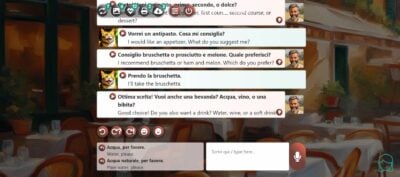
As always, my advice to acquire its use is to practice as much as possible. Call your Italian friends or engage in conversations with our AI tutor to practice its use and contextual meaning.
Embrace its versatility and experiment with using it in your sentences. I am sure you will easily understand it, semmai dovesse servirti! (if you will ever need it!)