How to Say “More” in Italian
“More” in Italian is più (pronounced PYOO), as in più tempo (more time) and più grande (bigger). When “more” comes after a verb or ends the sentence, Italian uses di più. For “extra” or “one more”, it uses in più. The accent matters: it is più, never “piu”.
| English | Italian | Example |
| more + adjective, adverb or noun | più | Voglio più tempo. (I want more time.) |
| more (after a verb) | di più | Devi dormire di più. (You need to sleep more.) |
| extra, spare, one more | in più | Ho un biglietto in più. (I have a spare ticket.) |
| some more, a little more | ancora | Ancora un po’ di vino? (A little more wine?) |
| another | un altro / un’altra | Vuoi un altro caffè? (Would you like another coffee?) |
| more than | più di / più che | Ha più di quarant’anni. (He is over forty.) |
| not any more | non… più | Non lavoro più qui. (I don’t work here any more.) |
| the most | il più / la più | È il più veloce. (He is the fastest.) |
| more and more | sempre più | Fa sempre più caldo. (It is getting hotter and hotter.) |
| more or less | più o meno | Costa più o meno dieci euro. (It costs about ten euros.) |
Più: more before an adjective, adverb or noun
Put più right before the word it describes. It never changes with gender or number.
Questa strada è più lunga.
This road is longer.
Parla più lentamente, per favore.
Speak more slowly, please.
Vorrei più tempo libero.
I would like more free time.
Di più: more after a verb
Do not leave più alone at the end of a sentence. After a verb, use di più.
Devi dormire di più.
You need to sleep more.
Ti amo di più.
I love you more.
In più: extra
In più means “in addition”, something extra that was not counted or expected.
Ho un biglietto in più.
I have a spare ticket.
C’è una sedia in più.
There is an extra chair.
Ancora and altro: some more, another
For “some more” of something you are eating or drinking, use ancora. For “another one”, use un altro (masculine) or un’altra (feminine). To say “more of it” with a pronoun, see my lesson on the pronoun ne.
Vuoi ancora un po’ di pasta?
Do you want a little more pasta?
Vuoi un altro caffè?
Would you like another coffee?
Ne vuoi ancora?
Do you want some more (of it)?
Più di and più che: more than
Use più di before a number, a noun or a person. Use più che when you compare two verbs, adjectives or nouns.
Ha più di quarant’anni.
He is over forty.
Marco è più alto di Luca.
Marco is taller than Luca.
Mi piace più leggere che guardare la TV.
I like reading more than watching TV.
Non… più: not any more
In a negative sentence, più means “any more” or “no longer”.
Non fumo più.
I don’t smoke any more.
Non ne voglio più.
I don’t want any more.
Il più: the most
Add the article before più to say “the most”. You can read more in my lesson on the Italian superlative.
È la ragazza più simpatica della classe.
She is the nicest girl in the class.
Sempre più: more and more
Sempre più shows something that keeps growing, and sempre meno shows something that keeps getting smaller. I explain it in my lesson on “more and more” and “less and less”, and for “so much” see the word tanto.
Studio sempre più volentieri l’italiano.
I enjoy studying Italian more and more.
Other useful expressions with più
- Più o meno: more or less.
- Per lo più: mostly.
- Due più due fa quattro: two plus two is four.
“The More… the More…” in Italian: the Comparative Correlative
In linguistics, this type of sentence structure is called a comparative correlative. A comparative correlative is the use of two comparatives to express correlation between two variables.
This is certainly a good expression to add to your Italian repertoire if you want to sound like a native, and it is so easy!
Let’s have a look at some examples of how to use it correctly:
Più ti conosco più mi piaci.
The more I know you, the more I like you.
Più cerco di rilassarmi, più mi innervosisco.
The more I try to relax, the more nervous I get.
Più studi, più preparato sarai per l’esame.
The more you study, the more prepared you will be for the exam.
When we use this construction with English adjectives, we just add -er to the end of the adjective. On the contrary, this construction never varies in Italian, whether it is used with adjectives, nouns or adverbs.
Più alto è il prezzo, più nuovo è il prodotto.
The higher the price, the newer is the product.
Più alto sei, più velocemente corri.
The taller you are, the faster you run.
More or Less?
How to use “più” and “meno” in Italian
This comparative correlative can also be used with the opposite meaning, which in English is translated with “the less… the less…”.
Meno guadagni, meno potrai acquistare.
The less you earn, the less you can buy.
Meno ti preoccupi, meno ti stresserai.
The less you worry, the less you become stressed.
Just like in English, you can even mix più (the more) and meno (the less):
Meno mangi, più avrai fame stasera.
The less you eat, the more you will be hungry tonight.
Più ti preoccupi, meno dormirai.
The more you worry, the less you will sleep.
“The More, the Better” in Italian
The literal translation of the English words “better” and “worse” is meglio and peggio in Italian. Since the structure of this Italian construction is very similar to English, you shouldn’t be surprised to discover that also in this case it works in the same way.
Più siamo, meglio è.
The more the better (merrier).
Più ti stressi, peggio ti sentirai.
The more you stress, the worse you will feel.
Meno studi, peggio andrà l’esame.
The less you study, the worse your exam will go.
Learn more about the Italian words buono and bene.
Experimenting with “the More… the More” Structures
Once you grasp these structures, you will find yourself frequently using them in conversations, I promise! In fact, the “più… più…” structure is a very useful way to express comparisons vividly.
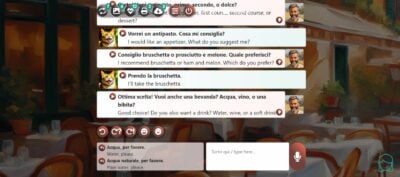
My advice, as always, is that you practice daily to better understand the context and the nuances of Italian expressions. Engage in conversations, either with friends or with our AI tutor, challenge yourself and learn Italian as a native speaker!
Practice: Più, Di Più or In Più?
- Vorrei ___ tempo per studiare.
- Devi mangiare ___, sei troppo magro!
- Ho comprato un biglietto ___ per te.
- ___ ti conosco, ___ mi piaci.
Answers: 1. più 2. di più 3. in più 4. Più… più