
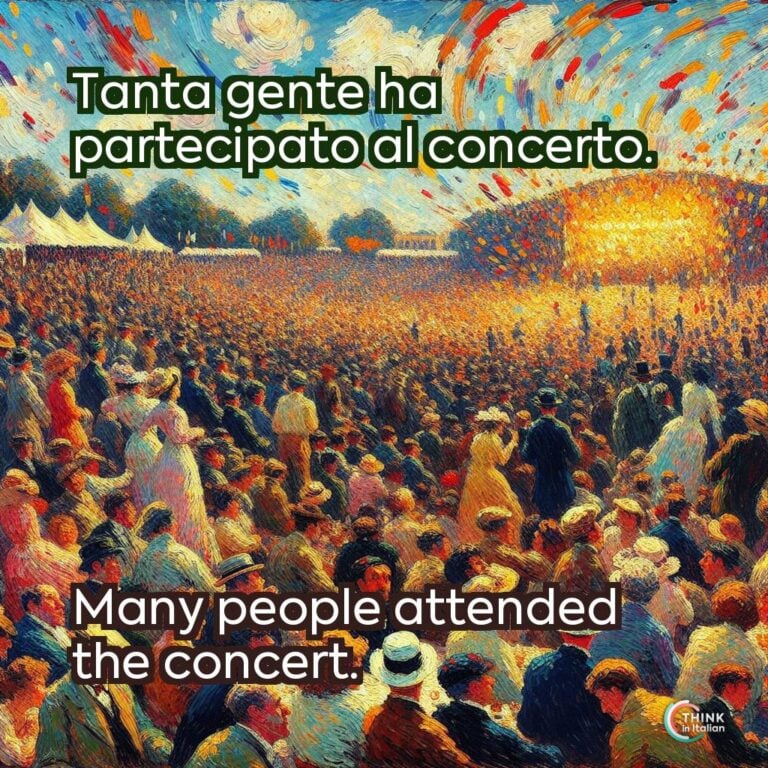
“Tanto” in Italian
Tanto in Italian can be either an adverb or an adjective, depending on the way it is used. Regardless of its grammatical use, it can be translated as a lot (of), much, many, etc.
Per pranzo mangio tante verdure.
For lunch I eat a lot of vegetables.
Ieri abbiamo lavorato tanto.
Yesterday we worked a lot.
Ci sono tanti modi diversi di suonare questo strumento.
There are many different ways of playing this instrument.
As you can see, when it is used an adjective, tanto changes in gender and number to agree with the noun they accompany. Instead, when it is used as an adverb, it does not vary.
How to use “Tanto” in Italian
Tanto as an Adverb
As I mentioned before, when it is used as an adverb tanto does not vary. In this case, it is used to modify a verb, an adjective, or another adverb.
Nel fine settimana dormo tanto.
In the weekend, I sleep a lot.
La tua nuova casa è tanto bella!
Your new house is very beautiful!
Se sono stanca, lavoro tanto lentamente.
If I am tired, I word very slowly.
Tanto as an Adjective
When tanto is an adjective, it has four forms: tanto, tanta, tanti, tante. This varies according to the gender and the number of either the subject or the object.
Tante persone non sanno cucinare.
Many people can’t cook.
Ho incontrato tanti amici ultimamente.
I met many friends lately.
Other Meanings of “Tanto”
As a Conjunction
What you might not know is that, in Italian, tanto can also be used as a conjunction to connect one sentence to another. Have a look at the examples below:
Non dirgli niente, tanto non ti ascolta.
Don’t tell him anything; he won’t listen anyway.
Non l’ho invitata, tanto non sarebbe mai venuta.
I did not invite her; she would never have come anyway.
You need to be careful because tanto here has nothing to do with its original meaning! Instead, it means anyway, in any case, and is used to mean “in spite of reasons or situations that have already been mentioned”.
As a Filler
Sometimes, especially in very informal contexts, Italians use tanto on its own as an answer to a question.
Perché non hai parlato con Giorgia?
Eh, tanto…
Why didn’t you talk to Giorgia?
There’s no use, anyway…
In this case, tanto expresses resignation, meaning that something is useless and that nothing would change it.
Perché hai smesso di studiare il Russo?
Mah, tanto…
Why did you quit studying Russian?
There’s no use, anyway…
Here, the speaker, is transmitting the idea that there isn’t much point in studying Russian anyway, that it is not important and maybe was not taking him or her anywhere.
Tanto per…
Another common expression that includes the word tanto is tanto per + infinitive verb.
L’ho chiamato tanto per fare.
I called him without any specific reason.
If you do something tanto per fare, it means you do it with no specific reason, just to do it (just because).
Perché ti sei tinto i capelli?
Non so, tanto per cambiare un po’.
Why did you dye your hair?
I don’t know, just to change a bit.
Sometimes, tanto per is also used on its own in very informal settings.
Perché ti sei tinto i capelli?
Così, tanto per…
Why did you dye your hair?
Just because… (For no reason, really)
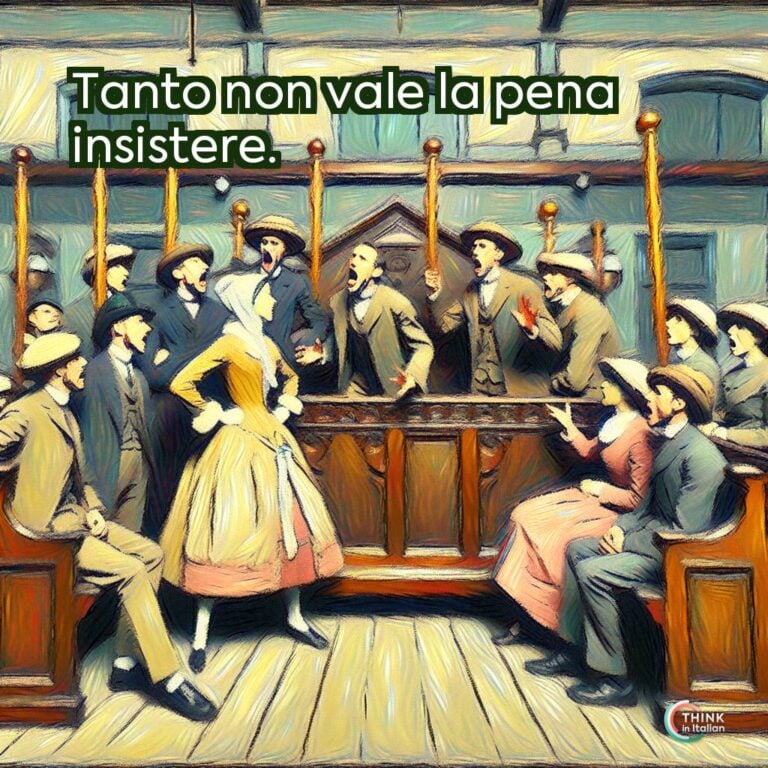
Tanto vale
Another common expression with the word tanto is tanto vale + verb. This expression can be translated with the English might as well + verb. Have a look at the following examples:
Se non lavoriamo, tanto vale uscire!
If we do not work, we might as well go out!
Se hai iniziato, tanto vale finire!
If you started, you might as well finish!
Expressions with “Tanto”
Here I listed some fixed expressions that include the word tanto.
Ready to use
“Tanto” is a very versatile Italian word. Now that you have learned all its different meanings and use, you are ready to speak your thoughts as an native speaker.
Whether you want to quantify items, enrich an adjective or a verb, or you just want to engage in naturalistic informal conversations with your friends, tanto will help you improve your Italian skills.
Start practicing this word right now, tanto cosa hai da perdere? (what do you have to lose, anyway?)