Jokes About Italians

An interactive lesson guiding you from key takeaways to expert insights. Comes with Q&A, useful vocabulary, interactive audio, quizzes and games.

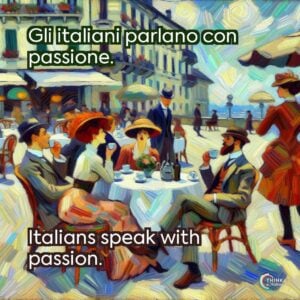
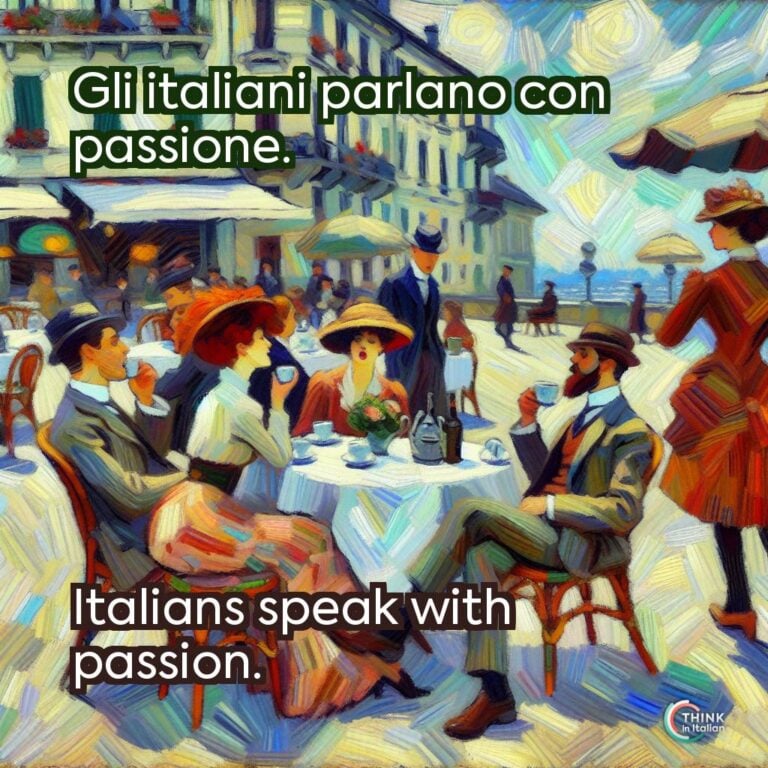
Gli italiani parlano con passione.
Published Jan 27, 2022
Updated Aug 31, 2024
Written by
Italian language tutor, course author. MEng, MBA. Member of the International Association of Hyperpolyglots (HYPIA). After learning 12 languages, I can tell you that we all master languages by listening and mimicking. I couldn’t find an app to recommend to my students, so I made my own one. With my method, you’ll be speaking Italian from Lesson 1.
Reviewed by
No data was found

Key Takeaways

  • Italian stereotypes often stem from historical events, particularly the mass migration to the U.S. in the late 19th century.
  • Many jokes about Italians rely on harmful stereotypes, especially those related to organized crime and communication styles.
  • Respectful humor can foster empathy and inclusivity, allowing for shared laughter without reinforcing negative stereotypes.
  • Italian comedians like Roberto Benigni and Checco Zalone exemplify how humor can address serious social issues while celebrating cultural uniqueness.
  • Understanding the origins of Italian stereotypes is crucial for appreciating the cultura and humor of Italy.

Stefano's Insights

Play to see captions...
Ah, le barzellette sugli italiani! Un mix di storia, cultura e stereotipi. Dai tempi della migrazione italiana negli USA, i media hanno alimentato immagini ingiuste, come l'associazione con la mafia. E poi c'è il nostro stile comunicativo appassionato, spesso frainteso come drammatico. Ricordo le animate discussioni in famiglia che i miei amici stranieri scambiavano per litigi! Ma l'umorismo può unire, se rispettoso. Adoro comici come Benigni e Zalone, che usano la satira per affrontare temi sociali. Se vuoi imparare l'italiano, devi conoscere anche la nostra cultura, barzellette incluse. Quindi, scherza pure, ma con rispetto!
Ah, jokes about Italians! A mix of history, culture, and stereotypes. Since Italian migration to the USA, media have fueled unfair images, like the mafia association. And our passionate communication style is often misunderstood as dramatic. I remember family discussions mistaken for arguments by my foreign friends! But humor can unite, if respectful. I love comedians like Benigni and Zalone, who use satire to tackle social issues. If you want to learn Italian, you must know our culture, jokes included. So, joke away, but with respect!

Quick facts

What historical events led to Italian stereotypes?

Italian stereotypes largely stem from mass migration to the U.S. in the late 19th and early 20th centuries, which resulted in ethnic neighborhoods unfairly viewed as ignorant or criminal.

How did the Mafia influence Italian stereotypes?

The rise of the Mafia in the 1920s and 1930s solidified damaging stereotypes associating Italians with organized crime, a notion still prevalent in jokes today.

Why are Italians perceived as overly dramatic?

Italians' expressive and passionate communication style is often misinterpreted as overly dramatic, leading to misconceptions about them being rude or conflictual.

How can humor promote inclusivity?

Respectful humor highlights common human experiences, fostering empathy and understanding, which helps in celebrating cultural diversity and bridging divides.

What's the balance between humor and stereotypes?

While humor can appreciate cultural quirks, it's crucial to avoid reinforcing harmful stereotypes that perpetuate prejudice, thus maintaining a balance between humor and respect.

How do Italians use self-deprecating humor?

Italians use self-deprecating humor to reclaim identity, show resilience against prejudice, and diminish the power of negative stereotypes, often through clever wordplay and cultural references.

Who are some renowned Italian comedians?

Notable Italian comedians include Roberto Benigni, Checco Zalone, Teresa Mannino, and Luciana Littizzetto, who use humor to address social issues and promote cultural understanding.

Can humor bridge cultural gaps?

Yes, when used respectfully, humor can bridge cultural gaps, fostering inclusivity and providing educational insights into different cultures and traditions.

Why should language learners understand cultural humor?

Understanding cultural humor is vital for language learners as it reflects and is reflected in the language, offering deeper insights into the culture.

What is the role of humor in Italian culture?

Humor in Italian culture helps express emotions, navigate challenging situations, and form social bonds, often through self-deprecating jokes and clever wordplay.

Audio images

🔊
Un italiano senza spaghetti è come un giorno senza sole.
🔊
Impariamo a ridere insieme.
🔊
Gli italiani amano ridere e scherzare.
🔊
Gli italiani sono molto espressivi.
🔊
L'umorismo può aiutare a superare le differenze culturali.
🔊
Gli italiani amano parlare con le mani.
🔊
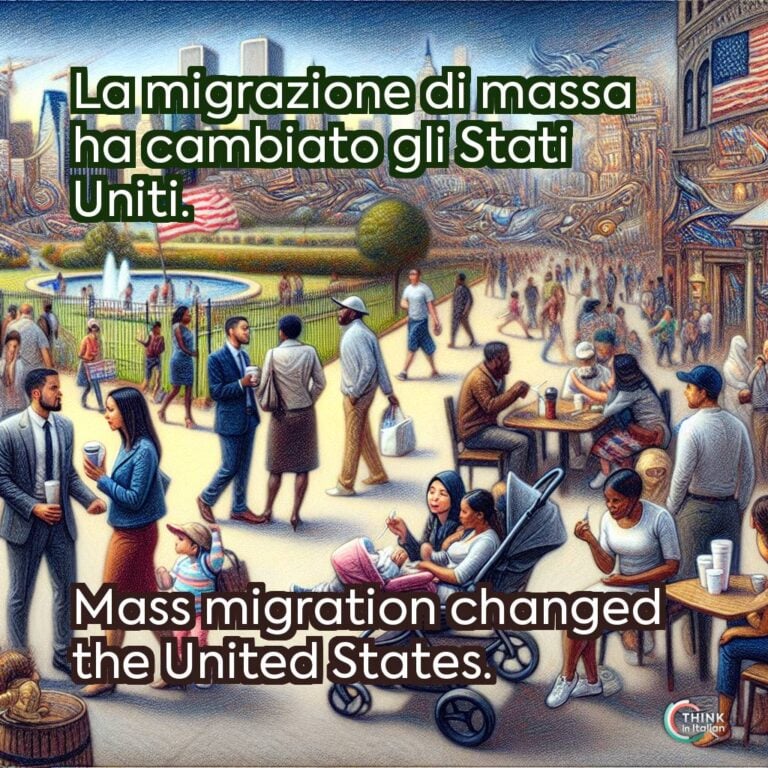
La migrazione di massa ha cambiato gli Stati Uniti.
🔊
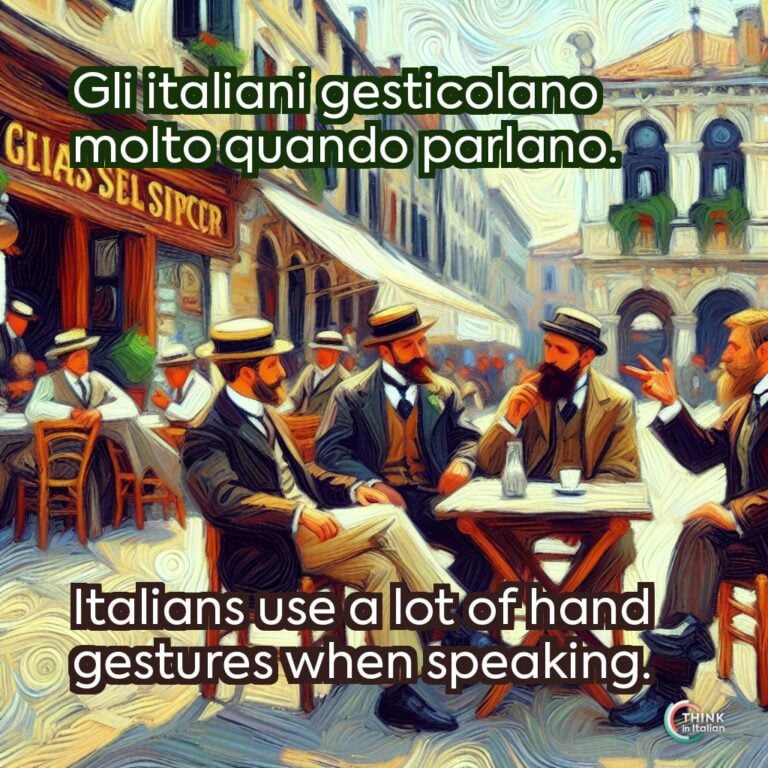
Gli italiani gesticolano molto quando parlano.
🔊
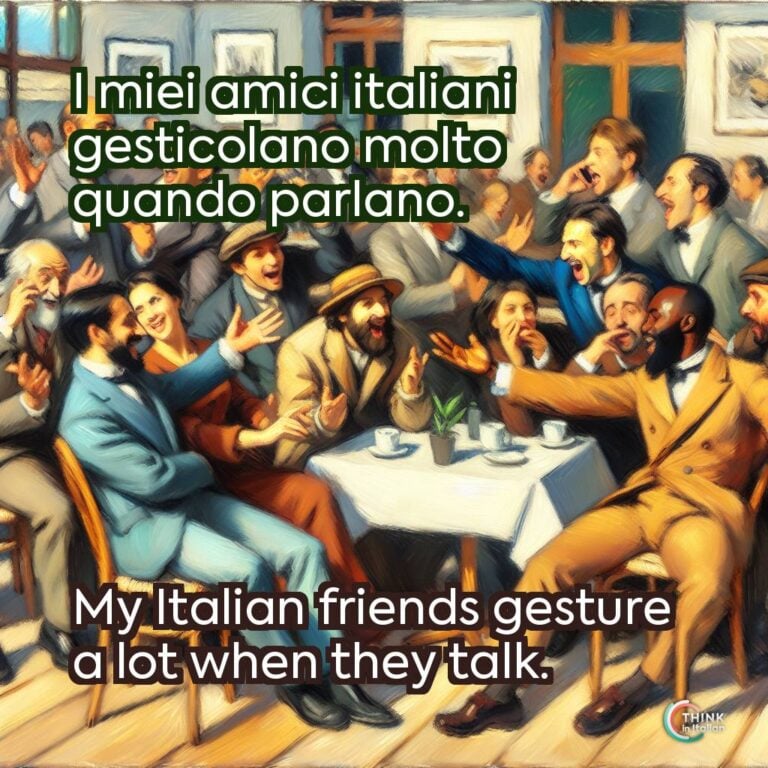
I miei amici italiani gesticolano molto quando parlano.
🔊
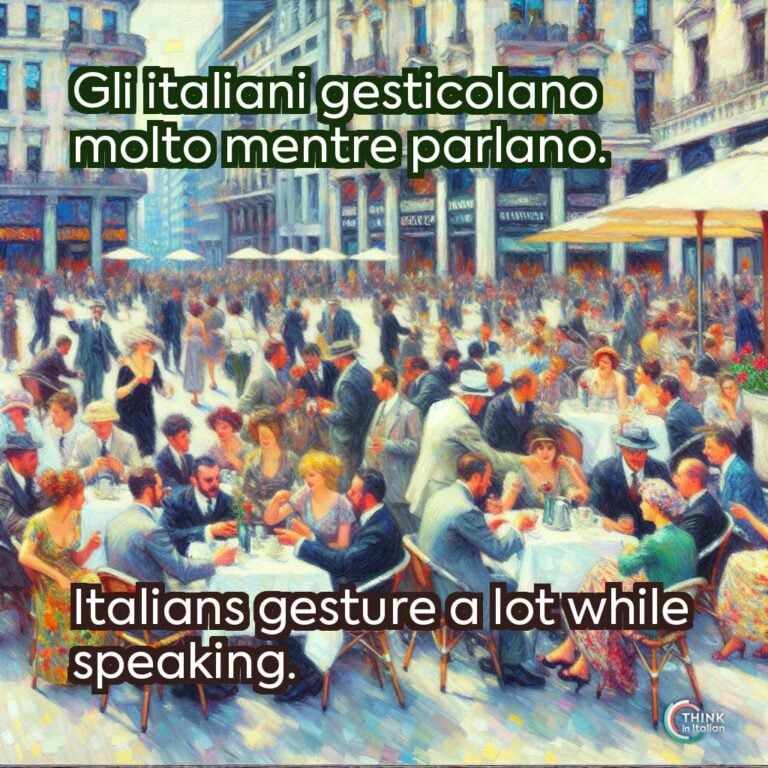
Gli italiani gesticolano molto mentre parlano.
🔊
Gli italiani parlano con passione.
Learn on the go
Install the FREE Think In Italian app for faster loading, offline mode, and quick access anytime.
No registration needed. Works on all devices. Ready in 1 click and 3 seconds.

Main Article

Jokes About Italians

Origins of Italian Stereotypes

Most of the jokes about Italians you hear nowadays are deeply rooted in historical events, particularly the mass migration of Italians to the United States between the late 19th and early 20th centuries.

This migration led to the formation of ethnic neighborhoods that were unfairly seen by the media as ignorant or criminal, which fueled many stereotypes.

As a child, I remember hearing stories from my grandparents about how their parents struggled to be accepted in their new country.

One of the most damaging stereotypes is the association of Italians with organized crime because of the rise of the Mafia in the 1920s and 1930s, that is still central in many jokes about Italians that we still hear one hundred years later.

Another reason why I think Italians are sometimes made fun of is their expressive and passionate communication style. I believe that this cultural trait has often been misinterpreted as overly dramatic.

This happens quite often to me as well: when I am with my Italian friends or during family gatherings, my international friends tend to mistake our animated discussions for conflict, and end up believing that Italians are rude and conflictual, which in reality is not.

The Best Jokes About Italians

Respectful humor can help highlight common human experiences, creating empathy and understanding, allowing us to see the world from another’s perspective and fostering inclusivity.

I am a big fan of jokes, especially those that celebrate cultural uniqueness: if we focus on shared laughter rather than divisive stereotypes, I believe humor can bring people together and celebrate diversity.

Learn Italian on the go
Learn in the car with Think in Italian

However, it’s crucial to balance humor with respect. While jokes can be a way to appreciate cultural quirks, we must avoid reinforcing harmful stereotypes that perpetuate prejudice.

Here are some jokes about Italians:

  1. What’s the difference between a smart Italian and a unicorn?
    • A: Nothing, they’re both fictional characters
  2. What do you call a dodgy neighbourhood in Italy?
    • A Spaghetto.
  3. What do you call an Italian with his hands in his pockets?
    • Mute.
  4. Why are most Italian men named Tony?
    • When they got on the boat to America they stamped To NY (Tony) on their foreheads.
  5. What do you call an Italian with a broken arm?
    • Speech impaired.
  6. How do you know if you’re Italian?
    • You have a list of 15 phone numbers to reach your family of three.
  7. What do you call the rough parts of Italy?
    • The spa-ghetto.

Italians’ Sense of Humor

Humor plays a significant role in the Italian culture. I would say that, in general, Italians’ sense of humor allows us to express ourselves, get through challenging circumstances, and form relationships with others.

Through self-deprecating humor we make jokes about ourselves, we reclaim our identity, show resilience against prejudice, and diminish the power of negative stereotypes.

Italian jokes are known for their clever wordplay, puns, and cultural references. The jokes can vary from brief one-liners to lengthy tales – barzellette – with surprising turns.

As a language enthusiast, I have always enjoyed learning about the culture and traditions of other countries, because they reflect language and are reflected in language.

Here I will list some of the most famous Italian comedians that, for me, are the perfect example of Italian humor. They are the personification of respectful self-deprecating humor, well combined with social denounces and funny quotes.

  • Roberto Benigni is an acclaimed Italian comedian, actor, and director known for his work in “Life is Beautiful”. His humor often addresses themes of love, hope, and humanity, bridging cultural divides and highlighting the resilience of the human spirit.
  • Checco Zalone is my favourite Italian comedian ever! He is known for his satirical take on Italian society and politics. His films use humor to address issues like immigration and cultural integration, encouraging audiences to reflect on these important topics.
  • Teresa Mannino is an Italian stand-up comedian and actress who uses her platform to discuss gender roles, regional differences within Italy, and contemporary social issues. Her humor promotes understanding and appreciation of Italy’s diverse culture.
  • As a comedian, actress, and television host, Luciana Littizzetto is known for her commentary on social issues. Her humor addresses everything from gender equality to political satire, encouraging audiences to think critically about societal norms.

Can you Make fun of Italian?

Free Guide
How to Learn Languages Fast

Yes, you can. Be respectful, though!

Humor, when used respectfully, can help bridge cultural gaps and foster a sense of inclusivity. Humor can also play a very important educational role. It should be employed to inform, rather than alienate.

As you might have noticed, it is important to know the origins and functions of Italian stereotypes, as it reveals a complex interplay of history, culture, and social dynamics.

If you want to learn the Italian language, you must be familiar with its culture as well, and Italian jokes surely are an important part of it!

Learn more, and make respectful fun of your Italian friends.

Key Terms and Concepts

Barzellette

Barzellette are short, humorous tales characterized by clever wordplay and unexpected twists. They are a quintessential part of Italian comedic tradition, often reflecting cultural nuances.

Spaghetto

A playful term used in jokes to refer to a rough or sketchy neighborhood, derived from the word 'spaghetti'. It highlights Italian culinary associations in humorous contexts.

Italian Mafia

A criminal organization with origins in Italy, often associated with organized crime. Historical events link Italians to this stereotype, influencing jokes and media portrayals.

Expressive Communication

Italians are known for their animated and passionate communication style. Often mistaken for conflict, this trait is a cultural expression of enthusiasm and emotion.

Self-deprecating Humor

A style of humor where individuals make fun of their own quirks or stereotypes. Italians use this to reclaim identity and counter prejudicial views.

Ethnic Neighborhoods

Areas where people of similar ethnicity reside, often formed due to mass migrations. These neighborhoods have historically been misrepresented in media, leading to stereotypes.

Test your knowledge in 10 quick questions

Words

stereotipostereotype
umorismohumor
comunicazionecommunication
mafiamafia
culturaculture
identitàidentity
emigrazionemigration
rispettorespect
espressioneexpression
inclusivitàinclusivity

Phrases

scherzojoke
stereotipostereotype
culturaculture
comicocomedian
empatiaempathy
tradizionetradition
umorismohumor
identitàidentity
comprensioneunderstanding
comunicazionecommunication

Sentences

Gli italiani parlano con le mani, ma non prendono mai in giro il loro cibo.

Italians talk with their hands, but never make fun of their food.

La pizza è così italiana che se potesse parlare avrebbe un accento romano.

Pizza is so Italian that if it could talk, it would have a Roman accent.

Gli italiani dicono che i gesti valgono più di mille parole, specialmente quando spiegano una ricetta.

Italians say that gestures are worth more than a thousand words, especially when explaining a recipe.

In Italia, il caffè è una religione, e il barista è il sacerdote.

In Italy, coffee is a religion, and the barista is the priest.

Gli italiani sono famosi per il loro calore umano, e non solo per le temperature estive!

Italians are famous for their warmth, and not just because of the summer temperatures!

Match the Phrases

Memory game

Flip the cards to find matching pairs!

Crossword

Across
Down
Answers
think in italian reddit

The comments section has moved to the Think In Italian Reddit community. Join today!

Italian word of the day
d’oliva
È finito l’olio d’oliva. Dovremo comprarne ancora.
We ran out of olive oil. We’ll have to buy some more.

What's new

stefano lodola italian teacher (1)
30 Free Courses to Get You Started ($40 Value)
italian audio lesson preview
italian audio reading preview
italian ai tutor preview
"I've tried other apps like Babbel and Memrise. None made me fluent or made me feel like I was making much meaningful progress in learning a language."
testimonial 2
Ecem Topcu
Aug 7, 2025