“How Are You?” In Italian: Questions and Answers

An interactive lesson guiding you from key takeaways to expert insights. Comes with Q&A, useful vocabulary, interactive audio, quizzes and games.

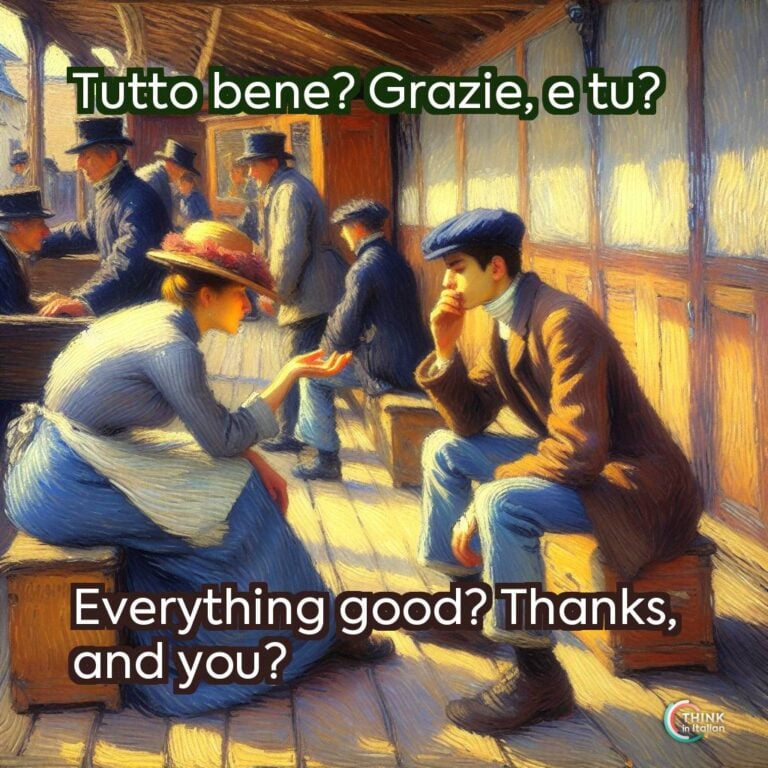
Tutto bene? Grazie, e tu?
Published May 9, 2020
Updated Sep 15, 2024
Written by
Italian language tutor, course author. MEng, MBA. Member of the International Association of Hyperpolyglots (HYPIA). After learning 12 languages, I can tell you that we all master languages by listening and mimicking. I couldn’t find an app to recommend to my students, so I made my own one. With my method, you’ll be speaking Italian from Lesson 1.
Reviewed by
No data was found

Key Takeaways

  • To ask "How are you?" in Italian, use come stai? for informal and come sta? for formal situations.
  • Casual alternatives include Tutto bene? (everything good?) and Come va? (how is it going?), perfect for friendly interactions.
  • For checking on someone's well-being, use come ti senti? (how are you feeling?) or va meglio? (is it going better?).
  • Common responses to "How are you?" include Bene, grazie. E tu? (Good, thanks. And you?) and Sto benissimo! (I’m very well!).
  • Always reciprocate by asking how the other person is doing; it shows politeness and interest in Italian culture.

Stefano's Insights

Play to see captions...
Ah, il classico "come stai?" in italiano! Non è solo un modo di rompere il ghiaccio, ma un invito a condividere davvero come ti senti. Mentre in inglese spesso si risponde con un semplice "bene", in Italia ci si aspetta un po' più di dettagli. La bellezza della lingua italiana è che offre una varietà di modi per chiedere come va, da "come stai?" a "tutto bene?" o "come va?". Ricordo una volta in cui chiesi a un amico italiano "come stai?" e mi raccontò la sua intera giornata! E tu, come risponderesti? "Bene, grazie" o magari "mai stato meglio"? Qualunque sia la tua risposta, ricorda di chiedere a tua volta: è cortesia italiana!
Ah, the classic "come stai?" in Italian! It's not just an ice-breaker, but an invitation to truly share how you're feeling. While in English you might just say "good," in Italy, a bit more detail is expected. The beauty of the Italian language is that it offers a variety of ways to ask how it’s going, from "come stai?" to "tutto bene?" or "come va?" I remember once asking an Italian friend "come stai?" and he ended up sharing his entire day! And you, how would you respond? "Bene, grazie" or maybe "never been better"? Whatever your answer, remember to ask in return: it's Italian courtesy!

Quick facts

How does asking "How are you?" differ in Italian?

Italians expect genuine answers, unlike the often superficial English usage.

What is the easiest way to ask "How are you?" in Italian?

"Come stai?" is the simplest informal way to ask.

How do formal and informal registers affect this question in Italian?

"Come sta?" is used for formal contexts while "Come stai?" is informal.

What are some casual ways to ask "How are you?" in Italian?

"Tutto bene?" and "Come va?" are common among friends.

What does "Tutto a posto?" literally mean?

It translates to "Is everything in its place?" reflecting Italian cultural values.

How does Italian culture influence the language's expressions?

Language and culture intertwine, as seen in expressions like "Tutto a posto?"

When might you use "Come ti senti?" in Italian?

It’s used to check on someone who was previously unwell.

How is the verb "stare" important in these questions?

It changes formality; "stai" for informal, "sta" for formal.

Why is it important to respond when asked "How are you?" in Italian?

Italians expect a response to show mutual interest and politeness.

How do you keep a conversation going in Italian culture?

Always ask back about the other person's well-being to maintain politeness.

Audio images

🔊
Stai imparando l'italiano? È molto utile!
🔊
L'italiano ha molti modi per chiedere "Come stai?"
🔊
Tutto a posto?
🔊
Lui chiede "Come va?" a tutti.
🔊
Tutto a posto?
🔊
Tutto a posto?
🔊
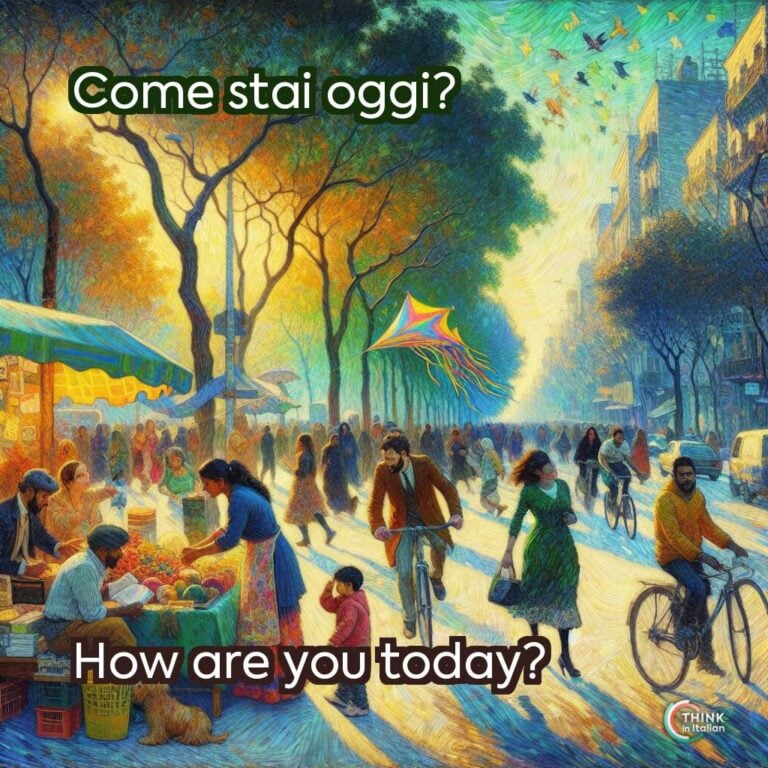
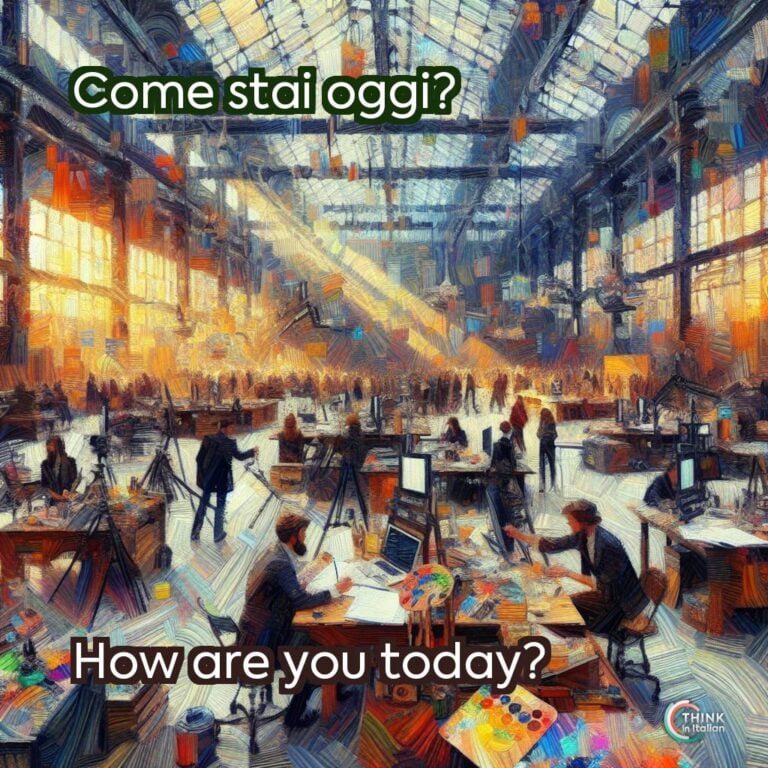
Come stai oggi?
🔊
Come stai oggi?
🔊
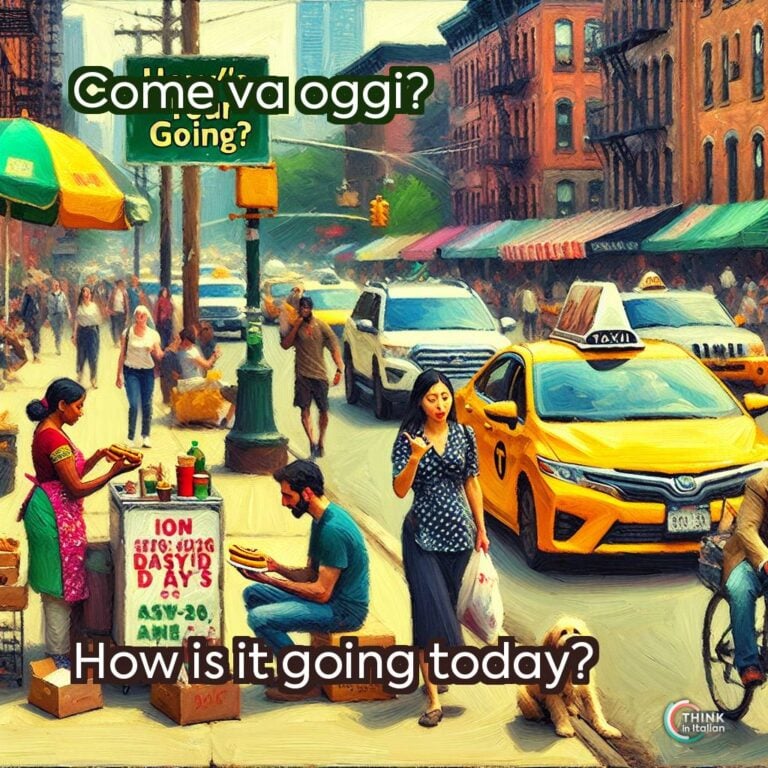
Come va oggi?
🔊
Come stai oggi?
🔊
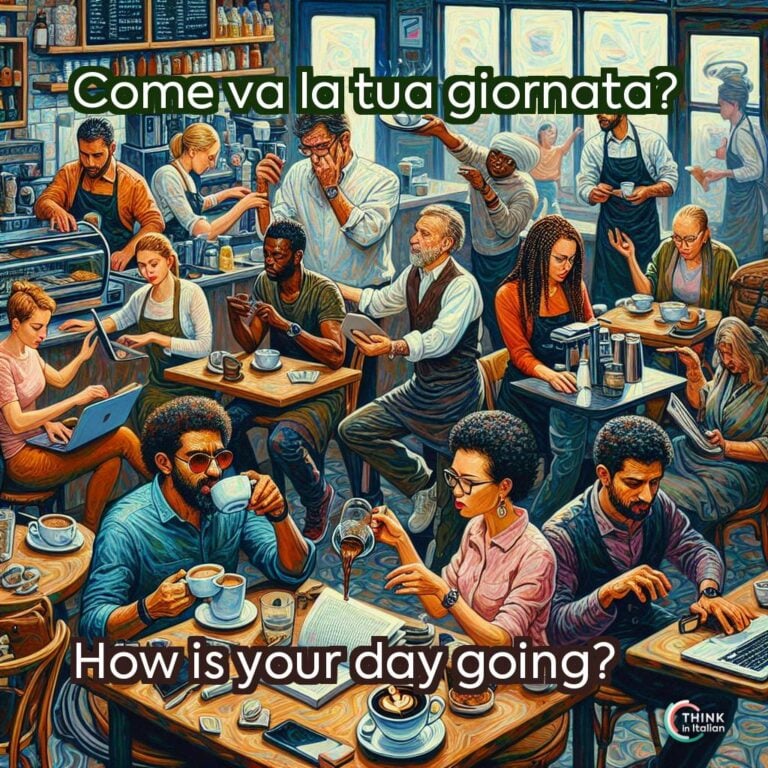
Come va la tua giornata?
🔊
Tutto bene? Grazie, e tu?
🔊
Sto imparando l'italiano con un partner linguistico.

Stefano's video lesson

Main Article

“How are you?” in Italian

Different Ways to ask “How are you?” in Italian

Asking “How are you?” in Italian is not just a greeting or a conversation starter. It is a way to demonstrate that you care about the other person, and that you are open to share a chat with them.

Unlike English, which, most of the time, uses “how are you?” as an ice-breaker only, the Italian counterpart does require an answer. Or, at least, if an Italian speaker asks you how you are, they expect an answer.

Interestingly, Italian is a very versatile language, therefore there are many ways of asking a simple “How are you?” in Italian, and different questions will result in different answers.

The easiest way you can ask an Italian how they are is come stai?, but the easier the question, the simpler the answer. So, let me go through different ways you can start a conversation in Italian.

The Basics: “Come stai?” vs “Come sta?”

As you might know already, the Italian language distinguishes between formal and informal register, and this plays a role in multiple aspects of conversations, including asking how someone is.

  • Come stai? – How are you? (Informal tu)
  • Come sta? – How are you? (Formal Lei)

Notice how the verb stare is conjugated in the third person singular in the second sentences, since it is a formal question.

Casual Conversations: “Tutto Bene?” and “Come va?”

In more relaxed settings, Italians often use Tutto bene? (everything good?) or Come va? (how is it going?). These phrases are perfect for casual encounters and are commonly used among friends. They are a great way to check in with friends without sounding too formal.

There also is another very similar expression which I like a lot: Tutto a posto? literally meaning “Is everything in its place?”. This expression really underlines the Italian perception of having things in their place to feel good.
As a linguist, I love how culture and language influence each other and how this can be reflected through words!

Interested in this topic? Learn more about whether speaking different languages affect your behavior.

Other Way to ask “How are you?” in Italian

I selected two more expressions that can be used to check on people. The difference between these expressions and the ones I illustrated before is that, here, the context of the question is different.

  • Come ti senti?/Come si sente? (How are you/You feeling?)
  • Va meglio? (Is it going better?)

As you might have perceived, you can use these expressions when you know that the interlocutor was not feeling great, and want to check on them.

Also, notice that when asking the question come ti senti? you are dealing with a reflexive verb. This means that its formal counterpart must take the reflexive pronoun into account as well.

Responding to “How Are You?”

Knowing how to ask “How are you?” is just the beginning. Equally important is knowing how to respond. Here are a few common responses:

  • Bene, grazie. E tu? – Good, thanks. And you?
  • Sto benissimo! – I’m very well!
  • Mai stato/a meglio! – never felt better than this!
  • Non c’è male. – Not bad.
  • Come al solito – As usual
  • Così così. – So-so.
  • Non posso lamentarmi – I cannot complain
  • Sto meglio – I’m better (usually used when your interlocutor wants to check on you after being informed of an unpleasant mood)
  • Male – Bad

As you can notice, I listed the possible answers in order from the most positive to the most negative. Hopefully, you’ll only need the first ones!

Also, as I mentioned before, asking how someone is in Italian is not just for saying. People expect you to answer, and they also expect you to show the same interest in how they feel.

Free Guide
How to Learn Languages Fast

This means that you should always ask back how your interlocutor is doing, in order to keep the conversation going. This is a sign of politeness in the Italian culture.

Mastering the Italian “How Are You?”

Mastering these greetings not only improves your Italian but also enriches your cultural experiences. Every time I travel abroad and tell someone I am Italian, the very first thing they say is come stai?. It is a worldwide known expression!

Now it’s time to learn other Italian greetings as well, so that you can have conversations with anyone you meet!

So, next time you meet an Italian speaker, try out these phrases. You’ll be surprised at how these simple words can bridge cultures and create lasting impressions.

Buona fortuna! (Good luck!)

Key Terms and Concepts

Formal vs. Informal Come sta?/Come stai?

Formal and informal registers determine how you ask “How are you?” in Italian: Come sta? is formal, while Come stai? is informal.

Casual Greetings: Tutto bene?, Come va?

In informal situations, Tutto bene? and Come va? are commonly used to ask how someone is, translating to 'everything good?' and 'how is it going?' respectively.

Expression: Tutto a posto?

This phrase means 'Is everything in its place?' and highlights the Italian cultural value of order and well-being as interconnected concepts.

Checking Well-being: Come ti senti?/Come si sente?

These phrases mean 'How are you feeling?' and are used when inquiring about someone's health or emotional state, considering both informal and formal contexts.

Responding to Greetings: Bene, grazie. E tu?

A common response to 'How are you?' in Italian is Bene, grazie. E tu?, meaning 'Good, thanks. And you?' showing reciprocal politeness.

Negative Responses: Male

When feeling unwell, the response Male is used, meaning 'Bad.' It's a straightforward way to express discomfort or dissatisfaction.

Test your knowledge in 10 quick questions

Words

comehow
staiare you
staare you (formal)
benegood
graziethanks
tuttoeverything
vais it going
megliobetter
sentiare you feeling
benissimovery well

Phrases

ciaohello
arrivedercigoodbye
graziethank you
scusaexcuse me/sorry
per favoreplease
benegood/well
malebad
così cosìso-so
tutto a postoeverything is fine
stancotired

Sentences

Come stai?

How are you?

Come va?

How is it going?

Tutto bene?

Everything good?

Bene, grazie. E tu?

Good, thanks. And you?

Sto benissimo!

I'm very well!

Match the Phrases

Memory game

Flip the cards to find matching pairs!

Crossword

Across
Down
Answers

FAQs

How do you answer Come Stai?

If you’re asked how are you in Italian and you're feeling fine, the easiest answer is "Bene!" (Good!)

How do you greet somebody in Italian?

If you want to say how are you in Italian you can just simply say "Come stai?" (informal) or "Come sta?" (formal).

What is Come Stai?

Use "Come stai?" when you want to ask informally how are you in Italian.

What is the difference between Come va and Come Stai?

If you want to ask how are you in Italian you can use "Come va?". This can be expanded in "come va la vita?", which is a general question about the other person's life. "Come stai?" is more related to health and mood, not so much about work.

think in italian reddit

The comments section has moved to the Think In Italian Reddit community. Join today!

Italian word of the day
cancellato
Ho preso un appuntamento ma poi ho cancellato.
I made an appointment but then I cancelled.

What's new

stefano lodola italian teacher (1)
30 Free Courses to Get You Started ($40 Value)
italian audio lesson preview
italian audio reading preview
italian ai tutor preview
"I've tried other apps like Babbel and Memrise. None made me fluent or made me feel like I was making much meaningful progress in learning a language."
testimonial 2
Ecem Topcu
Aug 7, 2025