How to Start a Conversation in Italian

An interactive lesson guiding you from key takeaways to expert insights. Comes with Q&A, useful vocabulary, interactive audio, quizzes and games.

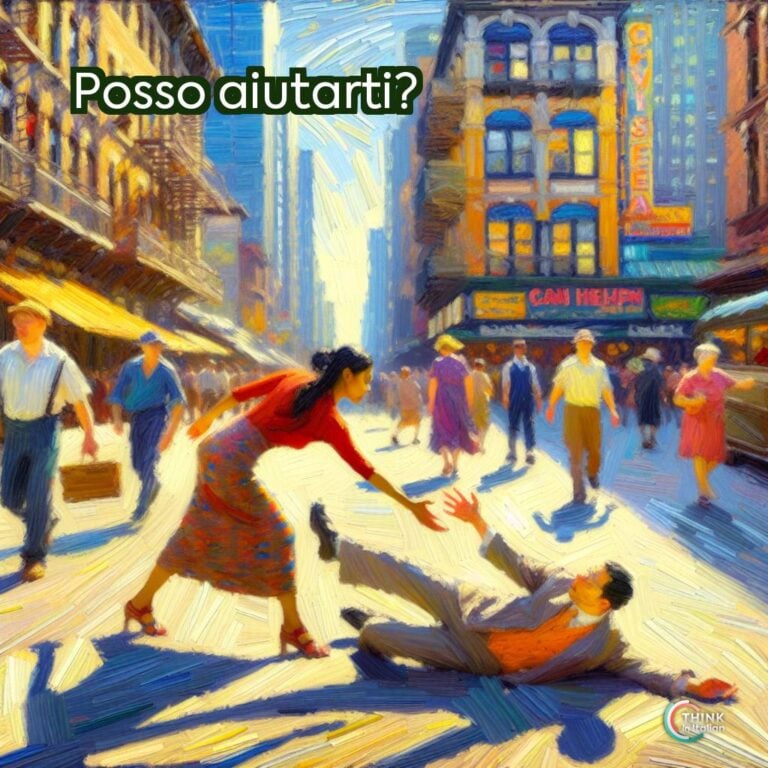
Posso aiutarti?
Posso aiutarti?
Posso aiutarti?
Published Feb 25, 2022
Updated Jul 25, 2024
Reviewed by
Italian language tutor, course author. MEng, MBA. Member of the International Association of Hyperpolyglots (HYPIA). After learning 12 languages, I can tell you that we all master languages by listening and mimicking. I couldn’t find an app to recommend to my students, so I made my own one. With my method, you’ll be speaking Italian from Lesson 1.
Written by
No data was found

Key Takeaways

  • Greetings are essential; use Ciao for casual encounters, and buongiorno or buonasera based on the time of day.
  • Respect formality by addressing strangers with Lei instead of tu, especially when speaking to older individuals.
  • Engage in small talk about the weather, food, or sports to create a friendly atmosphere and keep conversations flowing.
  • Offering compliments can foster genuine interactions; be sincere and avoid overly personal remarks to build rapport.
  • Use local phrases like allora and dai to sound more like a local and enhance your conversational skills.

Stefano's Insights

Play to see captions...
Ah, l'arte della conversazione in Italia! Non è solo uno scambio di parole, ma un modo per creare legami profondi. I saluti sono fondamentali: 'Ciao' è universale, ma 'salve' è il mio asso nella manica quando 'buongiorno' e 'buonasera' non vanno bene. La formalità è importante: usiamo 'Lei' per rispetto. Un po' di 'small talk' su meteo o cibo rompe il ghiaccio, e un complimento sincero apre molte porte. Ricordo ancora quando un complimento sul mio accento mi ha fatto guadagnare un amico a Roma! Impegnati a parlare come un locale e vedrai che le conversazioni diventeranno esperienze significative. E se non sei pronto, inizia con un tutor AI, ma poi esci e parla!
Ah, the art of conversation in Italy! It's not just an exchange of words, but a way to create deep bonds. Greetings are essential: 'Ciao' is universal, but 'salve' is my ace when 'buongiorno' and 'buonasera' don't fit. Formality matters: we use 'Lei' out of respect. A bit of small talk about weather or food breaks the ice, and a sincere compliment opens many doors. I still remember when a compliment on my accent earned me a friend in Rome! Commit to speaking like a local and conversations will become meaningful experiences. And if you're not ready, start with an AI tutor, but then go out and talk!

Quick facts

How important are conversations in Italian culture?

Conversations in Italy are a cornerstone for building and strengthening relationships, allowing for deep emotional connections and genuine reciprocal interest.

Where can one observe the Italian conversational style?

Italian conversational style is evident in local cafés, markets, family gatherings, and social events, characterized by expressive gestures and facial expressions.

What is the simplest way to greet someone in Italy?

The simplest greeting is "Ciao," which means both hello and goodbye and is suitable for casual settings.

When should you use "buongiorno" and "buonasera"?

"Buongiorno" is used in the morning, and "buonasera" is used starting from after lunch.

What is the best greeting for uncertain times of the day?

"Salve" is a formal yet flexible greeting perfect for times when it's too late for "buongiorno" but too early for "buonasera."

How does formality impact Italian social interactions?

Using "Lei" (formal you) instead of "tu" (informal you) shows respect, especially towards older individuals, and sets a polite tone.

Why is small talk significant in Italy?

Small talk about weather, food, or sports warms up conversations and helps fill gaps, making interactions more pleasant.

What topics are particularly effective for starting a conversation in Italy?

Discussing favorite meals or the weather can effectively start conversations, as food and wine are integral to Italian culture.

How can compliments enhance interactions in Italy?

Sincere, non-personal compliments can open doors to genuine interactions and help form new friendships quickly.

How can one sound more like a local in Italy?

Using local phrases or slang like “allora” (so, well) or “dai” (come on) demonstrates effort and respect, making you sound less like a tourist.

Audio images

🔊
Posso aiutarti?
🔊
Andiamo a prendere un caffè.
🔊
Il tempo è bello oggi.
🔊
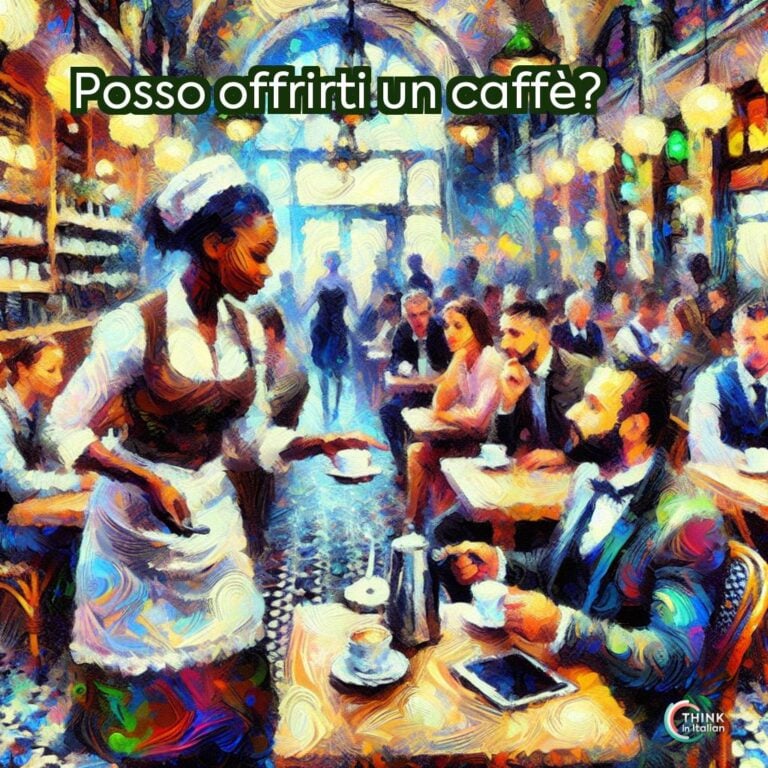
Posso offrirti un caffè?
🔊
Posso aiutarti?
🔊
Mi chiamo Luca, piacere di conoscerti.
Learn on the go
Install the FREE Think In Italian app for faster loading, offline mode, and quick access anytime.
No registration needed. Works on all devices. Ready in 1 click and 3 seconds.

Main Article

The Art of Making Conversation in Italy

Conversations hold an important role in Italian culture: they are a way to build and strengthen relationships, not only to exchange information but also to connect on a deeper emotional level, allowing interlocutors to share experiences and display genuine reciprocal interest.

This cultural emphasis on dialogue is evident in everyday life, from discussions in local cafés and markets to family gatherings and social events. Italians are really good at engaging in conversations, thanks to their expressive communication made of gestures and facial expressions.

If you are looking for a way to have conversations like a real local, then read this article and practice your conversational skills.

How to Start a Conversation in Italian

Greetings

The first thing you want to be able to do when you arrive in Italy is to greet the people you meet. The Italian “Ciao” is the simplest greeting, which means both hello and goodbye, and is suitable for casual settings.

Ciao! Come stai?

Hi! How are you?

As an alternative, you can say buongiorno or buonasera, to say respectively “good morning” and “good evening”. In Italian, we usually say buongiorno in the morning only, and buonasera starting from after lunch.

However, even though I am an Italian native speaker, I always feel there are a couple of hours during the day when it is too late to say buongiorno and too early to say buonasera. And this is the moment when I play the salve card!

The Italian greeting word “salve” is a formal “hello” that you can use in less casual contexts. I love this word because it is the safest bet to greet someone if you don’t know whether you should use “buongiorno” or “buonasera”.

Understanding Formality
Italy values formality in many social contexts. When addressing someone you don’t know, especially if they’re older, it’s respectful to use “Lei” (formal you) instead of “tu” (informal you).

Not only does this shift show respect, but it also sets the tone for a polite and formal interaction. However, if you decide to use the formal leimake sure you properly conjugate the verbs in the third person singular!

Buongiorno Signora Rossi! Come sta?

Good morning Madam Rossi! How are you?

Small Talk

If you ever traveled to Rome, you might have noticed that Italians always appreciate a good small talk. Simply talking about the weather, food, or sports, can be an easy way to warm things up and lighten the conversation.

Small talk is essential in Italian culture, and if you’re trying to learn Italian, this will help you fill conversational gaps in and keep the exchange going.

Che bel tempo oggi!

Such a nice weather today!

Of course, food and wine are crucial to the Italian culture. Starting a conversation by asking something about someone’s favorite meal is always a good way to make a new friend.

Qual è il tuo piatto preferito?

What is your favorite dish?

Compliments Open Doors

Offering a sincere compliment is something I found universally effective. In Italy, complimenting someone can open up more genuine interactions. Just be sincere and not too personal, and you will have new Italian friends in no time!

Also, first impressions matter. Show that you care about bonding with the Italian culture: use local phrases or slang to demonstrate effort and respect. Phrases like allora (so, well) or dai (come on) will make you sound more like a local and less like a tourist.

Free Guide
How to Learn Languages Fast

Embracing these conversational tools will not only smooth you social interactions in Italy, but it will also enrich your cultural experience. Starting conversations like a local opens doors to deeper connections and more meaningful experiences.

Start by informally greeting someone with “Ciao”, and then get ready to engage in fun and stimulating conversations with Italians.

Do not be too shy to share your thoughts and ideas! Italians really appreciate the effort and are often willing to help, so I promise you will enjoy your interactions and will not feel awkward in any social context!

If you don’t feel ready yet, you can try having a conversation with our AI tutor. But then, promise me you’ll go out and simply talk!

Key Terms and Concepts

Ciao

An informal Italian greeting used for both 'hello' and 'goodbye.' Suitable for casual settings and easily recognizable worldwide.

Buongiorno / Buonasera

Used to greet someone with 'good morning' (buongiorno) or 'good evening' (buonasera). Buongiorno is used in the morning; buonasera after lunch.

Salve

A formal Italian greeting used as a safe option when unsure whether to use buongiorno or buonasera. It translates to 'hello' in less casual contexts.

Lei (Formal You)

The formal Italian pronoun for 'you,' used in respectful interactions, particularly when addressing strangers or elders. Requires verbs to be conjugated in the third person singular.

Allora

An Italian discourse marker meaning 'so' or 'well.' Commonly used to start or transition conversations, giving you a more local and authentic sound.

Test your knowledge in 10 quick questions

Words

CiaoHello
BuongiornoGood morning
BuonaseraGood evening
LeiYou (formal)
TuYou (informal)
TempoWeather
CiboFood
SportSports
ComplimentoCompliment
AlloraSo/Then
DaiCome on

Phrases

CiaoHello
BuongiornoGood morning
BuonaseraGood evening
Come stai?How are you?
Piacere di conoscertiNice to meet you
Parli inglese?Do you speak English?
Che tempo fa oggi?What's the weather like today?
Ti piace lo sport?Do you like sports?
Complimenti!Compliments!
AlloraSo/Then

Sentences

Ciao, come stai?

Hi, how are you?

Buongiorno, è un piacere conoscerla.

Good morning, it's a pleasure to meet you.

Che tempo fa oggi?

How's the weather today?

Adoro il tuo cappotto, è davvero elegante!

I love your coat, it's really stylish!

Allora, cosa ti piace fare nel tempo libero?

So, what do you like to do in your free time?

Match the Phrases

Memory game

Flip the cards to find matching pairs!

Crossword

Across
Down
Answers

FAQs

How to start learning Italian?

To start learning Italian, you can begin with basic language learning materials like textbooks, apps, and online resources. It's also helpful to practice speaking and listening with native speakers or language exchange partners.

What is the first thing you should learn when learning Italian?

When learning Italian, the first thing you should learn is the basics of Italian pronunciation, including the sounds of vowels and consonants. This will help you to develop a good accent and be able to communicate effectively in Italian. Additionally, learning some basic Italian greetings and phrases will allow you to start communicating with native speakers right away.

think in italian reddit

The comments section has moved to the Think In Italian Reddit community. Join today!

Italian word of the day
testo
In che lingua tradurranno il testo?
What language are they translating the text to?

What's new

stefano lodola italian teacher (1)
30 Free Courses to Get You Started ($40 Value)
italian audio lesson preview
italian audio reading preview
italian ai tutor preview
"I've tried other apps like Babbel and Memrise. None made me fluent or made me feel like I was making much meaningful progress in learning a language."
testimonial 2
Ecem Topcu
Aug 7, 2025