
Start Learning Italian
Learning Italian – or any new language – is best approached step by step: the journey begins with common words and common phrases, to get familiar with the structure of Italian sentences to start expressing essential concepts.
They will serve as your survival toolkit, enabling you to navigate daily life, connect with locals, and immerse yourself in Italian culture.
In this comprehensive guide I will combine essential sentences, cultural insights, and practical tips to help you confidently start your Italian journey.
Italian Sentences
Greetings and Introductions
Greetings set the tone for any conversation in Italian. Make sure you use the right phrase depending on the situation:
- Ciao! – Hi/Bye! (informal)
- Salve! – Hi! (neutral/formal)
- Buongiorno! – Good morning/afternoon!
- Buonasera! – Good evening!
- Come stai? – How are you? (informal)
- Come sta? – How are you? (formal)
Introduce yourself with confidence:
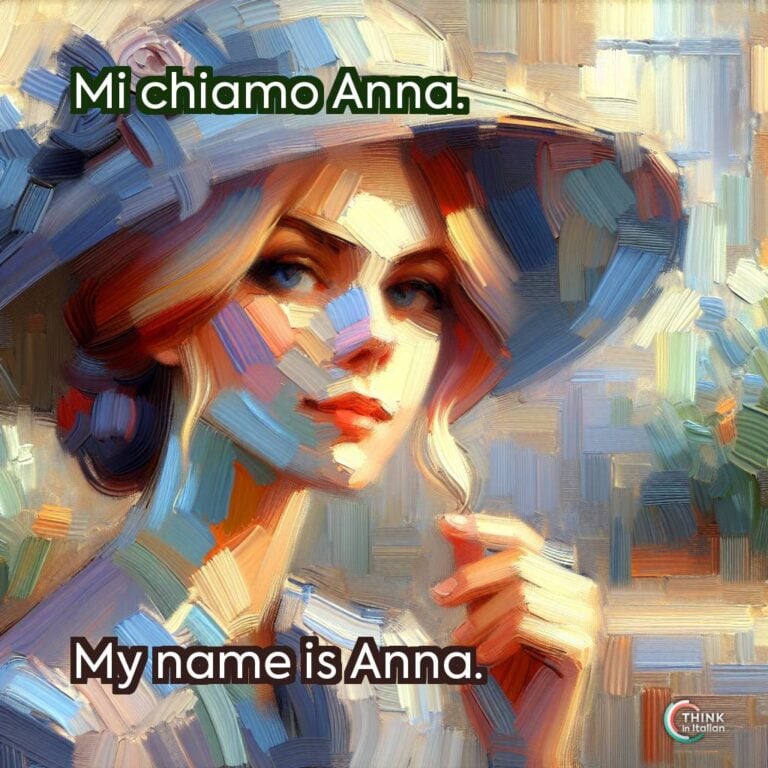
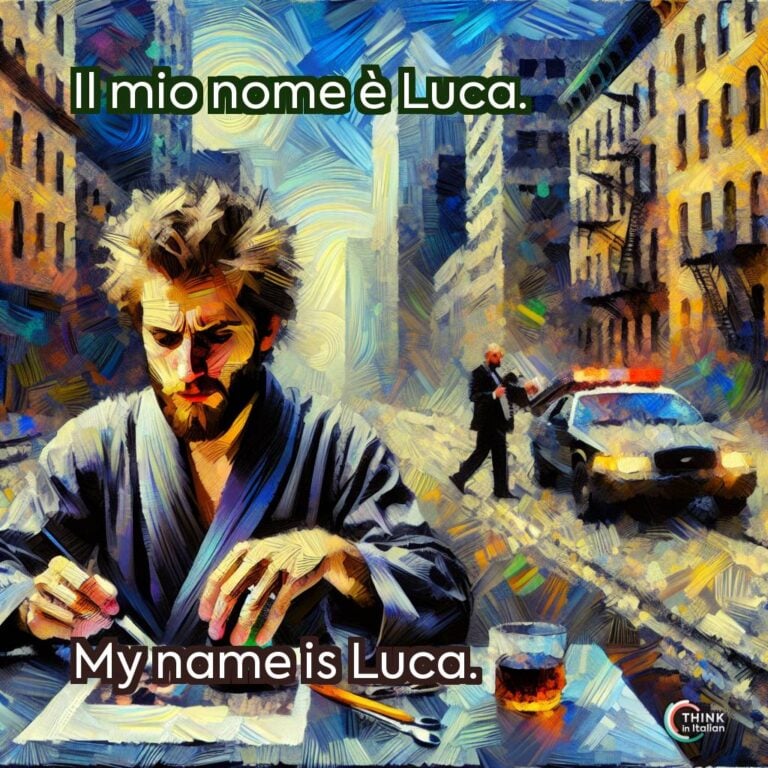
- Mi chiamo [nome]. – My name is [name].
- Piacere! – Nice to meet you! (neutral)
- Sono di [città/nazione]. – I’m from [city/country].
- Ho [numero] anni. – I’m [number] years old.
Ciao, mi chiamo Anna. Sono di Roma e ho 25 anni.
Hi, my name is Anna. I’m from Rome, and I’m 25 years old.
Polite Expressions
Politeness is deeply valued in Italian culture. These phrases help you navigate interactions respectfully:
- Per favore. – Please.
- Grazie. – Thank you.
- Prego. – You’re welcome.
- Mi scusi. – Excuse me. (formal)
- Scusa. – Excuse me/sorry. (informal)
- Non capisco. – I don’t understand.
- Può ripetere? – Can you repeat?
Mi scusi, può ripetere per favore?
Excuse me, can you repeat that, please?
Essential Questions
Basic questions keep conversations flowing:
- Che cos’è? – What is it?
- Chi è? – Who is it?
- Dove sei? – Where are you? (informal)
- Quando? – When?
- Perché? – Why?
Perché studi italiano?
Why are you studying Italian?
Asking for Directions
If you’re exploring a city or locating landmarks, these phrases are indispensable:
- Dov’è [posto]? – Where is [place]?
- Come arrivo a [place]? – How do I get to [place]?
- A sinistra. – To the left.
- A destra. – To the right.
- Sempre dritto. – Straight ahead.
Mi scusi, dov’è la stazione?
Excuse me, where is the station?
Transportation
Being able to navigate means of transports in Italy is another essential skill.
Quanto costa un biglietto?
How much is a ticket?
A che ora parte il treno?
What time does the train leave?
Questo autobus va a [place]?
Does this bus go to [place]?
Dining and Shopping
Italy’s food culture is legendary. Knowing how to order is essential:
- Vorrei [piatto]. – I would like [dish].
- Che cosa mi consiglia? – What do you recommend?
- Il conto, per favore. – The bill, please.
Vorrei una pizza margherita e un bicchiere di vino rosso.
I’d like a margherita pizza and a glass of red wine.
- Quanto costa? – How much does it cost?
- Posso provare questo? – Can I try this on?
- C’è una taglia più grande/piccola? – Is there a bigger/smaller size?
Quanto costa questa maglietta?
How much does this T-shirt cost?
Asking for Help
Knowing how to ask for help can be crucial:
- Ho bisogno di aiuto. – I need help.
- Dov’è il bagno? – Where is the bathroom?
- Può chiamare un’ambulanza? – Can you call an ambulance?
- Non mi sento bene. – I don’t feel well.
Non mi sento bene. Può portarmi al pronto soccorso?
I don’t feel well. Can you take me to the emergency room?
How to Build Your Confidence
Start Simple
The Italian language thrives on clarity. Begin with simple sentences that include a subject and a verb. Remember that most Italian sentences omit the subject, though!
Sono stanco.
I’m tired.
Ho fame.
I’m hungry.
Voglio uscire.
I want to go out.
Expand Gradually
As you grow more comfortable, expand your vocabulary and grammar. Check tips to memorize vocabulary in Italian, and start combining basic words to form more complex ideas.
Practice Daily
Use these sentences every day. Whether you’re speaking with a native Italian, creating imaginary conversations, or using flashcards, daily practice solidifies your skills.