
Understanding Apostrofo, Elisione, and Troncamento in Italian

An interactive lesson guiding you from key takeaways to expert insights. Comes with Q&A, useful vocabulary, interactive audio, quizzes and games.

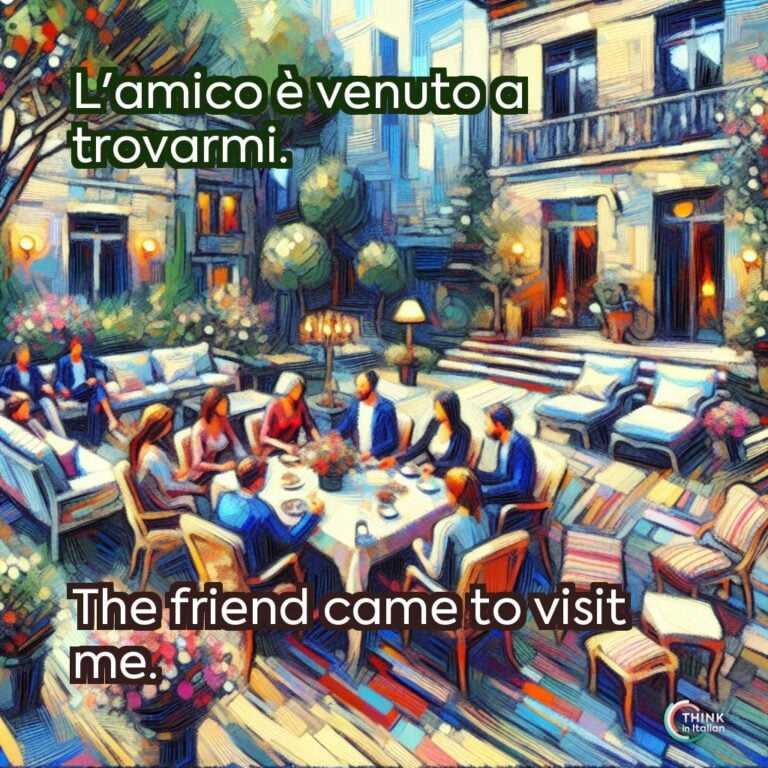
L'amico è venuto a trovarmi.
Published Feb 13, 2024
Updated Oct 16, 2024
Reviewed by
Italian language tutor, course author. MEng, MBA. Member of the International Association of Hyperpolyglots (HYPIA). After learning 12 languages, I can tell you that we all master languages by listening and mimicking. I couldn’t find an app to recommend to my students, so I made my own one. With my method, you’ll be speaking Italian from Lesson 1.
Written by
No data was found

Key Takeaways

  • The apostrophe in Italian indicates elisione and troncamento, helping to create smoother and more fluid speech.
  • Elision occurs when a word ending in a vowel is followed by another starting with a vowel or mute "h", merging them with an apostrophe.
  • Truncation involves permanently shortening a word, often by dropping the final vowel, and does not always require an apostrophe.
  • Examples of elisione include l’amica from la amica and l’uomo from lo uomo.
  • Common truncations include gran from grande and san or sant’ from santo.

Stefano's Insights

Play to see captions...
Ah, l'apostrofo italiano! Non è solo un segno di punteggiatura, ma un'arte. L'elisione e il troncamento sono i due protagonisti di questa danza linguistica. L'elisione avviene quando una vocale scompare davanti a un'altra vocale o una h muta, come in 'l'amico'. Il troncamento, invece, accorcia le parole, come 'l'ho visto'. Ricordo quando imparai queste regole: mi sembrava di risolvere un puzzle linguistico! Non usiamo mai l'apostrofo per il possesso, quindi niente 'Maria's pizza', ma 'la pizza di Maria'. Ecco un trucco: se sei in dubbio, consulta un dizionario o chiedi a un madrelingua. Questo ti aiuterà a evitare errori e a mantenere la tua comunicazione fluida. E ricorda: sbagliare un apostrofo in italiano è come versare il caffè sul tuo vestito bianco preferito: meglio evitare!
Ah, the Italian apostrophe! It's not just punctuation, it's an art. Elision and truncation are the stars of this linguistic dance. Elision happens when a vowel disappears before another vowel or a mute h, like in 'l'amico'. Truncation shortens words, like 'l'ho visto'. I remember learning these rules: it felt like solving a linguistic puzzle! We never use the apostrophe for possession, so no 'Maria's pizza', but 'la pizza di Maria'. Here's a tip: if in doubt, consult a dictionary or ask a native speaker. This will help you avoid mistakes and keep your communication smooth. And remember: messing up an apostrophe in Italian is like spilling coffee on your favorite white dress: best avoided!

Quick facts

What are the two functions of apostrophes in Italian language?

Apostrophes in Italian serve two functions: elision and truncation.

How does elision work in Italian?

Elision occurs when a vowel at the end of a word is dropped before another word starting with a vowel or mute h.

What does troncamento mean in Italian grammar?

Troncamento is the process of shortening words by replacing certain syllables with an apostrophe.

How is possession shown in Italian language?

In Italian, possession is shown by placing an article before the noun, not by using apostrophes as in English.

How can one ensure accuracy in using apostrophes in Italian?

Use a trusted Italian dictionary or get help from native speakers or language experts.

What is the role of apostrofo, elisione, and troncamento in Italian?

They help in combining words, omitting vowel sounds, and shortening words, making speech smoother and fluid.

What is the difference between elision and troncamento?

Elision omits a vowel before a word starting with a vowel, while troncamento removes the last vowel before a word starting with a consonant.

Can you give examples of words using apostrofo, elisione, and troncamento?

Examples include "l'arancia" (apostrofo), "dall'estero" (elisione), and "ragazz'" (troncamento).

What are some common mistakes with Italian apostrophes?

Common mistakes include dropping the apostrophe in elision, using an apostrophe instead of a missing vowel, and placing the apostrophe incorrectly in troncamento.

How important is mastering the use of apostrophes in Italian?

It's essential for effective communication, maintaining language integrity, and improving one's fluency in Italian.

Audio images

🔊
Lo studente prende l'autobus.
🔊
L'amico è venuto a trovarci.
🔊
L'amico è venuto a trovarmi.
Learn on the go
Install the FREE Think In Italian app for faster loading, offline mode, and quick access anytime.
No registration needed. Works on all devices. Ready in 1 click and 3 seconds.

Main Article

Apostrophe, Elision, and Truncation in Italian

Italian is celebrated for its smooth and flowing sound. On the one hand, this is due do the fact that most Italian words end with a vowel.

On the other hand, it is thanks to some essential linguistic tools, like apostrofo (apostrophe), elisione (elision), and troncamento (truncation).

In Italian, the apostrophe is a graphic symbol used to indicate both elision and truncation, two mechanisms that streamline sentences, making them easier to pronounce and helping maintain the natural rhythm of the language.

Basically, the apostrophe marks where parts of words have been omitted for smoother pronunciation, due to either elision or truncation.

Although apostrofo, elisione, and troncamento follow different rules, they work together to ensure that Italian remains as fluid and melodic as possible.

Here, I will show you how the apostrophe is used in Italian when truncation and elision are needed.

Apostrophe in Italian

Elision

Elision occurs when two words are placed next to each other and the first word ends with a vowel while the next one begins with a vowel or a mute “h”. Its use makes sure that awkward pauses are avoided when speaking.


Learn Italian on the go
Learn in the car with Think in Italian

The apostrophe is inserted in place of the missing vowel to show that the two words have been merged. This process is most commonly seen with definite articles and indefinite articles, prepositions, and pronouns, for example:

  • la amica becomes l’amica (the friend, female)
  • lo uomo becomes l’uomo (the man)
  • di estate becomes d’estate (in the summer)

There are some cases where elision is not possible: with plural articles, and with the masculine singular indefinite article un. Let me show you some examples:

  • le amiche (the female friends)
  • gli alberi (the trees)
  • un uomo (a man)
  • un albero (a tree)

Truncation

Truncation involves the permanent shortening of a word, usually by dropping the final vowel or syllable. Unlike elision, most of the truncated forms are fixed. When this is the case, no apostrophe is needed.

Truncation is commonly used with adjectives that precede masculine nouns and, depending on whether or not the next word starts with a vowel, it can makes use of the apostrophe to mark this change, as you can see from the examples below:

  • GrandeGran

Grande (big/great) is truncated to gran before singular nouns, whether the noun starts with a vowel or a consonant. No apostrophe is needed because the truncation is fixed.

    • Un gran giorno (a great day)
    • Una gran occasione (a great opportunity)
  • SantoSan / Sant’

The word santo (saint) is truncated in two ways: it becomes san before a name that starts with a consonant, and it becomes sant’ before a name that begins with a vowel, with an apostrophe marking the omitted “o”.

    • San Marco (Saint Mark)
    • Sant’Antonio (Saint Anthony)
  • BuonoBuon

Buono (good) is truncated to buon before all masculine nouns, whether they start with a consonant or a vowel. No apostrophe is needed.

    • Un buon amico (a good friend)
    • Un buon uomo (a good man)
Free Guide
How to Learn Languages Fast

When the noun is feminine, neither truncation nor elision are necessary:

    • Una buona amica (a good friend)
  • BelloBel / Bell’

The adjective bello (beautiful/handsome) is truncated as bel before singular masculine nouns that take the article il, without an apostrophe, and as bell’ before masculine or feminine nouns that begin with a vowel, with an apostrophe:

    • Un bel libro (a beautiful book)
    • Un bell’amico (a handsome friend, male)
    • Una bell’amica (a beautiful friend, female)
  • UnoUn

The indefinite article uno is truncated to un before masculine nouns, whether the noun starts with a vowel or consonant. No apostrophe is used.

    • Un albero (a tree)
    • Un uomo (a man)

The adverb poco (a little) is truncated to po’, with an apostrophe indicating the omission of the final letters “co”.

    • Un po’ di tempo (a little time)
    • Aspetta un po’ (wait a little)

Key Terms and Concepts

Apostrofo

A graphic symbol in Italian that indicates both elisione and troncamento, marking where parts of words are omitted for smoother pronunciation.

Elisione

Occurs when two Italian words are placed together, and the first ends with a vowel while the next begins with a vowel or a mute 'h', to avoid awkward pauses.

Troncamento

The permanent shortening of a word, usually by dropping its final vowel or syllable. Unlike elisione, it often doesn't require an apostrophe.

Definite Article Elision

In Italian, definite articles like la and lo elide before vowels, becoming l’, enhancing sentence fluidity.

Adjective Truncation

A process where adjectives like grande and buono are shortened to gran and buon before nouns, depending on the following letter.

Truncation of Santo

The word santo truncates to san before consonants and sant’ before vowels, marking the omission with an apostrophe.

Poco Truncation

The adverb poco is truncated to po’, using an apostrophe to indicate the omission of the final 'co.'

Test your knowledge in 10 quick questions

Words

l'amicothe friend
l'isolathe island
l'orathe hour
l'acquathe water
l'hoI have
dell'amoreof the love
l'albathe dawn
l'erbathe grass
l'hotelthe hotel
l'ideathe idea

Phrases

l'amicothe friend
l'animathe soul
l'ho vistoI saw it
l'alberothe tree
un'amicaa friend (female)
un'orologioa watch
dell'acquasome water
sull'erbaon the grass
nell'ombrain the shadow
questo è l'this is the

Sentences

L'amore è un sentimento profondo.

Love is a deep feeling.

L'ho visto ieri al mercato.

I saw him yesterday at the market.

L'amica di Sara è arrivata tardi.

Sara's friend arrived late.

L'estate in Italia è molto calda.

Summer in Italy is very hot.

Non l'ho mai incontrato prima.

I have never met him before.

Match the Phrases

Memory game

Flip the cards to find matching pairs!

Crossword

Across
Down
Answers
think in italian reddit

The comments section has moved to the Think In Italian Reddit community. Join today!

Italian word of the day
d’oliva
È finito l’olio d’oliva. Dovremo comprarne ancora.
We ran out of olive oil. We’ll have to buy some more.

What's new

stefano lodola italian teacher (1)
30 Free Courses to Get You Started ($40 Value)
italian audio lesson preview
italian audio reading preview
italian ai tutor preview
"I've tried other apps like Babbel and Memrise. None made me fluent or made me feel like I was making much meaningful progress in learning a language."
testimonial 2
Ecem Topcu
Aug 7, 2025