What Language Do Italians Speak?
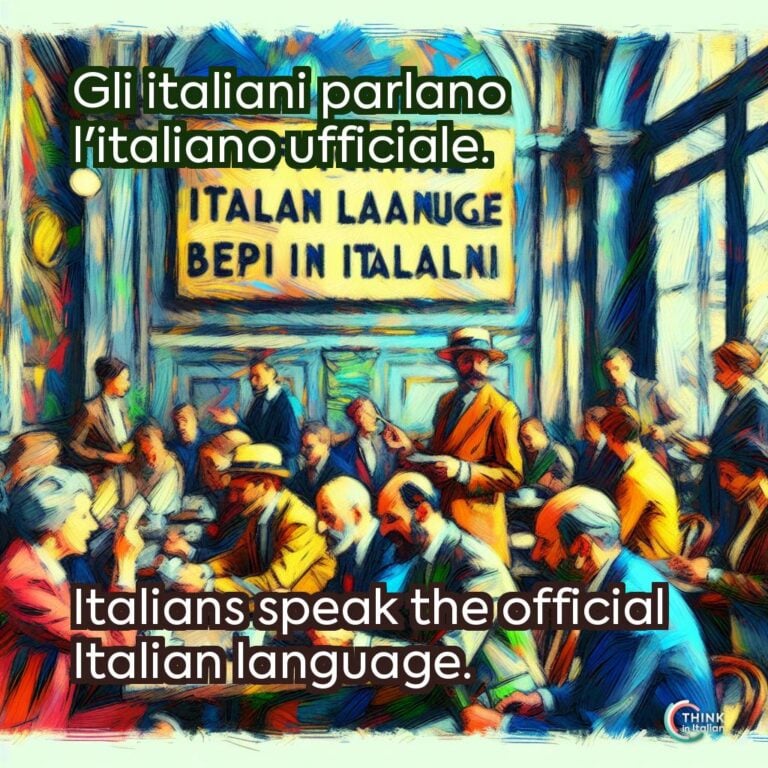
Italians speak Italian (italiano), the official language of Italy. Alongside it, Italy has many regional languages and dialects, and 12 minority languages, such as German, French, Sardinian and Friulian, are protected by national law.
The Italian language, also known as Italiano, is a Romance language that originated in Italy. It is the official language of Italy, San Marino, Switzerland (Ticino and parts of Graubünden), and Vatican City. It is one of the official languages of the European Union.
Italian is spoken by approximately 85 million people worldwide, with the majority residing in Italy. It is also spoken by Italian communities and descendants in other countries, making it one of the most widely spoken languages globally.
The Italian language has a rich history and is known for its melodic sound and expressive nature. It has influenced various other Romance languages and has contributed significantly to literature, art, music, and culture.
Knowing the Italian language can enhance communication and cultural understanding when visiting or interacting with Italian-speaking regions.
The Official Language of Italy
The official language of Italy is Italian. This is written into Italian law: Law 482/1999 states that the official language of the Republic is Italian.
Italian, a Romance language, is spoken by the majority of the population in Italy. It is also one of the official languages of Switzerland, San Marino, Vatican City, and Istria County in Croatia. Italian is derived from Latin and has its roots in the Tuscan dialect.
While Italian is the dominant language, there are also several regional languages and dialects spoken in different parts of Italy. These include Sicilian, Neapolitan, Sardinian, Venetian, and many others. These regional languages often have their unique characteristics and influences.
Italian is widely taught in schools throughout Italy and is the primary language used in government, education, media, and business. It is a language rich in history and culture, playing a significant role in the arts, literature, and music.
So, when it comes to the language spoken in Italy, the answer is unequivocally Italian.
Is Italian the Only Language Spoken in Italy?
Italian is not the only language spoken in Italy. While Italian is the official language of the country, there are also numerous regional languages and dialects spoken throughout Italy.
These regional languages vary in pronunciation, vocabulary, and grammar, reflecting the diverse cultural and historical influences in different regions. Some of the regional languages in Italy include Sicilian, Venetian, Neapolitan, and Sardinian.
These languages have their own unique characteristics and are often spoken alongside or even instead of Italian in their respective regions.
According to the latest ISTAT survey (data from 2024, published in January 2026), 53.6% of people aged six and over speak only or mainly Italian with their family, 9.6% speak only or mainly dialect, and 7.7% speak another language. Dialect use has fallen sharply in a generation, but dialects are still part of everyday life for many families. The use of regional languages is deeply rooted in local traditions, family upbringing, and cultural identity. While Italian remains the language of communication and education, regional languages have continued to play a significant role in preserving local heritage and fostering a sense of regional pride.
The recognition and preservation of regional languages in Italy have been a topic of debate and active efforts from various linguistic organizations and cultural associations. These initiatives aim to protect and promote linguistic diversity within the country. It is essential to acknowledge and respect the presence of these regional languages alongside Italian in order to fully appreciate the linguistic richness of Italy.
Fun fact: Italy has the highest number of UNESCO World Heritage Sites in the world.
Languages Recognized by Italian Law
Besides Italian, the Italian state recognizes and protects 12 historical linguistic minorities under Law 482/1999. In some areas one of these languages also has co-official status: French in the Aosta Valley, German in South Tyrol, Ladin in the Ladin valleys and Slovene in parts of Friuli Venezia Giulia.
| Language | Where it is spoken |
|---|---|
| Albanian (Arbëresh) | Communities in southern Italy and Sicily |
| Catalan | Alghero, in Sardinia |
| German (and other Germanic varieties) | South Tyrol and some other Alpine areas |
| Greek (Griko) | Parts of Salento (Puglia) and Calabria |
| Slovene | Friuli Venezia Giulia, around Trieste and Gorizia |
| Croatian | Molise |
| French | Aosta Valley |
| Franco-Provençal | Aosta Valley, some valleys in Piedmont, and two towns in Puglia |
| Friulian | Friuli |
| Ladin | The Dolomite valleys |
| Occitan | Alpine valleys of Piedmont, and Guardia Piemontese in Calabria |
| Sardinian | Sardinia |
Sicilian, Neapolitan, Venetian and Lombard are not on this list. In Italy they are usually called dialects, and many linguists consider them separate Romance languages. I cover them in my guide to the Italian dialects, and you can find more on how they relate to standard Italian in Italian language facts.
Italy also has a sign language: Italian Sign Language (LIS), which the Italian Parliament recognized in 2021.
The Italian Language
Italy, the birthplace of art, fashion, and mouthwatering cuisine, isn’t just famous for these things—it’s also renowned for its language. In this section, we’ll dive into the captivating world of the Italian language. From its fascinating history and origins to its unique characteristics and features, we’ll uncover the linguistic wonders that make Italian a cherished and melodious tongue. Prepare to be enchanted by the magic of Italian as we unravel its secrets in the next few paragraphs.
History and Origins of the Italian Language
The history and origins of the Italian language can be traced back to the Latin language spoken during the Roman Empire. The Latin language, which was the official language of the Roman Empire, had a significant influence on the development of Italian. Over time, Latin evolved and transformed, giving birth to what is now known as Italian.

During the Middle Ages, regional variations of Latin started to emerge in different parts of Italy, thus leading to the emergence of distinct regional languages. These variations were influenced by local dialects and cultural differences. As a result, the Italian language began to diverge into various regional languages.
In the 13th and 14th centuries, the renowned Italian poet Dante Alighieri played a vital role in shaping the modern Italian language. Dante’s famous work, “The Divine Comedy,” was written in a form of Italian that closely resembled the vernacular of Florence, his hometown. This particular form of Italian became the foundation upon which the standardized Italian language was built.
With the arrival of the Italian Renaissance in the 15th century, the Tuscan dialect, similar to Dante’s vernacular, gained prominence and became the language of literature and education. Over time, it gradually gained acceptance and was eventually adopted as the official language of Italy in the 19th century.
Today, Italian, with approximately 85 million speakers worldwide, stands as the official language of Italy and is also recognized as a minority language in some neighboring countries. The history and origins of the Italian language reflect its rich heritage and cultural significance.
Characteristics and Features of Italian
| Characteristics | Features |
|---|---|
| Phonetics | Italian has a consistent pronunciation system where each letter or combination of letters represents a specific sound. The alphabet has 21 letters, and standard Italian has seven vowel sounds. |
| Grammar | Italian grammar is characterized by its gendered nouns (masculine and feminine), articles that agree in gender and number, verb conjugations based on tense, mood, and subject, and a complex system of pronouns. |
| Vocabulary | Italian vocabulary is derived from Latin, and it shares many similarities with other Romance languages. It also has a rich collection of words and expressions that are unique to Italian culture and history. |
| Verb Tenses | Italian has a comprehensive system of verb tenses, including present, past, future, conditional, and subjunctive forms. Verbs are conjugated based on the subject and can convey precise actions and states. |
| Phrases and Idioms | Italian is known for its beautiful phrases and idiomatic expressions that add color and richness to the language. These phrases often reflect the passion and poetry of Italian culture. |
| Regional Variations | Italian exhibits regional variations in pronunciation, vocabulary, and grammar. Certain regions have their own dialects, such as Venetian, Neapolitan, and Sicilian, which can differ significantly from Standard Italian. |
| Musicality | Italian is considered a musical language due to its natural rhythm and melody. The language flows smoothly and is often associated with opera, classical music, and poetry. |
These characteristics and features make Italian a unique and expressive language, cherished by both native speakers and language learners alike. Whether you’re captivated by its phonetics, fascinated by its grammar, or drawn to its rich vocabulary, studying Italian can be a rewarding and enriching experience.
Variations and Dialects of Italian
Italian language is a rich tapestry of variations and dialects that reflect the diverse cultural landscape of Italy. In this section, we’ll dive into the intriguing world of regional dialects across Italy, exploring their distinct flavors and influences. We’ll also take a closer look at the fascinating interplay between the standard Italian language and these regional dialects, uncovering the unique characteristics that set them apart. Get ready to embark on a linguistic journey through Italy like no other!
Regional Dialects in Italy
Regional dialects in Italy contribute to the linguistic diversity of the country. These dialects have their own distinct characteristics and variations in different regions. Italy has dozens of regional dialects and languages, including well-known ones like Sicilian, Neapolitan, Venetian, and Milanese. Historical, cultural, and geographical factors have shaped these dialects, which have also been influenced by various languages over time.
Regional dialects in Italy can differ significantly from Standard Italian in terms of pronunciation, vocabulary, and grammar. This often makes them unintelligible to speakers of other dialects or even Standard Italian. While Standard Italian is predominantly used in formal and official settings, education, and media, regional dialects are more prevalent in informal and everyday conversations.
If you’re planning to travel to different regions of Italy, learning some basic phrases or expressions in the local dialect can be beneficial. It not only enhances your interaction with locals but also shows an appreciation for their cultural heritage.
Standard Italian vs. Regional Dialects
When discussing the Italian language, it is important to understand the differences between Standard Italian and Regional Dialects. Here are some key points to consider:
- Standard Italian: This is the official language of Italy and is based on the Tuscan dialect. It is the variety of Italian that is taught in schools and used in formal settings. Standard Italian is used in government, media, and business interactions throughout the country. It serves as a unifying language for all Italians, regardless of their regional dialects.
- Regional Dialects: Italy is known for its rich linguistic diversity, with various regions having their own distinct dialects. These dialects evolved from Vulgar Latin and have unique grammar, vocabulary, and pronunciation. Some popular Regional Dialects include Sicilian, Neapolitan, and Venetian. Regional Dialects are commonly spoken in informal, everyday situations among local communities.
- Dialect Variation: The variations between Standard Italian and Regional Dialects are extensive. While Standard Italian follows a standardized grammar and vocabulary, Regional Dialects may have different rules and vocabulary, making them somewhat distinct from one another. Regional Dialects have a strong influence on local culture and heritage, reflecting the history and traditions of each region.
- Language Choice: Italians are generally proficient in both Standard Italian and their Regional Dialects. The choice of which language to use depends on the context and the individuals involved in the conversation. Standard Italian is often used in formal situations, while Regional Dialects are preferred in informal settings among friends, family, and within local communities.
Despite the variations between Standard Italian and Regional Dialects, both play significant roles in Italian culture and identity. The preservation and promotion of Regional Dialects are essential for maintaining cultural diversity within Italy. At the same time, Standard Italian helps to foster national unity and facilitate communication between Italians from different regions.
Understanding the distinction between Standard Italian and Regional Dialects provides a deeper appreciation for the linguistic richness of Italy, showcasing the country’s historical and cultural complexities.
The Importance of Italian Language in Italy
When it comes to the importance of the Italian language in Italy, there are two key aspects to consider. We’ll delve into how Italian serves as a cultural identity, shaping the nation’s heritage and shared experiences. We’ll explore the efforts in language preservation and promotion within Italy, highlighting the significance of safeguarding and celebrating this beautiful language. So, let’s journey into the world of Italian and uncover the rich layers of its significance to the people of Italy!
Italian as a Cultural Identity
- Italian language plays a significant role in shaping the cultural identity of Italy as a nation.
- The language reflects the rich history and heritage of the Italian people, contributing to their cultural identity.
- Italian is deeply intertwined with the arts, literature, music, and cuisine of Italy, further enriching its cultural identity.
- Italian is not only a means of communication but also a symbol of Italian culture and national pride.
- Italian language promotes a sense of belonging and unity among Italians, strengthening their cultural identity.
- Italian is used in traditional ceremonies, rituals, and celebrations, reinforcing cultural traditions and affirming its role in Italian cultural identity.
- Expressions and idioms in Italian capture the unique Italian way of thinking and communicating, adding to its cultural identity.
- The Italian language is a vehicle for preserving and transmitting Italian cultural values, contributing to its cultural identity.
- Speaking Italian connects individuals to their Italian roots and heritage, solidifying their cultural identity.
- Italian language fosters a sense of cultural identity among Italians living abroad, helping them maintain a connection with their Italian cultural heritage.
Italian language is not just a means of communication but also a means of preserving and nurturing the cultural heritage of Italy. It is a source of pride and identity for Italians, connecting them to their history, traditions, and values. Through the Italian language, Italians celebrate their cultural richness and pass it on to future generations.
Language Preservation and Promotion in Italy
When it comes to language preservation and promotion in Italy, there are several crucial factors to consider.
The Italian government highly values the importance of preserving and promoting the Italian language as a cultural heritage. Efforts are consistently made to protect and maintain the integrity of the standardized Italian language, which serves as the official language of the country.
Italy not only recognizes but also respects the regional languages and dialects that exist within its borders. These include Sardinian and Friulian, which are protected by national law, as well as Sicilian and Lombard, which are widely spoken but not among the 12 languages covered by that law. All of them are integral parts of the cultural identity of different regions in Italy.
To actively promote the use of the Italian language and ensure its vitality, various initiatives are in place to support language education at schools and universities throughout the country. The Italian government readily acknowledges that proficiency in the Italian language is essential for effective communication, national identity, and social integration.
Organizations and institutions, both within Italy and globally, actively work towards the preservation and promotion of the Italian language. This involves advocating for Italian to be recognized as an official language in international organizations and facilitating cultural exchanges to encourage the learning of Italian worldwide.
Language preservation and promotion in Italy play a vital role in safeguarding cultural heritage, fostering national identity, and facilitating effective communication. The efforts made in this regard significantly contribute to the rich linguistic diversity and cultural tapestry of the country.
Italian Language Worldwide
Italian language not only has a rich cultural heritage but also holds a significant place worldwide. From being an official language in international organizations to having a widespread community of Italian speakers across the globe, there is so much to explore. Join me as we uncover the fascinating facts and global impact of the Italian language, from its role in international settings to its vibrant linguistic community around the world. Get ready to embark on a linguistic journey like no other!
Italian as an Official Language in International Organizations
Italian is an official language in a number of international organizations, most notably the European Union. It holds utmost importance in diplomatic meetings, conferences, and official documents. Italian is one of the 24 official languages of the European Union. It is not one of the six official languages of the United Nations, which are Arabic, Chinese, English, French, Russian and Spanish.

The presence of Italian in international organizations ensures that countries with Italian speakers and their representatives enjoy equal participation and representation. This inclusion enables effective communication among member states and facilitates the exchange of ideas and information. The official status of Italian plays a crucial role in promoting and preserving the language, safeguarding its continued relevance and significance on the international stage.
Here’s a fascinating fact: Did you know that Italian is one of the four official languages of Switzerland? Its official recognition in Switzerland beautifully exemplifies the linguistic diversity and cultural richness of the country.
Italian Speakers around the World
Italian is spoken well beyond Italy’s borders, but the numbers depend on what you count: native speakers, second-language speakers or people of Italian descent. Millions of people in Argentina, Brazil and the United States have Italian ancestry (over 17 million Americans are of Italian descent), but far fewer speak the language today. Here is where Italian has official status or a large speaking community:
| Country or territory | Status of Italian |
|---|---|
| Italy | Official language of the Republic |
| San Marino | Official language |
| Vatican City | Official language |
| Switzerland | One of the four national languages, official in Ticino and part of Graubünden |
| Slovenia | Co-official in Slovene Istria |
| Croatia | Co-official in Istria County |
| Canada | 375,645 people reported Italian as their mother tongue in the 2016 census |
Overall, about 65 million people speak Italian as a native language, and about 85 million speak it in total, counting second-language speakers. Italian is the third most widely spoken native language in the European Union.
Do Italians Speak English?
Many do, but not everyone. In the same 2024 ISTAT survey, 69.5% of people aged six and over said they know at least one foreign language, and English was the most common one (58.6%), followed by French (33.7%) and Spanish (16.9%). These figures are self-reported, so they say nothing about how well people speak. In big cities and tourist areas you will find English speakers easily, while in smaller towns a few words of Italian go a long way.
Asking About Languages in Italian
Here are the phrases you need to talk about languages in Italian:
| Italian | English |
|---|---|
| Che lingua parli? | What language do you speak? (informal) |
| Che lingua parla? | What language do you speak? (formal) |
| Quali lingue parli? | Which languages do you speak? |
| Parli inglese? | Do you speak English? |
| Parlo un po’ di italiano. | I speak a little Italian. |
| Non parlo italiano. | I don’t speak Italian. |
| In Italia si parla italiano. | Italian is spoken in Italy. |
Frequently Asked Questions
What is the official language of Italy?
Italian. Law 482/1999 states that the official language of the Republic is Italian. French, German, Ladin and Slovene have co-official status in specific areas, such as the Aosta Valley (French) and South Tyrol (German).
What language do Italians speak?
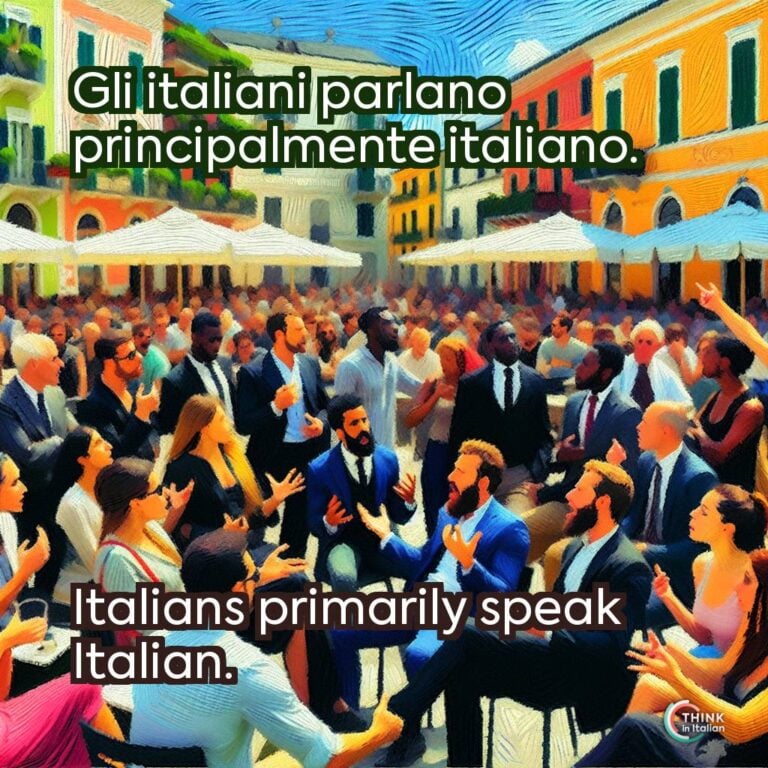
Italians primarily speak Italian, which is the official language of Italy. However, there are also many dialects spoken in different regions of the country.
How many dialects are spoken in Italy?
Italy has dozens of regional dialects and languages, including Lombard, Piedmontese, Venetian, Neapolitan and Sicilian. On top of these, 12 historical minority languages, such as Ladin, Friulian and Sardinian, are protected by national law.
What is the history of the Italian language?
The Italian language has a long and complex history, with three main periods: Old Italian, Middle Italian, and Modern Italian. Modern Italian, spoken by about 65 million native speakers and about 85 million people in total, is known for its musicality and lyrical quality.
What other languages are spoken in Italy?
In addition to Italian and its dialects, there are 12 historical minority languages recognized and protected by Law 482/1999. Sardinian, Occitan, and Franco-Provençal are among the most endangered minority languages in the country.
How widely is Italian spoken outside of Italy?
Italian is spoken as a second language by millions of people worldwide. It is an official language in San Marino, Vatican City and Switzerland, and it has regional status in parts of Slovenia and Croatia. Large communities of Italian descent live in Argentina, Brazil and the United States, but far fewer people in those countries speak Italian today than have Italian ancestry.