

Simple Italian News to Learn Italian
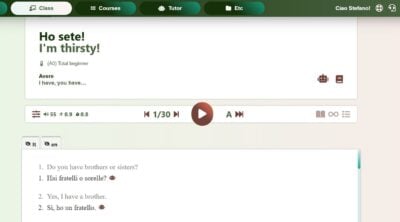
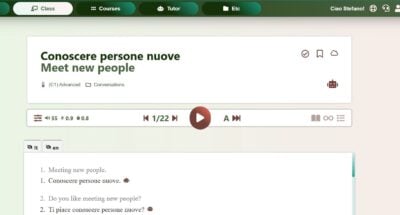
Learning Italian doesn’t have to feel overwhelming. One of the most intensive, interactive, and at the same time effective ways to build your proficiency is through simple Italian news.
These materials are specially tailored for beginners and make the process of learning Italian both accessible and rewarding. It combines realistic language exposure with cultural insights that allow you to:
- Expand your vocabulary with words and phrases used in everyday contexts.
- Improve your comprehension skills by listening to authentic language in manageable chunks.
- Deepen your understanding of Italian culture, values, and society.
Italian news is full of listening, reading, and speaking opportunities. You can easily slip into the language by selecting very simple news sources to start with and get up to date with current events.
For me, they provide a functional way to learn the language, much more practical than just memorizing words and phrases from a textbook.
Here, I will explain how simple Italian news can supercharge your learning journey and make the process enjoyable.
Why Use Italian News to Learn the Language?
Real-Life Context
Unlike exercises from textbooks, which often deal with generic or even outdated scenarios, news articles represent the real-life application of the Italian language.
They cover current events, societal issues, and trends, thus exposing learners to relevant and modern expressions. Also, you will get to know idiomatic phrases or slang expressions that are commonly used among people in everyday interactions.
Moreover, you will stay updated about recent events in Italy and maintain your learning relevant and entertaining.
Cultural Insights
Italian news are not only about the language, but it is also a major source of cultural knowledge. They are a window to what is most important: political, sportive, artistic, or regional concerns for Italians.
Italian news will enrich your cultural awareness about politics and society, sports, which is central to the Italian culture, and regional diversity, which bring out the difference in traditions and identities among Italy’s regions.
Progressive Learning
For me, one of the most positive aspects of using Italian news is that it can be tailored to any level.
- Start Small: start training yourself with simple news platforms like Il Mio Primo Quotidiano or News In Slow Italian. These sources use direct language, along with shorter sentences, to convey the gist of everything easily.
- Gradual Challenge: as your skills improve, you can go on to intermediate and advanced news outlets like Corriere della Sera or La Repubblica for example, in which articles are written for native speakers.
- Build Vocabulary Naturally: news articles expose you to thematic clusters of words. For instance, in a sport article, you will be exposed to specific terms over and over again, which reenforces that word in your mind.
With Italian news, you could master the language at your own speed as well as connect to some current, real-world issues.
How to use Italian News Effectively
Start Small
Start with Italian news by focusing on small articles or headlines. These are concise and easy to manage, and will allow you to grasp the main ideas without feeling overwhelmed. Headlines often use simple, direct language that is perfect for beginners.
- Headline scanning: first, skim through the headlines in order to get an idea of what is being covered.
- Read one article: choose a topic that you are interested in and read just a few sentences.
- Get the gist: don’t try to understand every word, just try to recognize known words and put together an idea of what it’s saying.
Connect Reading to Listening
Take your learning to the next level with news sources that give text and audio versions of each article. Listening will improve your pronunciation, the recognition of natural sentence flow, and will get you used to the rhythm of Italian speech.
- Listen first: before reading, listen to the audio version to train your ears on what the words sound like.
- Read along: while listening, read in the text and pay attention to the proper pronunciation of words.
- Replay segments: listen a number of times to the difficult parts in order to capture the nuances in pronunciation and intonation.
- Practice speaking: stop after a sentence or phrase and repeat out loud, imitating the speaker’s tone and rhythm. Not only pairing listening with reading strengthens your comprehension, but it also improves your speaking confidence.
Build Vocabulary in Context
Italian news is an excellent tool when it comes to memorizing new vocabulary because similar subjects tend to repeat key terms and phrases. It’s easier to remember the meaning of words when these are learned within groupings of any type.
- Identify common terms: pay attention to frequently used words in specific topics.
- Keep a vocabulary notebook: categorize words into politics, sports, weather, and such, adding their meanings and one sample sentence.
- Learn by repetition: note how certain phrases have been used in different contexts to learn better and more firmly.
- Sample vocabulary by category: by associating words with real contexts, you’ll start building up your vocabulary naturally.
Summarize What you Learn
Summarizing the news in your own words is a powerful way to enhance learning. You practice the processing and retrieving information, and you also learn how to construct sentences in Italian.
- Be brief: take an article or an audio clip, and summarize in one/two sentences to grasp the main idea.
- Use new vocabulary: in your summary, include words and phases that you just learned.
- Speak your summary: read it loud, so that you will feel fluency and confidence.
The more you do this practice, the more it will consolidate your comprehension and build your skill to think and then express yourself in Italian.
Create a Routine
As always, the secret of learning Italian with news is regularity.
- Choose a specific time: dedicate 15–20 minutes each day to reading or listening to Italian news. What I like doing is associating the learning moment with something else, like during a lunch break, or before bed.
- Mix up your sources: alternate between audio, video, and written articles to keep your learning fresh and engaging.
- Track your progress: keep a log of the articles you’ve read or listened to, along with the new vocabulary you’ve learned.
Benefits of Learning Italian Through News
Improved Comprehension
Reading and listening to news expose you to natural Italian sentence structures, which help you get used to how native speakers talk.
News is different from textbook examples because one can find all types of sentence styles in it, from formal to conversational ones that allow easy adaption in real-life contexts.
Over time, this will sharpen your comprehension of Italian in everyday conversations, at work, or even if you happen to travel somewhere.
Vocabulary Expansion

News involves all types of topics and introduces you to specific terms you would never normally learn about politics, culture, sport, weather, and many more.
The thematic exposure provides not only enriching vocabulary but also a meaningful context for remembering and using words.
Cultural Connection
Italian news is so much more than learning the language; it’s about values, traditions, and social priorities. You will get to understand customs and connect you with the Italian culture.
Knowledge of current events or historical references helps to make understanding full of Italian life, enhances cultural appreciation, and makes learning much fun.
Flexible Learning
One of my favorite features of using news as a learning tool is its accessibility. Whether you are on your way to work, having a coffee break, or just before bed, Italian news is available in multiple formats: articles, podcasts, videos, and live broadcasts.
This flexibility will let you fit language learning into your daily routine and make it easy to be consistent. You can lean more on audio for listening, read short articles for vocabulary practice, or even take in videos to improve your comprehension and pronunciation.