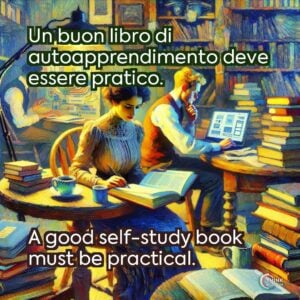


The Role of Textbooks in Language Learning
When it comes to language learning, textbooks might seem like an essential tool: they provide structure and familiarity, guiding learners through vocabulary, grammar, and exercises in a linear format.
As both an Italian teacher and a language learner, I still find myself relying quite a lot on textbooks. They offer valuable content, especially for beginners or casual learners who need structured guidance on grammar patterns and vocabulary.
In general, textbooks do serve as a foundation, especially when integrated with other learning resources like one-on-one lessons focused on conversation.
However, textbooks do have limitations, particularly when compared to more interactive resources like language apps, audio courses, and real-world media.
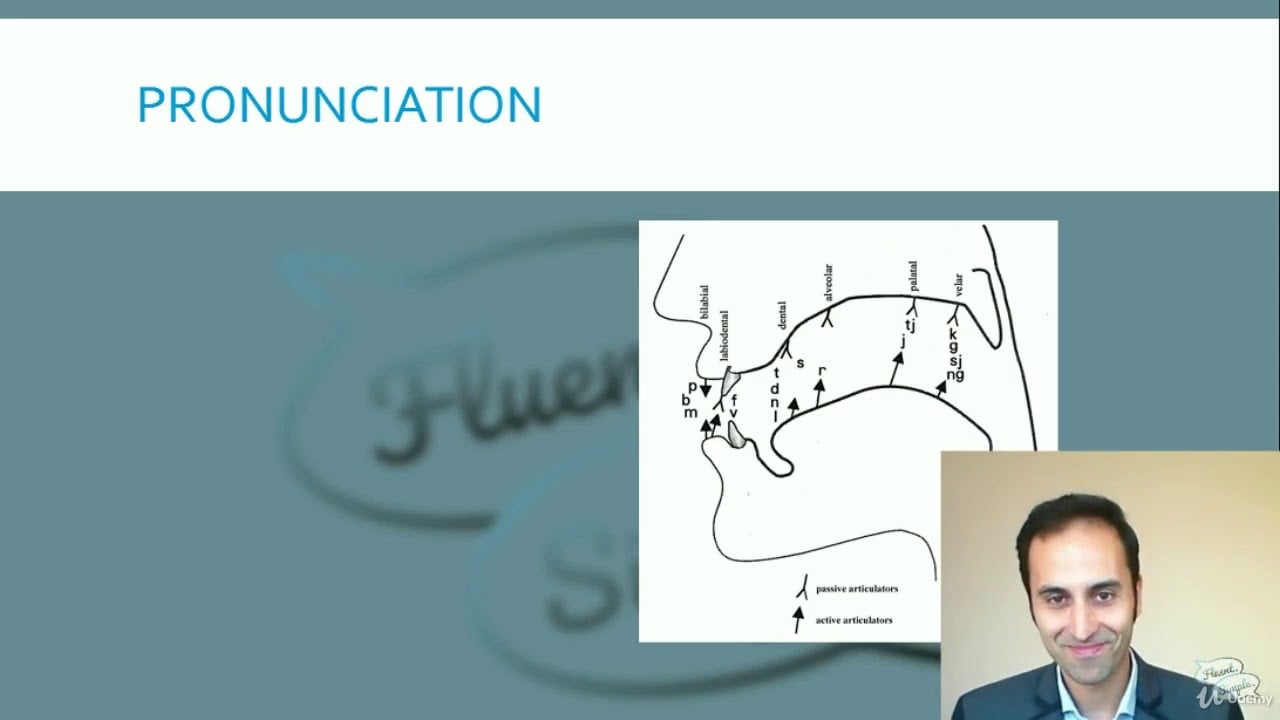
Printed textbooks are often less engaging than digital tools or live interaction – many of my students find them boring – especially because they tend to focus heavily on grammar rules rather than real-life language use.
Additionally, what I noticed is that some textbooks, especially older ones, are poorly designed and overly academic. They contain long explanations in the learner’s native language, limiting immersion with the target language.
Another common misconception is that textbooks alone can make you fluent: in reality, they are most effective when used as part of a comprehensive study plan.
With that in mind, let me guide you through some tips on how to choose a self-study book wisely and maximize its effectiveness as a part of your language learning journey.
How to Choose a Language Self-Study Book
Assess Your Language Level
- Beginner tips: look for textbooks with structured chapters, clear visuals, and step-by-step explanations. Books for beginners should ease you into the language with practical vocabulary and everyday phrases.
- Intermediate and advanced tips: more experienced learners benefit from books with challenging grammar, nuanced reading passages, and real-world examples that reflect natural language.
Balance Grammar With Practical Usage
- Grammar-focused books: I am a big fan of grammar! Books that emphasize the Italian grammar can help you understand the structure of Italian sentences. However, focusing solely on grammar can be limiting for fluency.
- Conversational language books: books that focus on phrases, dialogues, and contextual learning offer expressions you can use immediately, particularly useful for casual or travel-based learning.
Look for Listening and Speaking Practice
Good language books should incorporate audio resources (CDs, downloadable files, or companion apps) to practice pronunciation and listening comprehension.
Listening to a native speaker uttering sentences helps you understand natural rhythm and intonation. By mimicking native speakers, you can develop pronunciation skills and improve your accent over time.
Additionally, audio resources expose you to the pace and flow of real conversations, essential for building listening skills and understanding spoken language in natural contexts.
Evaluate Exercises and Practice Activities
Exercises should include translations, writing prompts, and sentence creation to reinforce new grammar and memorize new vocabulary.
They should encourage you to apply what you’ve learned in different contexts, helping to bridge the gap between theory and real-life usage.
Repetition through varied exercises ensures that you actively engage with the language, improving retention and building confidence in using new structures and vocabulary.
This active approach enables you to recall and use the language more naturally over time.
Seek Cultural Insights and Real-World Context
Language is shaped by culture. Books with cultural insights allow you to understand not only what is said but how and why it is said.
This understanding can be crucial to interpret context-specific meanings, nuances, and expressions that may not translate directly into your native language.
Understanding the history of the Italian language will allow you to also grasp the meaning of idioms and proverbs, adding depth to your cultural perception.
These insights will help you communicate more naturally, as you become familiar with the customs and social norms that influence language use in real-world situations.
Visual Appeal and Layout
Choose books with an organized layout: this includes white space, illustrations, tables, color-coded sections or icons, and clear headings and subheadings.
A clear layout guides the eye, making it easier to focus on key points. It also improves navigation, allowing you to locate information quickly.
Strategically placed visuals and summaries can break up the content, making complex topics feel more manageable and engaging.
It is subjective, but, for me, text-dense pages are very overwhelming, while visuals help simplify information and enhance memory.
Textbooks vs. Real-World Materials
While textbooks provide structured learning, real-world materials—such as podcasts, YouTube, and news sources—immerse you in natural language. They expose you to colloquial phrases, dialects, and cultural nuances that textbooks might overlook.
Real-world content often presents vocabulary in context, helping you recognize how language operates in everyday settings.
For beginners, the transition from textbooks to native materials can be challenging. “Graded readers,” simplified texts for language learners, or beginner-friendly channels with adjustable playback speeds can help bridge this gap. Many modern platforms offer playback control, subtitles, and other features that make real-world content accessible.
Pros of Textbooks
Psychological Comfort of Structure
Textbooks are comforting for beginners because they offer a clear, sequential learning path. Each chapter introduces new language elements, allowing learners to track their progress.
This structure is particularly useful for people who want to learn Italian on their own, as it provides a step-by-step progression which also helps building confidence.
Solid Foundation and Freedom
Textbooks are particularly useful for absolute beginners who need a solid foundation in grammar and vocabulary. This is especially true for languages with new writing systems or complex grammar structures.
Also, textbooks are convenient for those with limited schedules, as they offer resources that can be revisited at one’s own pace without commitment.
Cons of Textbooks
Challenges of Pronunciation and Listening Comprehension
Textbooks present the main limitation of not teaching pronunciation, especially for languages with sounds that do not exist in the learner’s native language.
Visual diagrams can be helpful, but hearing native speakers is essential for accurate pronunciation. Language apps might be useful to counterbalance this lack.
Fixed Study Plan
It is true that you can skim a book as you wish, and it is as well true that you can draw from it whenever you need, yet textbooks have a generalized and fixed plan, which may not fit everyone’s needs.
Every learner should first identify their goals and only then create a personalized learning path. This is why every first class with me is always about goals and needs.
For example, if you are studying Italian to travel, you may need to prioritize conversational phrases over grammar. Spaced repetition is a good strategy to retain what you’ve learned without following a textbook’s rigid structure.
Recommended Italian Language Books
As I said before, effective language textbooks follow a set structure, combining vocabulary, grammar, and practice activities. Here I will give you a list of what you should look for and avoid:
Good books:
- Prioritize communication and conversational skills
- Provide example-based grammar notes that are brief and straightforward
- Primarily written in the target language, with minimal use of the learner’s language
- Include authentic script, especially for languages with non-Latin alphabets
- Offer concise cultural notes in the target language for context
Books to Avoid:
- Focus heavily on grammar rules and exceptions
- Have lengthy grammar notes without practical examples
- Depend heavily on the learner’s language for explanations
- Use transliterations (like writing Chinese in Latin characters) unnecessarily, particularly for learners above beginner level
- Have a cluttered or overcrowded layout, which can be hard to navigate
And now let me be pragmatic. Here you are some recommended self-study books:
- “Italian Made Simple” by Cristina Mazzoni: this beginner’s guide introduces essential grammar and vocabulary through exercises and puzzles, complemented by cultural readings.
- “Living Language Italian“by Living Language: with 46 lessons and audio content, this comprehensive course is ideal for on-the-go learning.
- “Italian Grammar: Barron’s Grammar Series” by Marcel Danesi: a quick-reference guide to Italian grammar, packed with exercises and examples to build grammar proficiency.
Learning as a Journey, not a Race
In an era of apps and courses that promise quick results, remember that language learning is a long-term commitment. If you want to learn Italian fast, you’ll have to squeeze your effort in a shorter time span.
Rather than seeking fluency in a matter of weeks, embrace the gradual process and celebrate small wins: set incremental goal, like understanding a native song or having a full conversation. This will help you maintain motivation.
Cultivate a growth mindset, where mistakes are part of the journey.