Breaking Balls in Italian: How to Use Rompere (Slang and Meaning)

An interactive lesson guiding you from key takeaways to expert insights. Comes with Q&A, useful vocabulary, interactive audio, quizzes and games.

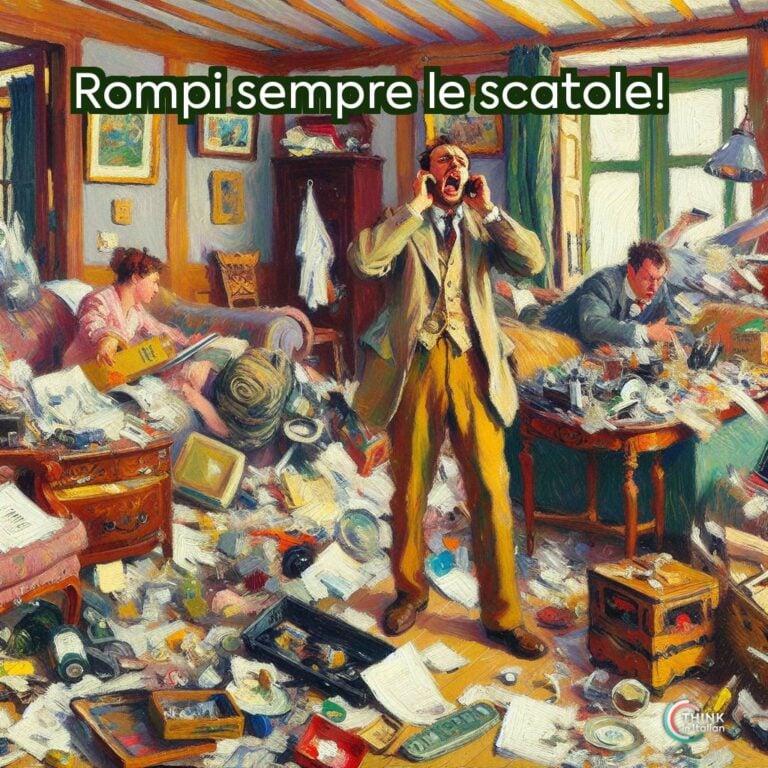
Rompi sempre le scatole!
Published Sep 12, 2024
Updated Sep 30, 2026
Reviewed by
Italian language tutor, course author. MEng, MBA. Member of the International Association of Hyperpolyglots (HYPIA). After learning 12 languages, I can tell you that we all master languages by listening and mimicking. I couldn’t find an app to recommend to my students, so I made my own one. With my method, you’ll be speaking Italian from Lesson 1.
Written by
No data was found

Key Takeaways

  • The verb rompere means "to break" and is used in various contexts beyond its literal meaning.
  • Common expressions include rompere il silenzio (to break the silence) and rompere il cuore (to break someone's heart).
  • In slang, rompere le palle means to annoy someone, while rompere le scatole is a softer alternative.
  • Nouns like rompiscatole and rompipalle describe annoying people, showcasing the verb's versatility.
  • Understanding these slang expressions enhances your grasp of Italian culture and improves conversational skills.

Stefano's Insights

Play to see captions...
Ah, il verbo 'rompere'! Non solo significa 'rompere' in senso letterale, ma è anche un maestro del linguaggio figurato. Può spezzare silenzi, cuori e scatole (o palle, se vi sentite un po' più audaci). Ricordo che da bambino mio fratello mi chiamava 'rompiscatole' – un titolo ben meritato, direi. Imparare l'italiano non è solo memorizzare verbi e coniugazioni, ma anche capire come questi si intrecciano con la cultura. Un viaggio che va ben oltre le parole di base e si addentra nei gesti, idiomi e battute che rendono l'italiano così affascinante. Quindi, non rompete le scatole e immergetevi nel mondo del linguaggio italiano!
Ah, the verb 'rompere'! Not only does it mean 'to break' literally, but it's also a master of figurative language. It can break silences, hearts, and boxes (or balls, if you're feeling bold). I remember my brother calling me a 'rompiscatole' as a child – a well-deserved title, I must say. Learning Italian isn't just about memorizing verbs and conjugations but understanding how they intertwine with culture. It's a journey beyond basic words into the gestures, idioms, and jokes that make Italian so fascinating. So, don't be a nuisance and dive into the world of the Italian language!

Quick facts

What does "rompere" mean in Italian?

"Rompere" translates to "to break" and belongs to the second conjugation group.

How is "rompere" conjugated in the present tense for "io"?

In the present tense, "io" form of "rompere" is "rompo."

What is the past perfect form of "rompere" for "noi"?

The past perfect form of "rompere" for "noi" is "abbiamo rotto."

Can "rompere" be used metaphorically in Italian?

Yes, "rompere" is often used metaphorically to mean interrupting or ending situations.

What does "rompere il silenzio" mean?

"Rompere il silenzio" means "to break the silence."

How do Italians say "to break someone's heart"?

Italians say "rompere il cuore" to mean "to break someone's heart."

What is a polite alternative to "rompere le palle"?

A polite alternative is "rompere le scatole," meaning to annoy someone.

What does the term "rompiscatole" describe?

"Rompiscatole" describes an annoying person, similar to "rompipalle."

Why is learning Italian slang important?

Italian slang offers insights into cultural attitudes and social dynamics, enhancing language authenticity.

How does understanding "rompere" help in learning Italian?

Understanding "rompere" in context enriches your grasp of Italian culture and everyday speech.

Audio images

🔊
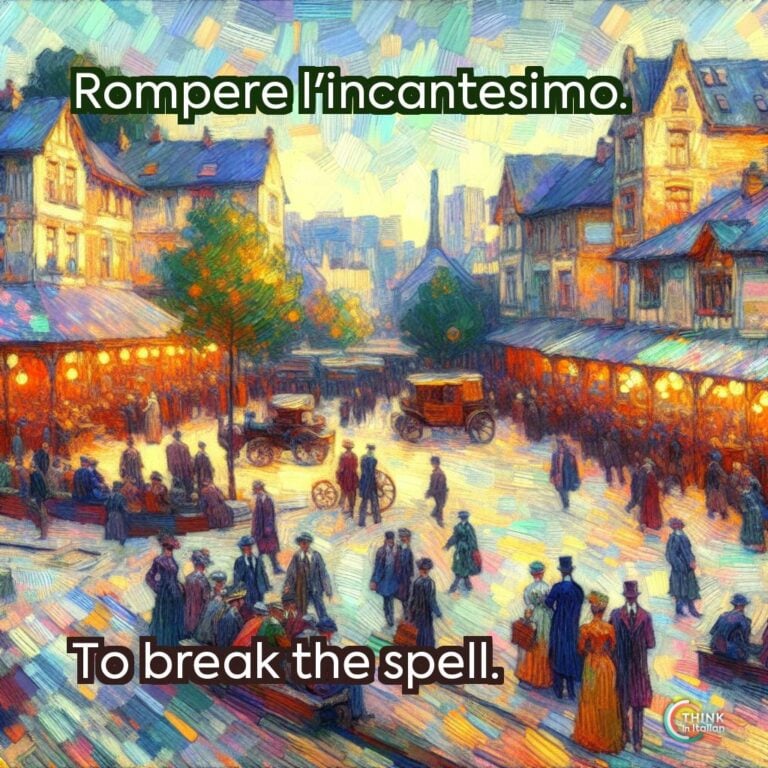
Rompere l'incantesimo.
🔊
Lui rompe sempre il ghiaccio.
🔊
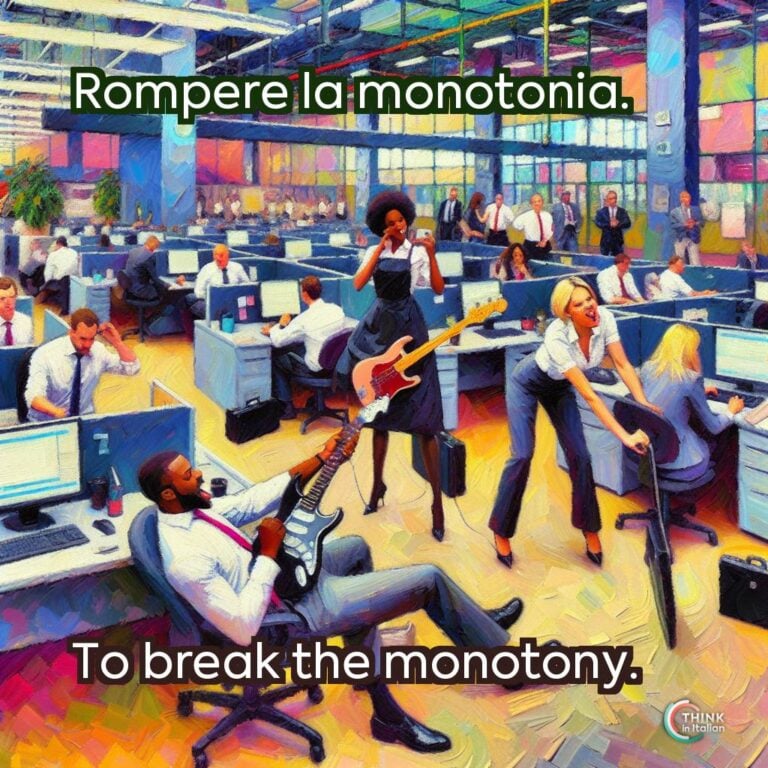
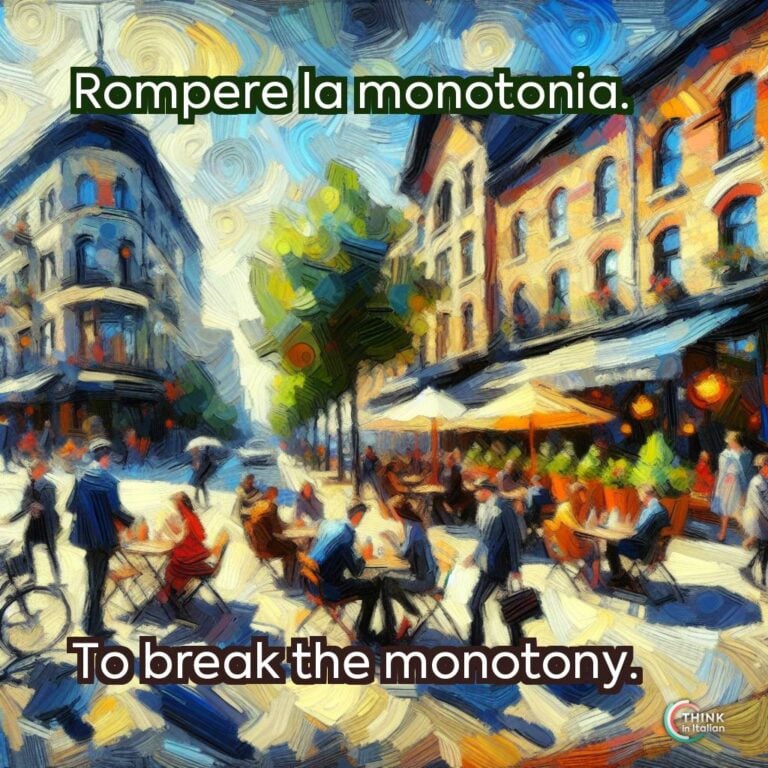
Rompere la monotonia.
🔊
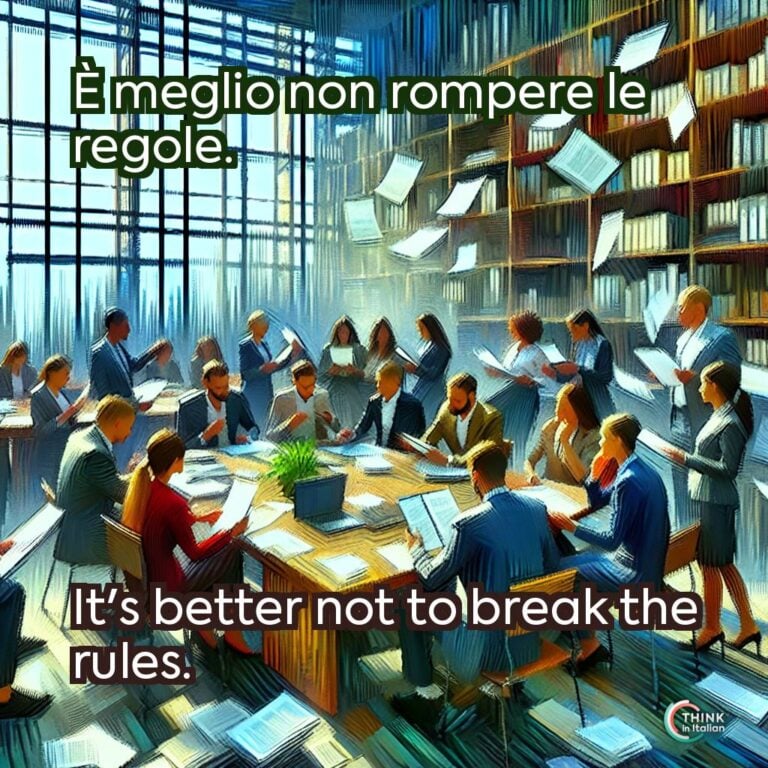
È meglio non rompere le regole.
🔊
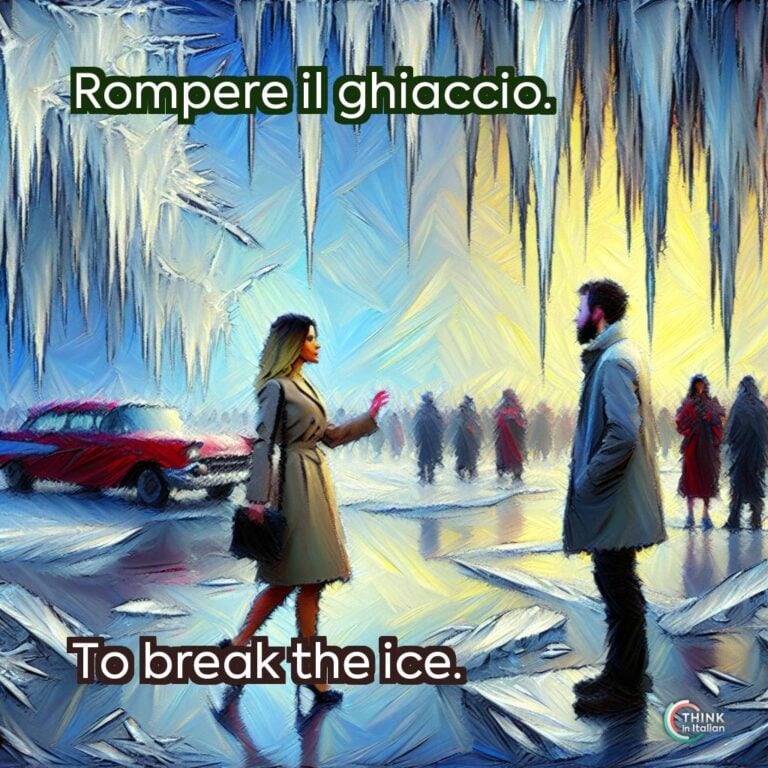
Rompere il ghiaccio.
🔊
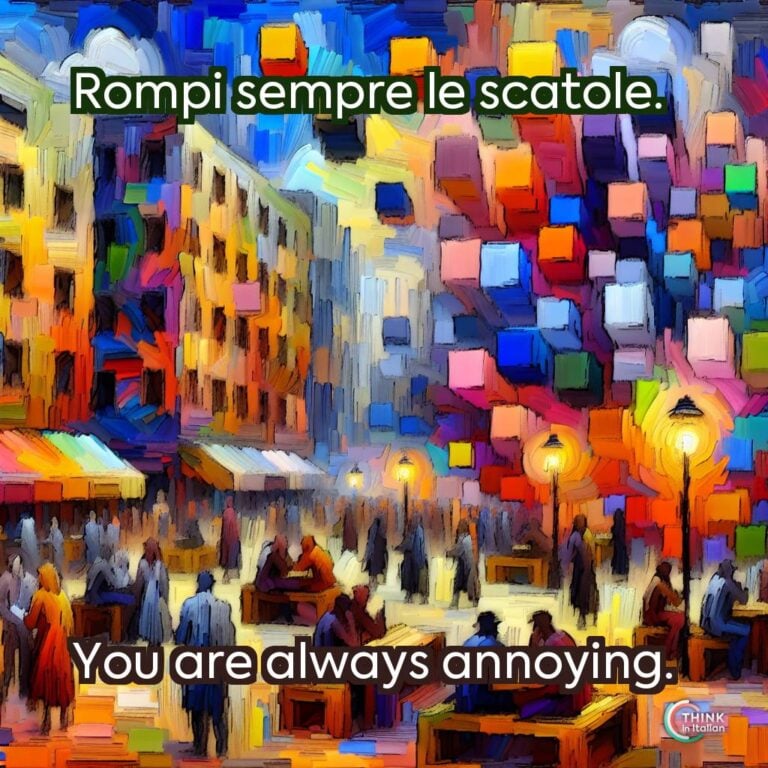
Rompi sempre le scatole.
🔊
Rompere la monotonia.
🔊
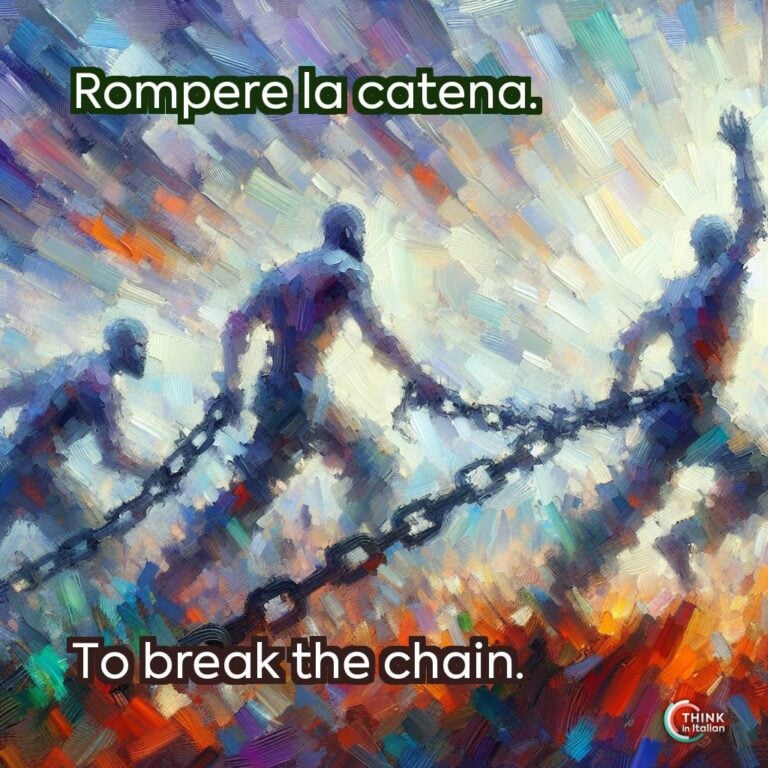
Rompere la catena.
🔊
Lei è veramente un rompiscatole.
🔊
Rompi sempre le scatole!

Main Article

“Breaking balls” in Italian is rompere le palle, and it means to annoy someone. It comes from the verb rompere (“to break”), which is also behind milder expressions like rompere le scatole and words like rompiscatole (a pain in the neck). It is vulgar, so use it only with close friends.

The Verb “Rompere”

The verb rompere in Italian means “to break”. It belongs to the second conjugation (-ere). It is regular in the present, imperfect and future, but irregular in the past participle (rotto) and in the passato remoto. Below, I created a table to show you its indicative conjugations:

TenseIoTuLui/LeiNoiVoiLoro
Presentromporompiromperompiamorompeterompono
Present Perfect (passato prossimo)ho rottohai rottoha rottoabbiamo rottoavete rottohanno rotto
Imperfectrompevorompevirompevarompevamorompevaterompevano
Simple Past (passato remoto)ruppirompestirupperompemmorompesteruppero
Future Simpleromperòromperairomperàromperemorompereteromperanno

Beside its traditional meaning, the verb rompere is often used metaphorically to mean interrupting, ending, or breaking a situation, relationship, or mood. For instance, have a look at the examples below:

Rompere il silenzio.

To break the silence.

Rompere il cuore.

To break someone’s heart.

Rompere le scatole.

To annoy someone. (lit. to break the boxes)

Rompere un patto.

To break an agreement.

“Rompere” in Italian Slang

In everyday conversations, Italians often use the verb rompere in a very nuanced and, let’s be honest, vulgar way.

For instance, the expression rompere le palle (to break someone’s balls) is used to convey frustration, meaning that someone is annoying. If you prefer a softer tone, use rompere le scatole, as you saw before.

Interestingly, this verb also gives birth to several nouns to describe annoying people. For example, like my brother always used to call me as children, rompiscatole or rompipalle.
Learning Italian means understanding these expressions, as they can give you a more authentic grasp of the language and how it is spoken by natives.

In fact, if you want to learn Italian, you should not focus on basic vocabulary only, but rather on the contextual use of words and the cultural weight they have.

Rompere le Palle: Meaning and Examples

Rompere le palle literally means “to break someone’s balls”, just like the English expression. It means to annoy someone, or to bother them again and again. Rompere le scatole (“to break the boxes”) has the same meaning, but it is much milder and you can use it with more people. The nouns rompipalle and rompiscatole describe a person who does this.

Mi stai rompendo le palle!

You’re busting my balls! / You’re getting on my nerves!

Non mi rompere le scatole!

Don’t bother me!

Mio fratello mi ha rotto le scatole per tutto il giorno.

My brother pestered me all day.

Che rottura!

What a pain! / What a drag!

Sei un rompiscatole!

You’re a pain in the neck!

There is an even stronger version, rompere i coglioni, which is best avoided unless you are among very close friends. If you want to know which Italian words are truly offensive, read my article on Italian curse words. For more everyday slang, have a look at my list of Italian slang words.

Rompere vs Rompersi: How to Say “To Break” in Italian
Learn Italian on the go
Learn in the car with Think in Italian
Free Guide
How to Learn Languages Fast

The people who search for “to break in Italian” usually need the literal meaning. Rompere takes a direct object, while rompersi (the reflexive form) is used when something breaks by itself, or when you break a part of your body:

Ho rotto il bicchiere.

I broke the glass.

Il bicchiere si è rotto.

The glass broke.

Mi sono rotto il braccio.

I broke my arm.

Si è rotto il naso.

He broke his nose.

Notice that the reflexive forms use essere in the passato prossimo, while rompere uses avere (ho rotto).

Other Expressions with Rompere

ItalianEnglish
rompere il ghiaccioto break the ice
rompere le uova nel paniereto spoil someone’s plans (literally “to break the eggs in the basket”)
rompere le righeto dismiss a group, to break ranks
Chi rompe paga, e i cocci sono suoi.You break it, you buy it. (literally “who breaks pays, and the pieces are his”)

Other ways to say “to break” in Italian

Depending on the context, Italian uses other verbs:

  • spezzare: to snap or break into pieces, as in spezzare il pane (to break bread) or spezzare il cuore (to break someone’s heart).
  • infrangere: to shatter, or to break a rule or a promise, as in infrangere la legge (to break the law).
  • fare una pausa: to take a break.

Learn the Italian Slang to Speak Like a Native

Italian slang provides a fascinating glimpse into how language can reflect cultural attitudes and social dynamics. Learning these expressions will allow you to understand how Italians use language to navigate their social worlds.

By understanding how rompere is used in different contexts, you’ll not only enhance your language skills but also appreciate the rich variety of the Italian culture, which includes not just words but also gestures, idioms, and jokes.

Key Terms and Concepts

Rompere

A regular verb in the second conjugation group meaning 'to break.' Used metaphorically, it can indicate ending or interrupting situations.

Rompere il silenzio

A phrase meaning 'to break the silence,' used to describe an interruption of quietness or solitude.

Rompere le scatole

An expression meaning 'to annoy someone,' literally translating to 'break the boxes.' Considered a less vulgar alternative to similar expressions.

Rompere le palle

A slang expression meaning 'to annoy someone,' literally translating to 'break the balls.' It's considered vulgar and used to express frustration.

Rompiscatole

A noun derived from rompere, meaning 'annoying person.' Literally, it translates to 'box breaker.'

Rompipalle

A noun derived from rompere, meaning 'annoying person.' It translates to 'ball breaker' and is considered vulgar.

Second Conjugation Verb

Rompere belongs to this category, characterized by verbs ending in -ere. It follows regular conjugation patterns in Italian.

Test your knowledge in 10 quick questions

Words

rompereto break
scatoleboxes
palleballs
rompiscatoleannoying person
rompipalleannoying person
silenziosilence
cuoreheart
pattoagreement
frustrazionefrustration
autenticoauthentic

Phrases

rompereto break
rompere il silenzioto break the silence
rompere il cuoreto break someone's heart
rompere le scatoleto annoy someone (lit. to break the boxes)
rompere un pattoto break an agreement
rompere le palleto break someone's balls (to annoy)
rompiscatoleannoying person (lit. box breaker)
rompipallevery annoying person (lit. ball breaker)
silenziosilence
palleballs

Sentences

Rompere il silenzio.

To break the silence.

Rompere le palle.

To be a pain (lit. to break the balls).

Rompere le scatole.

To annoy someone (lit. to break the boxes).

Rompere un patto.

To break an agreement.

Mio fratello è un rompiscatole.

My brother is a nuisance (lit. a box-breaker).

Match the Phrases

Memory game

Flip the cards to find matching pairs!

Crossword

Across
Down
Answers
think in italian reddit

The comments section has moved to the Think In Italian Reddit community. Join today!

Italian word of the day
benzina
Abbiamo ancora benzina? Solo qualche litro.
Have we still got gas? Only a few liters.

What's new

stefano lodola italian teacher (1)
30 Free Courses to Get You Started ($40 Value)
italian audio lesson preview
italian audio reading preview
italian ai tutor preview
"I've tried other apps like Babbel and Memrise. None made me fluent or made me feel like I was making much meaningful progress in learning a language."
testimonial 2
Ecem Topcu
Aug 7, 2025