

The Italian present tense (presente indicativo) is formed by removing -are, -ere or -ire from the infinitive and adding the endings below. It is used for what is happening now, for habits, for general truths and for the near future.
| -ARE parlare | -ERE vendere | -IRE dormire | -IRE (-isc) finire | |
|---|---|---|---|---|
| io | parlo | vendo | dormo | finisco |
| tu | parli | vendi | dormi | finisci |
| lui/lei | parla | vende | dorme | finisce |
| noi | parliamo | vendiamo | dormiamo | finiamo |
| voi | parlate | vendete | dormite | finite |
| loro | parlano | vendono | dormono | finiscono |
The endings are -o, -i, -a/-e, -iamo, -ate/-ete/-ite, -ano/-ono. There is no separate form for “I am speaking” or “I do speak”: parlo covers “I speak”, “I am speaking” and “I do speak”.
Italian Present Tense
Conjugation
All verbs in the present tense are conjugated by removing the infinitive ending are, ere, or ire and by adding the corresponding endings.
First conjugation regular verbs (ending in – are) are conjugated as follows:
| Present Tense (First Conjugation) | |
| io | lavoro |
| tu | lavori |
| lui/lei | lavora |
| noi | lavoriamo |
| voi | lavorate |
| loro | lavorano |
Second conjugation regular verbs (ending in – ere) are conjugated as follows:
| Present Tense (Second Conjugation) | |
| io | vivo |
| tu | vivi |
| lui/lei | vive |
| noi | viviamo |
| voi | vivete |
| loro | vivono |
Third conjugation regular verbs (ending in – ire) have two types of conjugations: some verbs, like finire and capire, require the suffix –isc between the root and the ending, while others follow the regular patterns.
| Present Tense (Third Conjugation) | ||
| Without suffix -isc | With suffix -isc | |
| io | dormo | capisco |
| tu | dormi | capisci |
| lui/lei | dorme | capisce |
| noi | dormiamo | capiamo |
| voi | dormite | capite |
| loro | dormono | capiscono |
Notice that the suffix –isc is only added for the subjects io, tu, lui/lei, loro, and not for noi and voi.
Also be aware that it is not possible to predict which verbs belong to the -isc group, therefore my advice is that you learn them by heart. However, I can help you with a list of verbs that follow the -isc pattern:
| Italian Verb | English Translation |
|---|---|
| Agire | to act |
| Capire | to understand |
| Costruire | to build |
| Dimagrire | to lose weight |
| Esaurire | to exhaust |
| Fallire | to fail |
| Finire | to finish |
| Gestire | to manage |
| Inserire | to insert |
| Preferire | to prefer |
| Pulire | to clean |
| Punire | to punish |
| Sparire | to disappear |
| Suggerire | to suggest |
| Unire | to join |
Spelling Changes in the Present Tense
Some regular -are verbs change their spelling to keep the same sound:
- Verbs in -care and -gare add an h before i: cercare -> cerchi, cerchiamo; pagare -> paghi, paghiamo.
- Verbs in -ciare, -giare and -iare do not double the i: mangiare -> mangi, mangiamo; cominciare -> cominci, cominciamo; studiare -> studi, studiamo.
Use
In Italian, the present tense is used to:
- talk about actions that are currently happening:
Lucia vive a Bologna.
Lucia lives in Bologna.
Oggi lavoro da casa.
I’m working from home today.
However, notice that if you want to stress out that an action or event is occurring right now, you can use the progressive tense (-ing form).
- talk about general truths:
L’acqua bolle a 100 gradi.
Water boils at 100 degrees.
Le tigri non vivono in Africa.
Tigers don’t live in Africa.
- talk about habits and recurrent actions currently happening:
Mangio due piatti di pasta al giorno.
I eat pasta twice a day.
Tutte le sere leggo un po’ prima di andare a dormire.
Every evening I read for a bit before I go to sleep.
- talk about future actions if the time of the action is clear:
Domani torno a casa.
I’m going back home tomorrow.
Actions That Started in the Past and Continue
Italian uses the present tense with da for something that began in the past and is still true. English uses “have been” here:
Studio italiano da due anni.
I have been studying Italian for two years.
Abito qui da tre anni.
I have lived here for three years.
See my lesson on how to use da for more.
Subjects, Questions and Negatives
The subject pronoun is usually left out, because the ending already shows who is doing the action. Use it for emphasis or contrast: Lui lavora, lei studia (He works, she studies). To make a negative, put non before the verb. To ask a question, keep the same word order and raise your voice at the end. There is no word for “do”:
Lavoro a Milano.
I work in Milan.
Non lavoro a Milano.
I don’t work in Milan.
Lavori a Milano?
Do you work in Milan?
What About Irregular Verbs?
The patterns above cover regular verbs. Some of the most common verbs are irregular in the present tense, for example essere (io sono), avere (io ho), andare (io vado) and fare (io faccio). Learn them in my lessons on the irregular present tense and on the present tense of essere.
Practice: Complete the Sentences
Write the correct present tense form, then check your answers:
- (mangiare) Io ___ una mela. – mangio
- (leggere) Noi ___ un libro. – leggiamo
- (dormire) Tu ___ molto. – dormi
- (finire) Loro ___ il lavoro alle sei. – finiscono
- (parlare) Voi ___ italiano? – parlate
- (pagare) Noi ___ il conto. – paghiamo
Italian Verbs: an Introduction
Italian Verbs Conjugations
Italian verbs can be divided into three groups based on their conjugation, that is, the ending of their infinitive forms. It is important that you are aware of this distinction because verbs conjugations affect the way the verb is, indeed, conjugated.
The three Italian conjugations are -ARE, -ERE, -IRE:
- First conjugation (verbs end in – are): mangiare (= to eat), lavorare (= to work), studiare (= to study).
- Second conjugation (verbs end in – ere): leggere (=to read), perdere (= to lose), vivere (= to live).
- Third conjugation (verbs end in – ire): dormire (= to sleep), capire (= to understand), preferire (= to prefer).
Be aware that, in linguistics, the vowel that changes and allows to classify a verb in one or another conjugation is called thematic vowel, and it is important that you know its existence when conjugating verbs.
In fact, when you conjugate a verb in Italian, you are making sure its root displays the semantic information, namely the meaning of the verb, while its ending displays the following grammatical information:
- Subject (person and number)
- Verb mood and tense
- Verb conjugation
Let me show you an example:
LAVORARE – lavorano
Where lavor is the root, displaying the meaning of the verb (to work) and -ano is the ending, displaying the verb conjugation (first), the verb tense (indicative present), and the subject (third person plural).
Almost all Italian first-conjugation verbs are regular. Irregular verbs usually belong to the second and third conjugation.
Italian Verbs Moods and Tenses
Italian is a very rich language in terms of verbal system. It has different moods and tenses. Here, I will show you the present tense of the indicative mood, but I believe it is important you are familiar with the entire verb organization in general.
I made this table which shows the first person singular conjugation of all verb tenses and moods. Notice that, for the imperative mood, I used the second person singular.
| Mood | Tense | Conjugation |
|---|---|---|
| Indicativo | Presente (Present) | studio |
| Imperfetto (Imperfect) | studiavo | |
| Passato remoto (Remote Past) | studiai | |
| Futuro semplice (Simple Future) | studierò | |
| Passato prossimo (Present Perfect) | ho studiato | |
| Trapassato prossimo (Past Perfect) | avevo studiato | |
| Trapassato remoto (Preterite Perfect) | ebbi studiato | |
| Futuro anteriore (Future Perfect) | avrò studiato | |
| Congiuntivo | Presente (Present) | studi |
| Imperfetto (Imperfect) | studiassi | |
| Passato (Past) | abbia studiato | |
| Trapassato (Past Perfect) | avessi studiato | |
| Condizionale | Presente (Present) | studierei |
| Passato (Past) | avrei studiato | |
| Imperativo | Presente (Present) | studia |
| Infinito | Presente (Present) | studiare |
| Passato (Past) | avere studiato | |
| Participio | Presente (Present) | studiante |
| Passato (Past) | studiato | |
| Gerundio | Presente (Present) | studiando |
| Passato (Past) | avendo studiato |
This lesson covers the present tense of the indicative mood, regular verbs only. For irregular verbs, see the irregular present tense lesson.
Verb: Centre of the Sentence
Learning verbs is essential if you want to learn a new language. Verbs are the most important element of a sentence. They affect the choice of the subject, the objects, their relative prepositions etc… therefore it is crucial that you properly learn how to conjugate Italian verbs.
The present tense is only the first step: familiarize with conjugations, verbs endings, and get ready to improve your Italian skills.
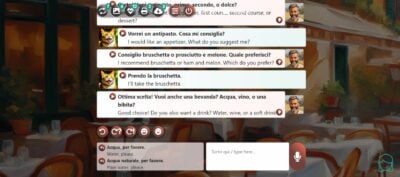
Practice, practice, and practice! And if you don’t have a conversation partner, take advantage of our Italian AI tutor to engage in unlimited conversations based on your level.
You can personalize your conversations and, for instance, you can choose to speak only in present tense and get instant feedback on your errors.
You have just taken the first step!