Italian Slang: 10 Essential Expressions

An interactive lesson guiding you from key takeaways to expert insights. Comes with Q&A, useful vocabulary, interactive audio, quizzes and games.

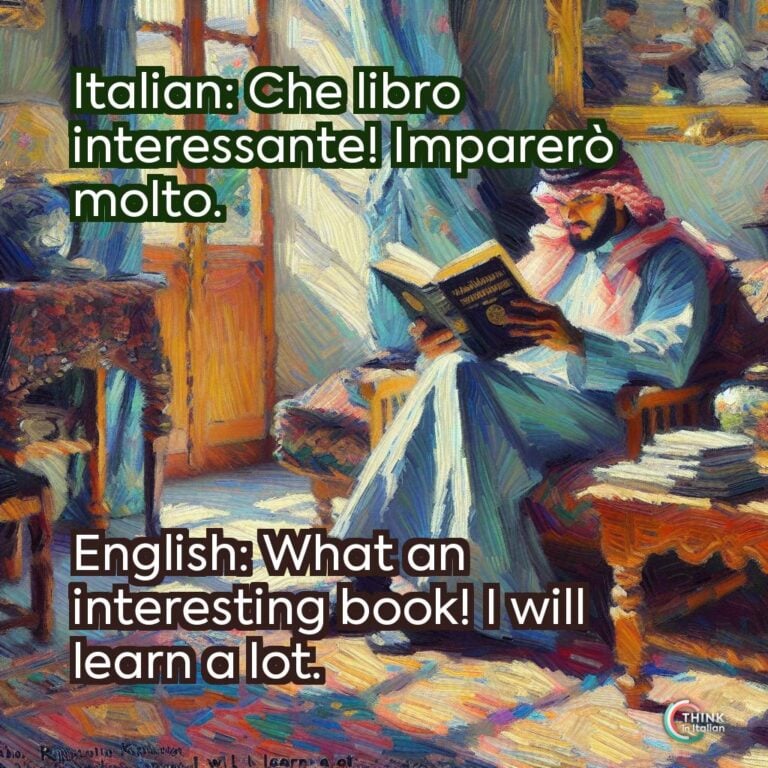
Italian: Che libro interessante! Imparerò molto.
Published Nov 23, 2021
Updated Dec 17, 2024
Reviewed by
Italian language tutor, course author. MEng, MBA. Member of the International Association of Hyperpolyglots (HYPIA). After learning 12 languages, I can tell you that we all master languages by listening and mimicking. I couldn’t find an app to recommend to my students, so I made my own one. With my method, you’ll be speaking Italian from Lesson 1.
Written by
No data was found

Key Takeaways

  • Italian slang enhances your conversational skills and helps you connect better with native speakers.
  • Expressions like Boh... indicate uncertainty or disinterest, making conversations feel more natural.
  • Use Dai! to encourage friends or request favors in a friendly manner.
  • Say Che schifo! to express disgust in various situations, from food to personal hygiene.
  • Incorporate phrases like Meno male! to convey relief or gratitude in everyday conversations.
  • Learning these expressions will improve your understanding of Italian culture and enhance your enjoyment of Italian media.

Stefano's Insights

Play to see captions...
Ah, il meraviglioso mondo dello slang italiano! Non c'è modo migliore per sembrare un vero italiano che infilare un bel "Boh" o "Che palle" nella conversazione. Quando ero studente a Roma, ho imparato a usare "Dai!" ogni volta che cercavo di convincere i miei amici a prendere un altro gelato. E chi può dimenticare il primo "Che schifo!" detto con disgusto genuino? Imparare queste espressioni non solo migliora la tua comprensione, ma rende le conversazioni molto più divertenti. Quindi, "Magari!" tuffati in questo colorato vocabolario e sorprendi i tuoi amici italiani. "Meno male!", ora puoi goderti i film italiani senza perdere le battute migliori.
Ah, the wonderful world of Italian slang! There's no better way to sound like a true Italian than to slip in a good "Boh" or "Che palle" into conversation. When I was a student in Rome, I learned to use "Dai!" every time I tried to convince my friends to get another gelato. And who can forget the first "Che schifo!" said with genuine disgust? Learning these expressions not only improves your comprehension but makes conversations much more fun. So, "Magari!" dive into this colorful vocabulary and surprise your Italian friends. "Meno male!", now you can enjoy Italian movies without missing the best jokes.

Quick facts

What does "Boh..." signify in Italian conversations?

"Boh..." means "I don't know" and indicates disinterest or uncertainty.

How is "Dai!" typically used in Italian?

"Dai!" means "Come on!" or "Please, do me this favor", urging action.

What does "Figurati..." express in Italian?

"Figurati..." means "Don't worry!" or "It's nothing!" and can be sincere or sarcastic.

In what situations would you use "Che schifo!"?

Use "Che schifo!" to express disgust, like seeing someone make a mess.

What does "Che palle!" literally translate to, and what does it mean?

Literally "What balls!", it means "What a pain!" indicating boredom or frustration.

What does "Magari!" convey in Italian?

"Magari!" encapsulates "I wish!", "I hope!", or "Maybe!" expressing hopeful desire.

When would you exclaim "Che figata!"?

Exclaim "Che figata!" to show excitement or admiration, like experiencing something cool.

How is "Basta!" used in Italian conversations?

"Basta!" means "Enough!" and is used to stop or finalize something.

What does "Mi fa cagare!" express about something?

"Mi fa cagare!" literally means "I have to poop", expressing strong disapproval or dislike.

What does "Meno male!" mean, and when is it used?

"Meno male!" means "Thank God!" and is used to express relief or gratitude.

Audio images

🔊
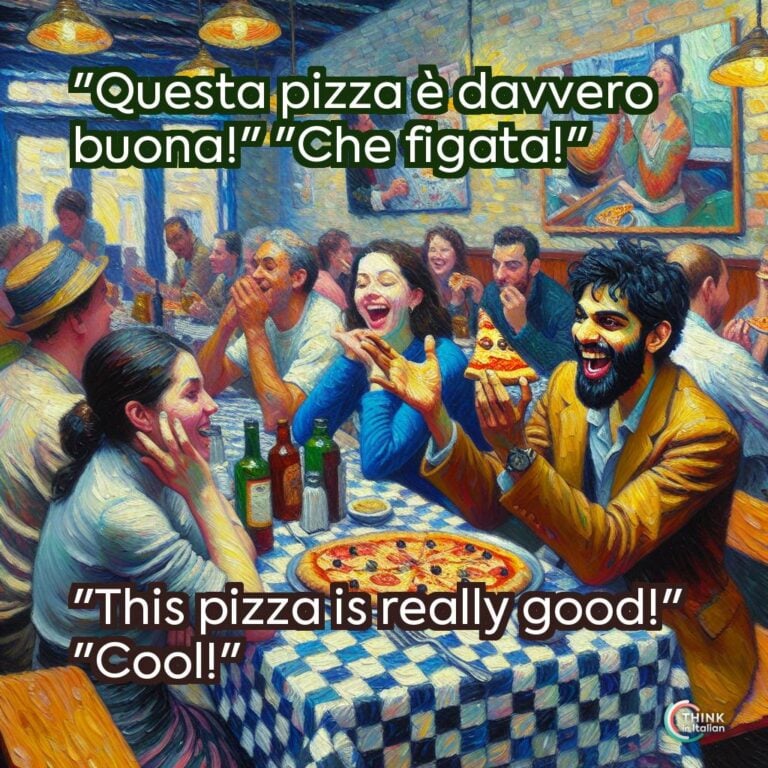
"Questa pizza è davvero buona!" "Che figata!"
🔊
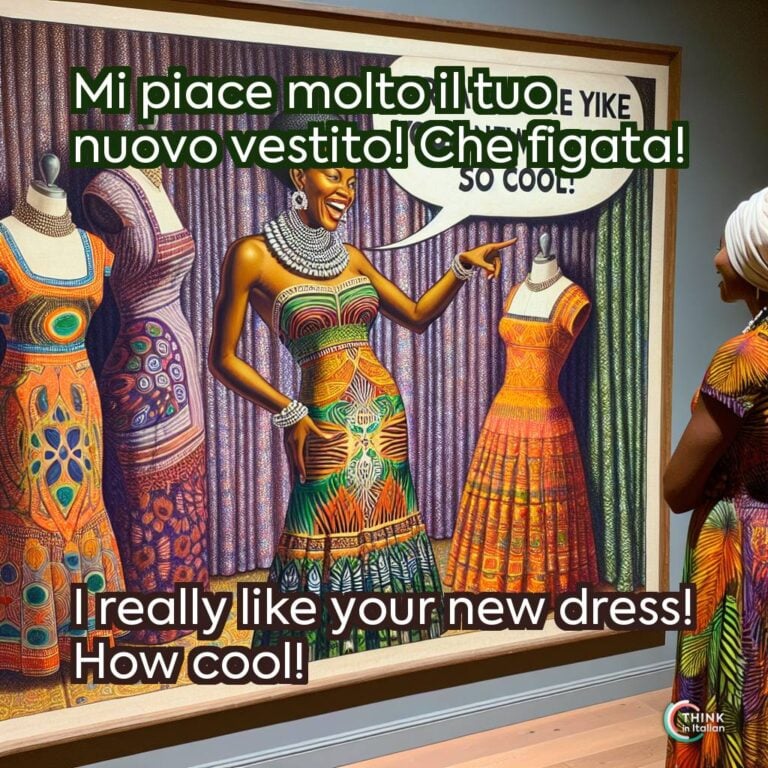
Mi piace molto il tuo nuovo vestito! Che figata!
🔊
Italian: Che libro interessante! Imparerò molto.
Learn on the go
Install the FREE Think In Italian app for faster loading, offline mode, and quick access anytime.
No registration needed. Works on all devices. Ready in 1 click and 3 seconds.

Main Article

Italian Slang

Italian is the official language of Italy, but I guess you have wondered at least once what language Italian speaks daily. If you want to connect with native speakers, enjoy Italian culture, and elevate your fluency, learning Italian slang is a must.

Italy’s rich tapestry of regional dialects profoundly shapes its slang. These dialects predate the country’s unification in 1861 and they are so distinct that even I, Italian from birth, struggle to understand most of them.

In general, Italian slang mirrors the country’s history and cultural shifts. It conveys camaraderie, humor, and identity. We use it to poke fun, express frustration, or assert independence.

In this article, I will guide you through the 10 most common Italian slang expressions. Be careful: they are very informal expressions, so you must know when to use them! Check the most common Italian slang words as well!

Top 10 Italian Slang Expressions

Fatti i Fatti Tuoi
Meaning: Mind your own business.
Context: Used to deflect nosy questions. Depending on the tone, it can sound playful or sharp.

Cosa stavi facendo ieri sera?

What were you doing last night?

Fatti i fatti tuoi!

Mind your own business!

Che Casino

Meaning: What a mess!
Context: Used to describe chaotic or confusing situations.

Hai visto la mia scrivania?

Did you see my desk?

Che casino!

What a mess!

Che Palle / Che Sbatti

Meaning: What a pain!
Context: Expresses boredom, frustration, or annoyance. Che sbatti is used more in north Italy, while che palle is more widespread.

Devo rifare tutto il lavoro da capo.

I have to redo all the work from scratch.

Che palle!

What a pain!

Ci sta

Meaning: It’s fine / That works.
Context: Used to show agreement or acceptance in casual situations.

Andiamo al cinema stasera?

Shall we go to the movies tonight?

Ci sta!

That works!

Che Figata!

Meaning: How cool!
Context: Expresses enthusiasm or approval, similar to “that’s awesome!” in English.

Hai vinto i biglietti per il concerto?

You won tickets to the concert?

Che figata!

How cool!

Che Schifo!

Meaning: How disgusting!
Context: Used to describe something unpleasant, gross, or revolting.

Un panino caduto nel fango?

A sandwich dropped in the mud?

Che schifo!

How disgusting!

Mi fa Cagare!

Meaning: It sucks!
Context: A strong expression of discontent or dislike.

Questa pizza con l’ananas?

This pizza with pineapple?

Mi fa cagare!

It sucks!

Notice the grammatical structure of this expression: the mi is an indirect pronoun meaning “to me”, indicating who is affected by the negative action.

Free Guide
How to Learn Languages Fast

In linguistics, this construction is called causative construction. It is composed of the verb fare and a verb in the present infinitive, and expresses a reaction that a subject causes in the speaker.

Meno Male

Meaning: Thank goodness!
Context: Expresses relief or gratitude for a favorable outcome.

Meno male che non ha piovuto durante il picnic.

Thank goodness it didn’t rain during the picnic.

Meno male!

Thank goodness!

A Fagiolo

Meaning: Right on point.
Context: Used to describe something that fits perfectly or is spot-on.

Se compriamo questo volo aereo arriveremo alle 19.

If we buy this flight we’ll arrive at 19.

E il concerto inizia alle 21. A fagiolo!

And the concert starts at 21. Right on point!

Non me ne Frega Niente

Meaning: I don’t care at all.
Context: A strong way to express indifference. Commonly used in casual or slightly irritated conversations.

Oggi gioca la Roma.

Today Rome is playing.

Non me ne frega niente!

I don’t care at all!

Tips for Using Italian Slang

  • Understand the Context: slang is informal and best used in casual settings. Avoid phrases like che palle! in professional environments, and stick to neutral expressions instead.
  • Listen and Observe: watch Italian movies or listen to native speakers to understand how slang is used. Pay attention to body language and tone for added context.
  • Practice with Locals: language apps work well for specific purposes, like to connect with Italians and practice slang.

Key Terms and Concepts

Boh...

An expression used to indicate uncertainty or disinterest. It's equivalent to saying 'I don't know' in English.

Dai!

A versatile expression meaning 'Come on!' or 'Please, do me this favor.' It's often used to urge someone to do something.

Che schifo!

An expression used to describe something disgusting or unpleasant. It directly translates to 'how disgusting!' in English.

Che palle!

Literally 'What balls!' It signifies boredom or annoyance, similar to saying 'what a pain' or 'how boring' in English.

Magari!

This word expresses hope or desire, encompassing meanings like 'I wish!', 'I hope!', or 'Maybe!' in English.

Basta!

A command for 'Enough!' or 'That's it!' It's used to stop something, akin to calling for a limit or end.

Meno male!

An expression similar to 'Thank God!' It literally translates to 'less bad', indicating relief or gratitude.

Test your knowledge in 10 quick questions

Words

bohI don't know
daicome on
che schifohow disgusting
cavolodarn
fregaturarip-off
figocool
sciallachill
tizioguy
tipagirl
sbattihassle

Phrases

BohI don't know
DaiCome on
Che schifoHow disgusting
Mi fa cagareI hate it
MagariMaybe
SciallaChill out
FigoCool
SbroccareTo freak out
Fare una figuracciaTo embarrass oneself
AvojaOf course

Sentences

Boh, non ho idea di cosa stia succedendo.

Boh, I have no idea what's going on.

Dai, andiamo al cinema stasera!

Come on, let's go to the movies tonight!

Hai visto quel film? Che schifo!

Did you see that movie? How disgusting!

Questo lavoro mi fa cagare, non ne posso più.

This job makes me want to poop, I can't take it anymore.

Non fare il tirchio, dai, offri tu il caffè oggi.

Don't be stingy, come on, you treat us to coffee today.

Match the Phrases

Memory game

Flip the cards to find matching pairs!

Crossword

Across
Down
Answers

FAQs

What does "che figata" mean?

"Che figata" means "What a cool thing!" and can be used to express excitement or admiration.

What does "basta" mean?

"Basta" means "Enough!" or "That's it!" and can be used to end a conversation or to stop someone from doing something.

Can learning these Italian slang expressions help with understanding Italian cinema or podcasts?

Yes, learning these informal expressions can help with understanding Italian cinema or podcasts that often contain slang, idioms, and dialects.

think in italian reddit

The comments section has moved to the Think In Italian Reddit community. Join today!

Italian word of the day
testo
In che lingua tradurranno il testo?
What language are they translating the text to?

What's new

stefano lodola italian teacher (1)
30 Free Courses to Get You Started ($40 Value)
italian audio lesson preview
italian audio reading preview
italian ai tutor preview
"I've tried other apps like Babbel and Memrise. None made me fluent or made me feel like I was making much meaningful progress in learning a language."
testimonial 2
Ecem Topcu
Aug 7, 2025