What Does “Ravioli” Mean
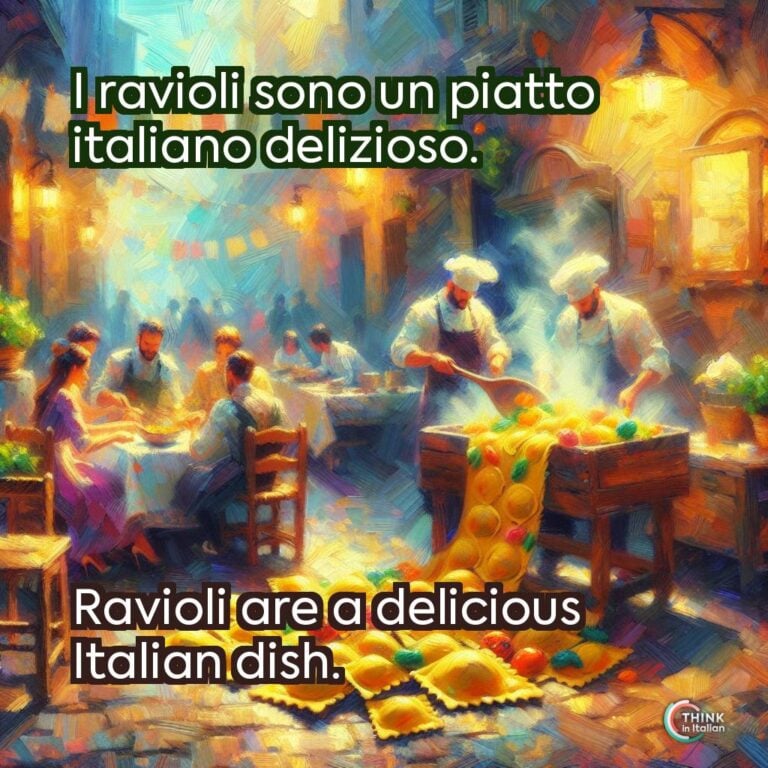
Ravioli is the Italian name for a type of stuffed pasta: little pockets of thin dough closed around a filling. In Italian it is the plural of raviolo (one piece) and it is pronounced “rah-VYOH-lee”.
Ravioli are one of the most beloved dishes in Italian cuisine. The origin of the name is not certain, but a common theory is that it derives from the Italian verb riavvolgere (to wrap, to encase).
In fact, ravioli are little parcels of dough that can be filled with a variety of delicious ingredients, therefore this name might reflect the wrapping or folding process of enclosing fillings within pasta dough.
Another theory connects it to the Genoese term rabiole, meaning “something of little value”, which could refer to the simplicity of ravioli originally made with leftover ingredients.
Whether it is true or just a legend, this etymological theory encapsulates ravioli‘s nature: a dish that takes basic components and transforms them into a delightful, flavorful meal.
A third explanation links the word to rava, a northern Italian word for “turnip”, which would make ravioli “little turnips”. Some dictionaries give this origin, but historians point out that the early recipes do not contain turnips, so the question stays open.
The History of Ravioli
The history of ravioli is deeply rooted in Italy. The earliest written records of ravioli are found in 14th-century Italian documents, suggesting that the dish may have originated as a food for the noble class.
Giovanni Boccaccio, one of the best Italian poets of all times, even mentions them in his Decameron, signifying the dish’s widespread appeal during the time. The 14th-century merchant Francesco Datini of Prato also mentions ravioli in his letters.
Initially, ravioli fillings were simple, using ingredients like cheese and herbs. As the dish spread across Italy, each region adapted it to local ingredients, creating fascinating variations.

The simplicity of ravioli’s ingredients reflects Italy’s principle of la cucina povera (peasant cooking), where creativity transforms humble ingredients into a meal that symbolizes comfort, warmth, and community.
Regional Variations Across Italy
As most Italian dishes, ravioli have their own version depending on the region. Here are some examples:
- Northern Italy: In Piedmont, we have agnolotti, small, square ravioli-like pasta, traditionally filled with roasted meat and vegetables. In Lombardy we have the typical tortelli, usually filled with pumpkin served with sage and butter, a classic winter dish.
- Central Italy: In Tuscany, ravioli are commonly filled with ricotta and spinach, paired with simple sauces like tomato or butter and sage.
- Southern Italy: Sardinia has culurgiones, a type of ravioli filled with potato, mint, and pecorino cheese. These ravioli are often sealed in a way that resembles an ear of wheat.
- Coastal Areas: along Italy’s coastal regions, ravioli are usually filled with seafood, for obvious reasons.
Ravioli vs Other Stuffed Pasta
Italians call all of these pasta ripiena, “stuffed pasta”. Ravioli are the best known, and they are usually square. The other types differ in shape, size and where they come from:
- Tortellini: small rings folded around the filling, typical of Emilia-Romagna and often served in brodo (in broth).
- Cappelletti: “little hats”, folded in a similar way to tortellini.
- Mezzelune: “half moons”, filled pasta cut in a semicircle.
- Agnolotti and tortelli: the Piedmont and Lombardy versions described above.
How to Make Ravioli
If you, like me, love cooking, then pay attention to this paragraph. It won’t be an actual recipe, but it can give you precious insights on how to make ravioli.
The art of making ravioli is as much about technique as it is about ingredients. Fresh pasta dough requires eggs, flour, and a bit of salt.
In northern Italy, where eggs are plentiful, dough is richer and softer. In the south, where durum wheat is more common, pasta dough often omits eggs, resulting in a firmer texture.
The process of making ravioli involves rolling out two sheets of dough, placing small dollops of filling on one sheet, covering with the other, and cutting individual pieces.
Edges are firmly sealed to ensure ravioli stay intact during cooking and don’t lose their filling. Interestingly, each region has specific shapes and methods, as well as filling.
Filling also varies seasonally and regionally. Spring might bring ricotta and spinach ravioli, while fall welcomes pumpkin or mushroom fillings, which I love!
Fillings and Sauces: How Italians Eat Ravioli

In Italy ravioli are a primo, a first course, and the sauce is kept light so that it does not cover the filling. The most common combinations are:
- ravioli di ricotta e spinaci – ricotta and spinach, often with burro e salvia (butter and sage)
- ravioli di zucca – pumpkin
- ravioli di carne – meat, often with a tomato sauce or a ragù
- ravioli di pesce – fish, especially along the coast
Here is how you would use these words at the table:
Vorrei i ravioli di ricotta e spinaci, per favore.
I would like the ricotta and spinach ravioli, please.
Questi ravioli sono fatti in casa.
These ravioli are homemade.
Ti piacciono i ravioli di zucca?
Do you like pumpkin ravioli?
The word for filling is ripieno, which comes from the same family as pieno (full). For more words about eating and dishes, see the Italian vocabulary for food.
Ravioli: Singular or Plural?
In Italian, raviolo is one piece and ravioli is more than one. In English, people usually treat “ravioli” as a mass noun and say “a plate of ravioli”, or even “a ravioli” for one piece. In Italian you say un raviolo for one and i ravioli for the dish.
Interesting Facts, Legends, and Rituals
Ravioli are surrounded by folklore and traditions across Italy:
- Folklore: legend holds that a Genoese sailor invented ravioli by wrapping his rations in dough to preserve them, creating a rudimentary form of the dish.
- Festivals and Holidays: in Sardinia, culurgiones are shaped like wheat ears and served on holidays, symbolizing prosperity. Liguria celebrates All Saints’ Day with sweet ravioli filled with chestnuts or jam.
- New Year’s Tradition: In Emilia-Romagna, ravioli are served on New Year’s Day as a symbol of good fortune and family unity.