
Truncation in Italian

An interactive lesson guiding you from key takeaways to expert insights. Comes with Q&A, useful vocabulary, interactive audio, quizzes and games.

Ho letto un bel libro.
Published Sep 12, 2024
Updated Sep 28, 2024
Reviewed by
Italian language tutor, course author. MEng, MBA. Member of the International Association of Hyperpolyglots (HYPIA). After learning 12 languages, I can tell you that we all master languages by listening and mimicking. I couldn’t find an app to recommend to my students, so I made my own one. With my method, you’ll be speaking Italian from Lesson 1.
Written by
No data was found

Key Takeaways

  • Truncation in Italian, or troncamento, involves shortening words for informal or rhythmic expression, especially in spoken language.
  • Common examples include grande to gran and buono to buon before masculine nouns.
  • Definite articles influence truncation; for instance, bello becomes bel before singular masculine nouns.
  • Some truncated forms, like buongiorno, have become fixed expressions in the Italian lexicon, showing language evolution.
  • Understanding the rules of truncation enhances fluency and appreciation of the rhythm and flow in Italian speech.

Stefano's Insights

Play to see captions...
Ah, il troncamento, quel piccolo trucco linguistico che fa sembrare l'italiano così musicale! È come quando tagli un po' di capelli e all'improvviso sembri più fresco. In italiano, parole come 'grande' diventano 'gran' e 'santo' diventa 'san' per rendere la frase più snella e piacevole all'orecchio. Ricordo quando imparavo l'italiano e mi chiedevo perché tutti dicessero 'buongiorno' e non 'buono giorno'. È tutta una questione di ritmo e fluidità! Anche 'bello' diventa 'bel' davanti a certe parole, proprio come gli articoli definiti. Queste regole non sono solo estetiche, sono essenziali per capire la melodia della lingua. Quindi, ascolta bene e lascia che il troncamento faccia la magia!
Ah, truncation, that little linguistic trick that makes Italian sound so musical! It's like trimming your hair and suddenly looking fresher. In Italian, words like 'grande' become 'gran' and 'santo' becomes 'san' to make the phrase slimmer and more pleasant to the ear. I remember learning Italian and wondering why everyone said 'buongiorno' instead of 'buono giorno.' It's all about rhythm and fluidity! Even 'bello' becomes 'bel' before certain words, just like definite articles. These rules aren't just aesthetic; they're essential to understanding the melody of the language. So, listen closely and let truncation work its magic!

Quick facts

What is truncation in linguistics?

Truncation shortens words for informal, rhythmic, or concise expression.

How does truncation differ from elision?

Truncation shortens words; elision removes vowels, indicated by an apostrophe.

Is truncation more common in spoken or written Italian?

Truncation is more common in spoken Italian but some forms enter written lexicon.

Can you give an example of truncation in Italian adjectives?

"Grande" often truncates to "gran," as in "un gran giorno" (a great day).

How does truncation affect the adjective "buono"?

"Buono" truncates to "buon" before singular masculine nouns starting with a consonant or vowel.

Are there exceptions to truncation for "buono"?

Yes, exceptions include masculine nouns starting with z, gn, ps, or s+consonant.

How does "bello" change with truncation?

"Bello" becomes "bel" before singular masculine nouns that would take "il" as the definite article.

How does truncation apply to the indefinite article "uno"?

"Uno" truncates to "un" before singular masculine nouns starting with a regular consonant or vowel.

What common compound words in Italian originated from truncation?

Examples include "buongiorno" (good morning) and "buonanotte" (good night).

Why is understanding truncation important for learning Italian?

It enhances phonetic and grammatical comprehension, reflecting the language's rhythmical and harmonious flow.

Audio images

🔊
Il treno è veloce
🔊
È un bellissimo panorama.
🔊
Mangi un buon pranzo.
🔊
Un bel cavallo corre velocemente.
🔊
Il gatto beve.
🔊
Grande diventa gran, come in un gran giorno.
🔊
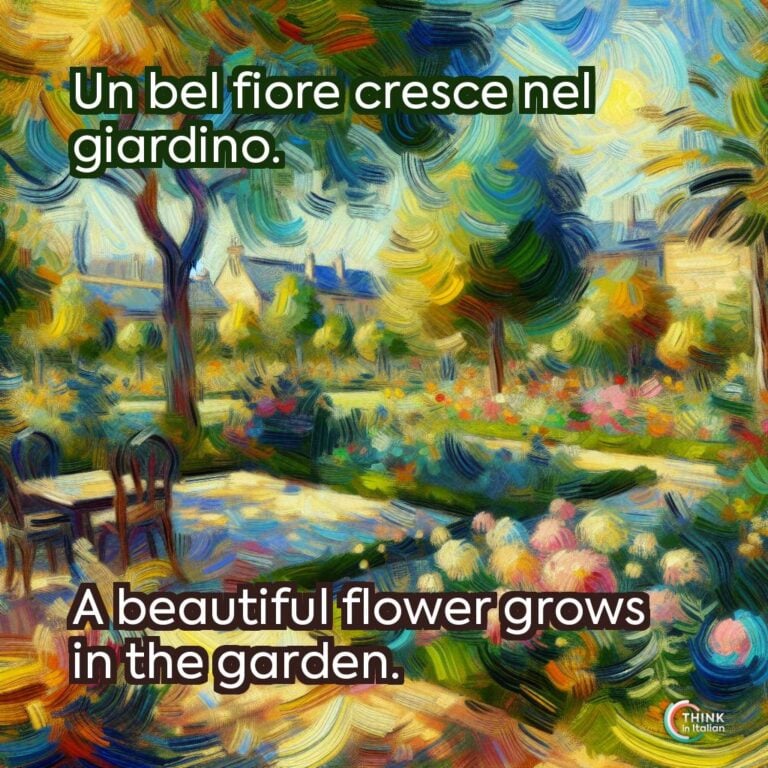
Un bel fiore cresce nel giardino.
🔊
Buon viaggio!
🔊
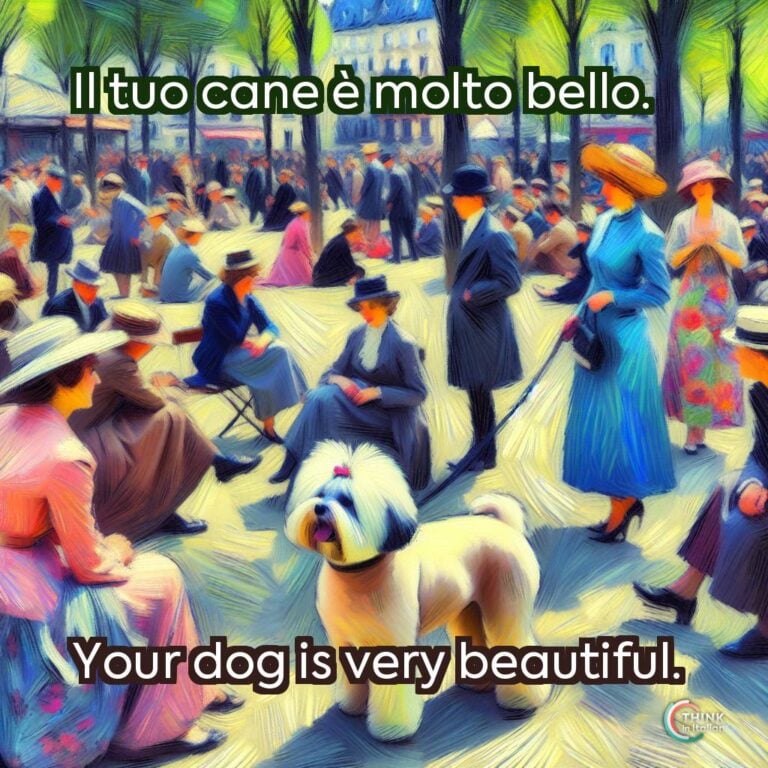
Il tuo cane è molto bello.
🔊
Ho letto un bel libro.
Learn on the go
Install the FREE Think In Italian app for faster loading, offline mode, and quick access anytime.
No registration needed. Works on all devices. Ready in 1 click and 3 seconds.

Main Article

What is Truncation?

Truncation, known as troncamento is the linguistic phenomenon where certain words are shortened when used in specific contexts to create a more informal expression or a more rhythmic or concise phrase.

Truncation is especially common with adjectives that precede masculine nouns and it must be distinguished from elision, which is the removal of a vowel and is indicated with an apostrophe (like l’amico for lo amico).

In Italian, truncation is more common in spoken language than in written language. However, some truncated words entered the Italian lexicon in their new truncated form and are used that way.

Let me show you some examples of truncation in Italian:

  • Grande often becomes gran, as in un gran giorno (a great day).
  • Santo becomes San before a consonant, like San Marco instead of Santo Marco.
  • Buono becomes buon as in un buon amico (a good friend).

You can try it yourself: say the word buongiorno and hear how it easily rolls off the tongue, resulting also more pleasing to the ear. If you’re interested in developing a better ear for these nuances, focus on how to develop pronunciation skills.

Truncation in Italian

Buono

In Italian, truncation affects the word buono in a way that is very similar to how definite articles behave.

Just as the definite articles il and lo are used in different contexts based on the noun they precede, buono is truncated to adapt to the sound and flow of the sentence, especially before a singular masculine noun starting with a consonant or a vowel.

Exceptions apply for singular masculine nouns starting with z, gn, ps, s followed by another consonant.

For example:

Stefano ha un buono stipendio, ma non un buon superiore.

Stefano has a good salary but not a good boss.

Bello

Learn Italian on the go
Learn in the car with Think in Italian

Also the adjective bello (beautiful) undergoes truncation in a way that is very similar to that of definite articles. In fact, it becomes bel when it comes before a singular masculine noun that would normally take il as the definite article.

Dovresti leggerlo, è un bel libro.

You should read it, it is a good book.

I created a table that shows the comparison between the adjective bello and definite articles:

Noun Definite Article Form of “Bello” Example with Definite Article Example with “Bello”
Libro (book) Il Bel Il libro Bel libro
Zaino (backpack) Lo Bello Lo zaino Bello zaino
Amico (friend) L’ Bell’ L’amico Bell’amico
Libri (books) I Bei I libri Bei libri
Studenti (students) Gli Begli Gli studenti Begli studenti
Casa (house) La Bella La casa Bella casa
Amica (female friend) L’ Bell’ L’amica Bell’amica
Case (houses) Le Belle Le case Belle case

Uno

Uno is an indefinite article used used before singular masculine nouns that begin with a consonant cluster, namely a consonant followed by another consonant.

However, when uno precedes a singular masculine noun that starts with a regular consonant or vowel, it truncates to un. This is why saying un’albero is incorrect: the proper form is un albero.

The truncation rule applies here because albero (tree) is a masculine noun starting with a vowel, and in Italian, the indefinite article un does exist and is used specifically before singular masculine nouns that begin with a vowel.

The use of an apostrophe with un is reserved for feminine nouns only, as in un’amica (a female friend).

Truncated Words That Entered the Lexicon

As I mentioned at the beginning of this article, truncated forms are so prevalent in Italian that some of them became the default way of expressing certain phrases, evolving into fixed expressions within the language.

Over time, these truncations have let to the creation of compound words, that result from merging two words into one unified expression that is now a standard in the Italian lexicon.

Free Guide
How to Learn Languages Fast

For example, buongiorno (good morning) and buonanotte (good night) are formed by combining buon or buona (good) with giorno (day) and notte (night), respectively.

This process of truncation and compounding reflects the dynamic nature of the Italian language, where convenience and fluidity in communication often shape the evolution of words and phrases.

Understanding Truncation

Truncation isn’t arbitrary: it is governed by specific rules related to the phonology of words. Truncation rules are not just about making the language sound prettier, but they are about efficiency and fluidity.

Italian speakers value a rhythmical and harmonious flow in their speech. If you want to learn Italian, understanding these phonetic and grammatical rules is vital.

Learning why Italians say buongiorno instead of buono giorno opens a window into the beauty and complexity of the Italian language.

Key Terms and Concepts

Troncamento

Troncamento is the linguistic phenomenon where words are shortened for a more informal expression or rhythmical flow, distinct from elision which uses an apostrophe.

Gran

Derived from grande, gran is used before masculine nouns for a compact, rhythmic expression, such as un gran giorno.

San

A truncated form of santo used before a consonant, common in names like San Marco instead of Santo Marco.

Buon

A truncated form of buono, adapted to the sound and flow before singular masculine nouns, as in un buon amico.

Bel

A truncated form of bello used before singular masculine nouns that take il, like bel libro.

Un

A truncated form of uno, used before singular masculine nouns starting with a vowel or regular consonant, such as un albero.

Test your knowledge in 10 quick questions

Words

troncamentotruncation
troncatotruncated
elisioneelision
grangreat (truncated form of 'grande')
sansaint (truncated form of 'santo')
buongood (truncated form of 'buono')
belbeautiful (truncated form of 'bello')
una (truncated form of 'uno')
buongiornogood morning (truncated form including 'buon')
buonanottegood night (truncated form including 'buona')

Phrases

troncamentotruncation
grangreat
sansaint
buongood
belbeautiful
unoone
una (masculine)
buongiornogood morning
buonanottegood night
amicofriend

Sentences

Grande diventa gran in contesti specifici.

Grande becomes gran in specific contexts.

Santo diventa San davanti a una consonante.

Santo becomes San before a consonant.

Buono diventa buon prima di un sostantivo maschile singolare che inizia con una consonante o una vocale.

Buono becomes buon before a singular masculine noun starting with a consonant or a vowel.

Bello si trasforma in bel davanti a sostantivi che prendono 'il' come articolo.

Bello changes to bel before nouns that take 'il' as the article.

Uno si tronca in un davanti a un sostantivo maschile singolare che inizia con una vocale.

Uno truncates to un before a singular masculine noun starting with a vowel.

Match the Phrases

Memory game

Flip the cards to find matching pairs!

Crossword

Across
Down
Answers
think in italian reddit

The comments section has moved to the Think In Italian Reddit community. Join today!

Italian word of the day
testo
In che lingua tradurranno il testo?
What language are they translating the text to?

What's new

stefano lodola italian teacher (1)
30 Free Courses to Get You Started ($40 Value)
italian audio lesson preview
italian audio reading preview
italian ai tutor preview
"I've tried other apps like Babbel and Memrise. None made me fluent or made me feel like I was making much meaningful progress in learning a language."
testimonial 2
Ecem Topcu
Aug 7, 2025