Different Italian Superstitions

An interactive lesson guiding you from key takeaways to expert insights. Comes with Q&A, useful vocabulary, interactive audio, quizzes and games.

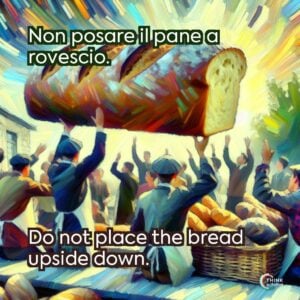
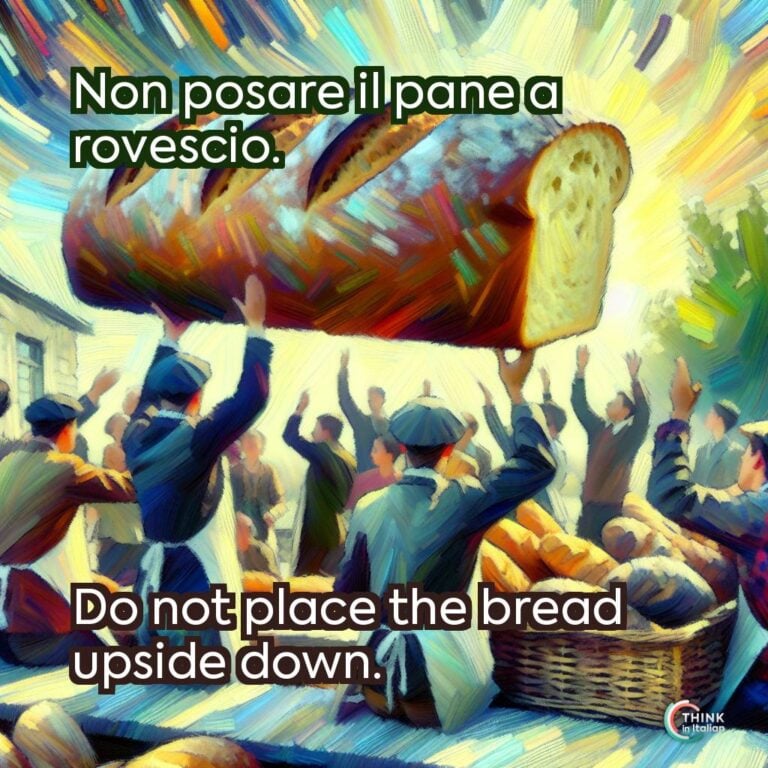
Non posare il pane a rovescio.
Published May 19, 2023
Updated Nov 8, 2024
Written by
Italian language tutor, course author. MEng, MBA. Member of the International Association of Hyperpolyglots (HYPIA). After learning 12 languages, I can tell you that we all master languages by listening and mimicking. I couldn’t find an app to recommend to my students, so I made my own one. With my method, you’ll be speaking Italian from Lesson 1.
Reviewed by
No data was found

Key Takeaways

  • Italian superstitions vary regionally, with northern and southern Italy holding distinct beliefs influenced by different cultural traditions.
  • The malocchio (evil eye) is a prevalent belief, with protective measures like the corno amulet to ward off bad luck.
  • Italians avoid the number 17 due to its association with death, making Friday the 17th particularly unlucky.
  • Food-related superstitions include the significance of bread and the practice of throwing spilled salt over the left shoulder for good luck.
  • In weddings, it’s bad luck for the groom to see the bride’s dress beforehand, and catching the bouquet predicts the next marriage.
  • Animals also play a role in superstitions, with black cats seen as bad omens and birds entering homes believed to foretell death.

Stefano's Insights

Play to see captions...
Ah, l'Italia! Non solo pasta e amore, ma anche un mare di superstizioni che colorano la vita quotidiana. Dal temuto numero 17, che fa scappare più di un italiano, al versare il vino per buona sorte, le credenze sono ovunque. Ricordo mia nonna che, ogni volta che vedeva un gatto nero, faceva tre passi indietro, come se stesse giocando a un gioco segreto. Ma attenzione, non sposatevi di martedì o lasciate il pane a testa in giù! Queste piccole superstizioni, per quanto curiose, ci offrono uno sguardo affascinante sulla cultura italiana, un mix di storia, folklore e un pizzico di magia. E voi, avete mai toccato ferro per scaramanzia?
Ah, Italy! Not just pasta and love, but also a sea of superstitions that color daily life. From the dreaded number 17, which makes many Italians flee, to spilling wine for good luck, beliefs are everywhere. I remember my grandmother, who would take three steps back every time she saw a black cat, as if playing a secret game. But beware, don't get married on a Tuesday or leave bread upside down! These little superstitions, as curious as they are, offer a fascinating glimpse into Italian culture, a mix of history, folklore, and a touch of magic. And you, have you ever touched iron for good luck?

Quick facts

What happens if you spill wine on the tablecloth in Italy?

Italians believe spilling wine on the tablecloth brings good luck, often intentionally spilling a small amount for fortune.

Why is it bad luck to leave bread upside down in Italy?

Bread is considered sacred in Italy; leaving it upside down is thought to bring bad luck, a tradition dating back to ancient times.

What food do Italians eat on New Year's Eve for good luck?

Eating lentils on New Year's Eve is a widespread Italian superstition believed to ensure good fortune in the coming year.

Why should the groom not see the bride's dress before the wedding?

It’s considered bad luck in Italy for the groom to see the bride in her wedding dress before the ceremony, a belief taken very seriously.

What does catching the bride's bouquet signify in Italy?

Catching the bride's bouquet at an Italian wedding means the single woman will be the next to marry, a tradition popular worldwide.

Why avoid crossing paths with a black cat in Italy?

In Italy, a black cat crossing your path is believed to bring bad luck, so many Italians avoid them to prevent misfortune.

What number is considered unlucky in Italy?

The number 17 is considered unlucky in Italy due to its ancient association with death, a superstition with deep cultural roots.

How do Italians ensure good luck with their shoes?

Italians believe putting shoes on the wrong feet brings good luck, a quirky superstition practiced before important events.

How do Italians ward off the evil eye?

Italians use amulets, often shaped like horns or hands, to ward off the evil eye, a curse from envious or jealous individuals.

What does hearing an owl hoot signify in Italy?

Hearing an owl hoot outside your window in Italy is considered a sign of impending death, a superstition taken with great caution.

Audio images

🔊
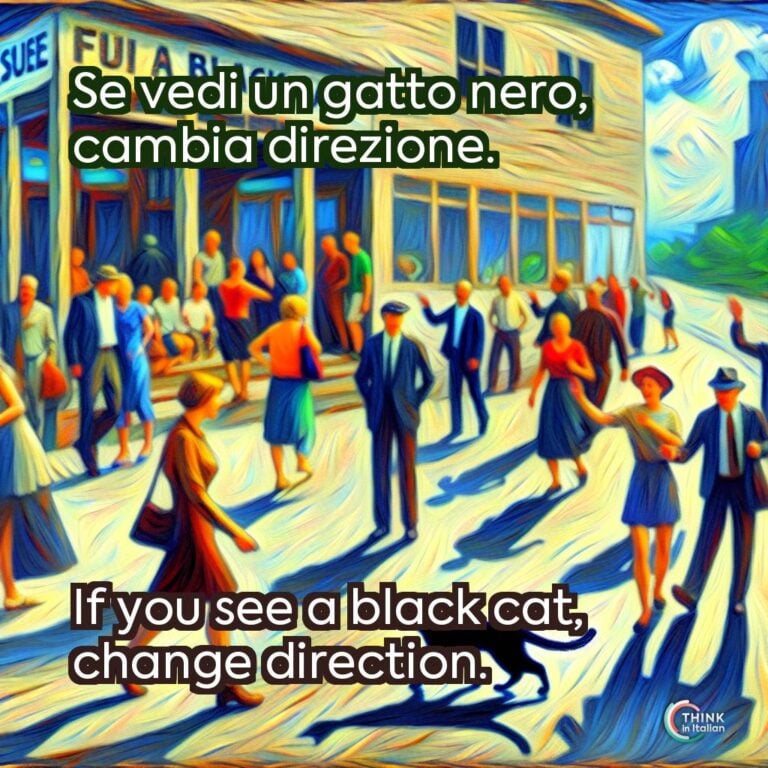
Se vedi un gatto nero, cambia direzione.
🔊
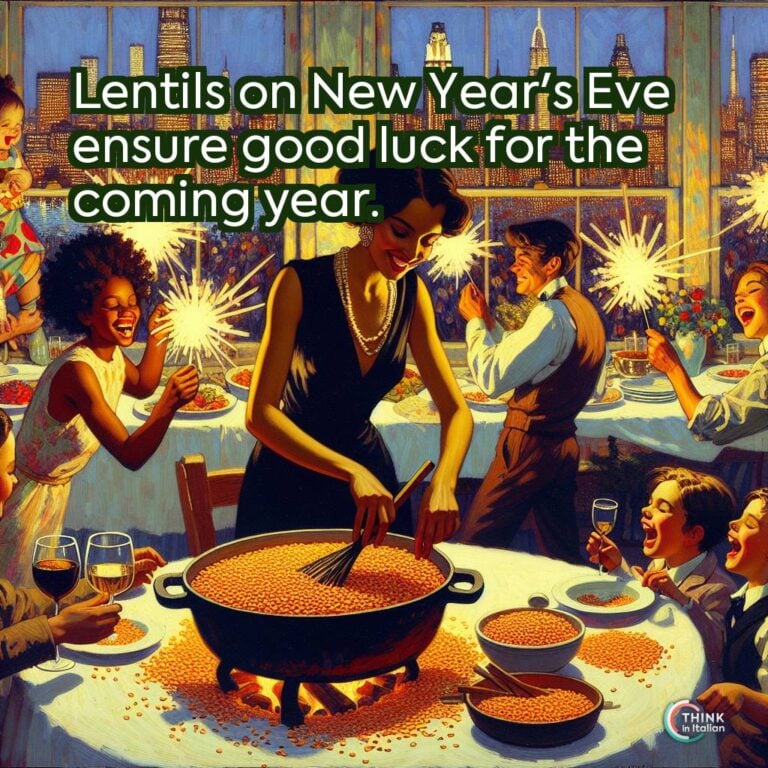
Lentils on New Year's Eve ensure good luck for the coming year.
🔊
Non posare il pane a rovescio.
Learn on the go
Install the FREE Think In Italian app for faster loading, offline mode, and quick access anytime.
No registration needed. Works on all devices. Ready in 1 click and 3 seconds.

Main Article

What Are Italian Superstitions?

Italy, renowned for its rich history, vibrant culture, and world-famous cuisine, is also home to a variety of deep-rooted superstitions that reveal much about the Italian way of life.

Whether mystical or practical, Italian superstitions are a window into the customs and mindset of Italians and Italian society. They include a range of beliefs and practices that have been passed down through generations.

However, they are not uniform across the country: northern Italy, influenced by Alpine and Central European traditions, has different beliefs compared to southern regions like Sicily, where customs have Arab and Greek roots.

Symbolism and Protective Measures

The Evil Eye and Rituals

The belief in the malocchio (evil eye) is pervasive in Italy. This curse stems from envy or jealousy and is said to bring bad luck.

To ward off its effects, Italians may use specific symbols or practice protective rituals like making the mano cornuta (hand gesture resembling horns). In more elaborate cases, older family members may perform incantations passed down through generations.

The Horn-Shaped Amulet

Central to many Italian superstitions are protective symbols and rituals. The corno, a horn-shaped amulet made of red coral, gold, or silver, is widely recognized as a charm to ward off the malocchio (evil eye).

This amulet, which resembles a chili pepper, is particularly popular in southern Italy. Touching or showing this talisman is believed to repel envy and misfortune.

If you have an Italian friend, ask them whether they have or ever had a corno as a key chain. At least 70% of Italians, including myself, had it at least once in their life.

The Power of Touching Iron

While many cultures touch wood for good luck, Italians often touch iron to ward off misfortune. The gesture of toccare ferro (to touch iron) is especially common when discussing negative possibilities.

Italian Superstitions

Superstitions Related to Numbers and Dates

  • The Number 17
Learn Italian on the go
Learn in the car with Think in Italian

Unlike the Western fear of the number 13, Italians avoid 17 due to its association with death. This belief stems from its Roman numeral form, XVII. If rearranged, it spells VIXI, meaning “I have lived”, therefore signifying that now I am dead.

  • Friday the 17th

Combining the superstition around 17 with the Christian belief that Friday was the day of Jesus’ crucifixion, Friday the 17th is considered a particularly unlucky day. Some Italians might take extra precautions on this day to avoid misfortune.

Superstitions Related to Food

  • The Significance of bread

Bread holds a sacred status in Italian households, symbolizing life and nourishment. Placing a loaf upside down is considered disrespectful and a symbol of bad luck, stemming from religious associations where bread represents the body of Christ.

  • Spilled salt

Spilling salt is seen as a bad gesture, a belief that dates back to times when salt was highly valuable. To counteract the misfortune, Italians throw a pinch of the spilled salt over their left shoulder to blind the devil lurking behind them.

  • Eating lentils for wealth

On New Year’s Eve, many Italians serve lentils which symbolize wealth and prosperity for the upcoming year. The small, coin-shaped legumes are believed to attract financial fortune.

Superstitions Related to Marriage

  • The wedding dress

It is considered bad luck for the groom to see the bride in her wedding dress before the ceremony. Many Italian brides take great care to keep their dresses hidden until the wedding day.

  • Catching the bouquet

A fun tradition of Italian weddings is when women gather behind the bride’s shoulders and the bride throws her bouquet. The common belief is that the single woman who catches the bride’s bouquet will be the next to marry.

  • Avoiding Tuesday and Friday weddings

There are two specific days of the week that are considered unlucky days for weddings: martedì (Tuesday) and venerdì (Friday).

The first is linked to Italian mythology, as it is associated to Mars, the god of war. The second is considered a day of fasting and penance for Christians.

Superstitions Related to Animals

  • The black cat
Free Guide
How to Learn Languages Fast

Seeing a black cat cross your path is regarded as a bad omen in Italy. This belief traces back to medieval beliefs that linked black cats to symbols of misfortune. Now, some Italians may even change their route to avoid the perceived bad luck.

What I find interesting about these beliefs is the legend behind them: this one states that, since there was no lighting system back then, if a cat crossed the street, it was very likely to be run over.

  • Birds entering the house

I personally did not know this one, but apparently a bird flying into the home is seen as an ominous sign, often believed to foretell death. Italians take great care to prevent this from happening.

Get rid of Misfortune

Italian superstitions, rich in history and full of symbolic meaning, still shape the culture and traditions of Italy. They may seem quirky or puzzling to outsiders, but they hold deep significance for us, acting as a bridge between past and present.

Whether you’re visiting Italy or simply curious about its culture, understanding these superstitions provides valuable insight into what makes the country’s heritage so fascinating.

Respecting these beliefs is essential, but it’s also important to recognize that, at their core, they are just that: superstitions. They add color and depth to life without needing to limit one’s potential or choices.

Key Terms and Concepts

Malocchio

Means the evil eye in Italian. It's a curse believed to stem from envy or jealousy, bringing bad luck to those affected.

Corno

A horn-shaped amulet used in Italy to ward off the malocchio. Often made of red coral, gold, or silver.

Toccare ferro

An Italian gesture of touching iron to ward off misfortune, similar to the phrase 'knock on wood' in English-speaking cultures.

Number 17 Superstition

In Italy, 17 is considered unlucky due to its Roman numeral XVII, which can be rearranged as VIXI, meaning 'I have lived' and implying 'now I am dead.'

Martedì and Venerdì

Considered unlucky days for weddings in Italy; Tuesday (martedì) is linked to Mars, the god of war, and Friday (venerdì) is a day of penance.

Black Cat

Seeing a black cat cross your path in Italy is a bad omen, associated with misfortune. This superstition originates from medieval beliefs.

Spilled Salt Ritual

In Italy, spilling salt is seen as unlucky. To counteract it, throw a pinch of salt over the left shoulder to blind the devil lurking behind.

Test your knowledge in 10 quick questions

Words

superstizionesuperstition
tradizionetradition
sfortunabad luck
fortunatolucky
matrimoniomarriage
gatto neroblack cat
civettaowl
ragnospider
funeralefuneral
ansiaanxiety

Phrases

superstizionesuperstition
sfortunabad luck
buona fortunagood luck
numero 17number 17
versare vinospilling wine
pane capovoltoupside down bread
sposabride
gatto neroblack cat
ragnospider
civettaowl

Sentences

Il numero 17 è considerato sfortunato in Italia, quindi molti lo evitano.

The number 17 is considered unlucky in Italy, so many people avoid it.

Versare vino sul tavolo può portare fortuna secondo una credenza popolare.

Spilling wine on the table can bring good luck according to a popular belief.

Non si dovrebbe mai lasciare il pane a testa in giù, è un segno di sfortuna.

One should never leave bread upside down, it's a sign of bad luck.

In alcune regioni italiane, vedere un gatto nero attraversare la strada porta sfortuna.

In some Italian regions, seeing a black cat crossing the road brings bad luck.

Si dice che sentire il verso di un gufo sia un presagio di morte.

It is said that hearing an owl hoot is an omen of death.

Match the Phrases

Memory game

Flip the cards to find matching pairs!

Crossword

Across
Down
Answers
think in italian reddit

The comments section has moved to the Think In Italian Reddit community. Join today!

Italian word of the day
consegnare
Non potremo consegnare in tempo.
We will not be able to deliver it in time.

What's new

stefano lodola italian teacher (1)
30 Free Courses to Get You Started ($40 Value)
italian audio lesson preview
italian audio reading preview
italian ai tutor preview
"I've tried other apps like Babbel and Memrise. None made me fluent or made me feel like I was making much meaningful progress in learning a language."
testimonial 2
Ecem Topcu
Aug 7, 2025