Exploring Italian Folklore: The Legends and Myths That Will Leave you Spellbound

An interactive lesson guiding you from key takeaways to expert insights. Comes with Q&A, useful vocabulary, interactive audio, quizzes and games.

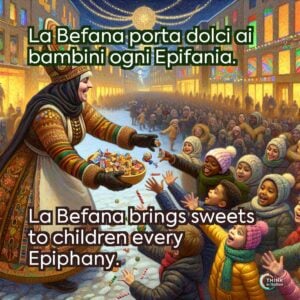
La Befana porta dolci ai bambini ogni Epifania.
Published May 13, 2023
Updated Dec 24, 2024
Written by
Italian language tutor, course author. MEng, MBA. Member of the International Association of Hyperpolyglots (HYPIA). After learning 12 languages, I can tell you that we all master languages by listening and mimicking. I couldn’t find an app to recommend to my students, so I made my own one. With my method, you’ll be speaking Italian from Lesson 1.
Reviewed by
No data was found

Key Takeaways

  • Italian folklore is a rich tapestry of legends and myths, reflecting Italy's diverse cultural heritage.
  • The legend of La Befana showcases the blend of pagan and Christian traditions in Italian celebrations.
  • Tarantella dance originated as a remedy for tarantula bites, illustrating how folklore influences modern Italian culture.
  • Festivals like Ferragosto highlight ancient Roman customs, still celebrated with parades and feasts across Italy.
  • Folklore tales, such as the Cimaruta, reveal the importance of protection and luck in Italian beliefs.

Stefano's Insights

Play to see captions...
Ah, il folklore italiano! Un mondo incantato di leggende e miti che ci fa viaggiare nel tempo. Dalla Befana che porta doni ai bambini, alla danza della Tarantella, il folklore italiano è un vero tesoro di storie tramandate oralmente. Ricordo quando mia nonna mi raccontava del Ponte del Diavolo, e io restavo a bocca aperta. È affascinante vedere come queste storie influenzino ancora oggi la cultura moderna italiana e oltre. Quando andate in Italia, non dimenticate di tuffarvi in queste storie che hanno incantato generazioni.
Ah, Italian folklore! An enchanting world of legends and myths that takes us back in time. From La Befana bringing gifts to children to the Tarantella dance, Italian folklore is a treasure of orally passed stories. I remember my grandmother telling me about the Devil's Bridge, and I was amazed. It's fascinating to see how these stories still influence modern Italian culture and beyond. When you visit Italy, don't forget to dive into these tales that have captivated generations.

Quick facts

What unique aspect of Italian culture is often overlooked?

Italian folklore, a treasure trove of legends and myths, often goes unnoticed despite its rich history and cultural significance.

How did Italian folklore integrate both paganism and Christianity?

Italian folklore evolved by adapting pagan beliefs to Christian practices, merging ancient traditions with new religious customs.

What supernatural elements are common in Italian folklore?

Italian folklore often features witches and ghosts, reflecting a rich tradition of supernatural stories.

What are the origins of Italian folklore, according to scholars?

Scholars suggest Italian folklore has roots in Etruscan, Roman, Greek, and Celtic cultures, highlighting a diverse cultural influence.

Who is La Befana in Italian folklore?

La Befana is an old woman who brings gifts to children on Epiphany, continuing her search for baby Jesus.

What is the legend behind the Tarantella dance?

The Tarantella dance originated from women bitten by tarantulas, who danced to exhaustion believing it cured the venom.

How is the Ferragosto Festival linked to ancient Rome?

The Ferragosto Festival dates back to Emperor Augustus, who proclaimed a summer respite, now celebrated with parades, fireworks, and feasts.

What symbols make up the Cimaruta talisman?

The Cimaruta talisman includes symbols like a sprig of rue, a crescent moon, a key, and a snake, believed to offer protection from evil.

What is the legend associated with the Fountain of Trevi?

Legend says tossing a coin into Rome's Fountain of Trevi guarantees a return trip to the city.

How has Italian folklore influenced modern popular culture?

Italian folklore has inspired elements in movies, TV series, children's books, and songs, showcasing its enduring cultural impact.

Audio images

🔊
Esplora la storia affascinante di La Befana in Italia!
🔊
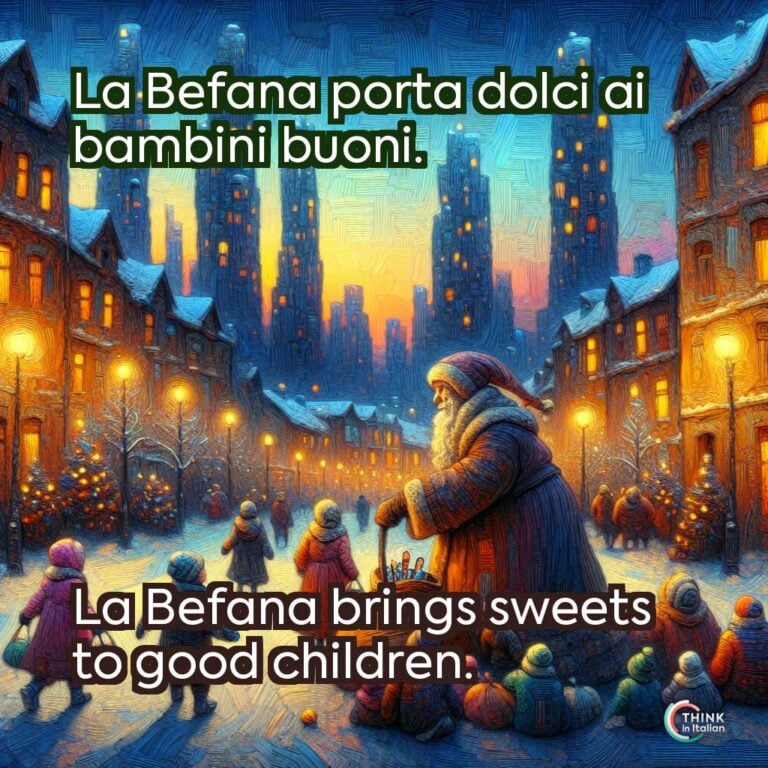
La Befana porta dolci ai bambini buoni.
🔊
La Befana porta dolci ai bambini ogni Epifania.

Main Article

Italian Folklore

The Origin of Italian Folklore

Italy is celebrated worldwide for its art, cuisine, and historical landmarks, but one of its most enchanting aspects is its rich folklore, with its blend of mythology, superstitions, regional legends, and symbolic traditions.

The Italian folklore originates in practices of ancient Etruscan, Roman, Greek, and even Celtic cultures, that blended tales of gods, spirits, and supernatural beings into their daily lives.

One of the earliest examples is the legend of Romulus and Remus, twin brothers raised by a she-wolf who founded Rome. This story dates back to the 8th century BCE and embodies Roman ideals of unity and strength.

With the advent of Christianity, many pagan traditions were adapted to align with the new faith, like Saturnalia, a Roman midwinter festival of feasting and gift-giving, that evolved into Christmas.

Regional Variations in Italian Folklore

Italy’s folklore is as diverse as its regions. For instance, the Sicilian legend of Colapesce tells of a boy who sacrificed himself to stabilize Sicily’s underwater columns, symbolizing resilience and devotion.

In Venice, ghost stories like the Phantom of the Canals reflect the city’s romantic yet mysterious atmosphere, while in Northern Italy, tales of the Benandanti – agrarian shamans who protected crops from witches – highlight the region’s connection to agriculture.

In Emilia-Romagna you can hear of the haunting story of Azzurrina, a ghostly girl who vanished from the Castle of Montebello, which captivates paranormal enthusiasts.

Italian Legends and Myths

Italian Legends

Among the most cherished is the tale of La Befana, the Christmas witch who visits children on Epiphany Eve, delivering sweets to the good and coal to the naughty.


Learn Italian on the go
Learn in the car with Think in Italian

According to the legend, she declined an invitation from the Three Wise Men to visit baby Jesus but regretted her decision and now searches for him annually, leaving gifts for children in hopes of redemption. Her story symbolizes generosity and second chances.

Rome’s Fountain of Trevi is another folkloric gem, tied to the superstition that tossing a coin into the water ensures a return to the city.

This tradition is rooted in ancient beliefs about water as a mystical portal, and continues to attract tourists worldwide. The money that is collected is donated to charity.

The Ferragosto Festival, celebrated on August 15th, originated as a Roman holiday decreed by Emperor Augustus to provide respite after the harvest season.

Today, it aligns with the Feast of the Assumption and features parades, feasts, and fireworks, bringing communities together to celebrate the height of summer.

Italian Myths

The Sirens of Capri are mythical creatures part woman and part bird or fish that are said to have inhabited the rocky shores of the island.

Their hauntingly beautiful voices lured sailors to their doom, as famously described in Homer’s Odyssey. To resist their deadly song, Odysseus plugged his crew’s ears with beeswax and tied himself to the mast.

Today, the myth symbolizes the allure and danger of the unknown, with Capri’s dramatic cliffs serving as a fitting backdrop.

The Tarantella is a traditional Italian dance. It has its origins in an old superstition: its frenzied dancing was believed to cure the venom of a tarantula bite, by expelling the poison.

Free Guide
How to Learn Languages Fast

Lake Como, known for its beauty, hides the darker legend of the Tarantasio, a dragon-like creature said to dwell in its depths. It embodied ancient fears of the unknown. Although the monster remains a myth, occasional reports of unusual disturbances in the lake keep the story alive.

Equally eerie is the tale of Azzurrina, a young albino girl who vanished from Montebello Castle in the 14th century. Her mother dyed her hair blue to hide her condition, earning her the nickname Azzurrina.

One stormy day, she disappeared without a trace, and her ghost is said to return each summer solstice, her cries echoing through the castle. This story continues to draw paranormal enthusiasts.

Learn More About Folklore in Italy

Exploring Italian folklore offers a deeper understanding of the nation’s culture and history. To immerse yourself in this enchanting world:

  • Visit historical sites like the Castle of Montebello or the cliffs of Capri, where legends come alive.
  • Participate in traditional festivals such as Ferragosto or Epiphany celebrations with La Befana.
  • Read literary works inspired by folklore, such as Italo Calvino’s Italian Folktales.

Italian folklore is a living tradition that continues to inspire and connect people across generations. Whether you’re in Italy or exploring from afar, these tales offer a magical journey into the heart of Italian culture.

Key Terms and Concepts

La Befana

La Befana is a mythical old woman in Italian folklore who delivers gifts to children on the night of January 5th, coinciding with the Epiphany.

Tarantella

The Tarantella is a lively traditional Italian dance believed to cure the venom of a tarantula bite, symbolizing vitality and joy during celebrations.

Ferragosto Festival

Celebrated on August 15th, Ferragosto originated from ancient Rome and is marked by parades, fireworks, and feasts, symbolizing rest and festivity.

Cimaruta

The Cimaruta is a talisman comprising symbols like a sprig of rue, believed to protect against evil spirits and bring good luck.

Romulus and Remus

Romulus and Remus are legendary twin brothers in Italian folklore associated with the founding of Rome, embodying the city's origins and mythic history.

Test your knowledge in 10 quick questions

Words

leggendalegend
mitomyth
folklorefolklore
tradizionetradition
culturaculture
storiahistory
magiamagic
fatafairy
spiritospirit
festafestival

Phrases

folclorefolklore
leggendalegend
mitomyth
tradizionetradition
La BefanaThe Befana
TarantellaTarantella dance
La Fontana di TreviThe Fountain of Trevi
Il Ponte del DiavoloThe Devil's Bridge
ispirazioneinspiration
culturaculture

Sentences

La Befana è una figura leggendaria che porta doni ai bambini il 6 gennaio.

La Befana is a legendary figure who brings gifts to children on January 6th.

La Tarantella è una danza tradizionale che simboleggia la lotta contro il veleno del morso di una tarantola.

The Tarantella is a traditional dance that symbolizes the fight against the poison of a tarantula bite.

La leggenda della Fontana di Trevi narra che lanciare una moneta garantisca il ritorno a Roma.

The legend of the Trevi Fountain tells that throwing a coin guarantees a return to Rome.

Il Ponte del Diavolo è una storia famosa legata ai ponti con archi impossibili costruiti dal Diavolo stesso.

The Devil's Bridge is a famous story linked to bridges with impossible arches built by the Devil himself.

Le storie del folklore italiano continuano a ispirare film, programmi televisivi e letteratura per bambini.

Italian folklore stories continue to inspire films, television shows, and children's literature.

Match the Phrases

Memory game

Flip the cards to find matching pairs!

Crossword

Across
Down
Answers
think in italian reddit

The comments section has moved to the Think In Italian Reddit community. Join today!

Italian word of the day
cancellato
Ho preso un appuntamento ma poi ho cancellato.
I made an appointment but then I cancelled.

What's new

stefano lodola italian teacher (1)
30 Free Courses to Get You Started ($40 Value)
italian audio lesson preview
italian audio reading preview
italian ai tutor preview
"I've tried other apps like Babbel and Memrise. None made me fluent or made me feel like I was making much meaningful progress in learning a language."
testimonial 2
Ecem Topcu
Aug 7, 2025