

Italian Dialogues Between Friends

An interactive lesson guiding you from key takeaways to expert insights. Comes with Q&A, useful vocabulary, interactive audio, quizzes and games.

Vado al bar con Luca.
Published Aug 28, 2023
Updated Aug 28, 2024
Written by
Italian language tutor, course author. MEng, MBA. Member of the International Association of Hyperpolyglots (HYPIA). After learning 12 languages, I can tell you that we all master languages by listening and mimicking. I couldn’t find an app to recommend to my students, so I made my own one. With my method, you’ll be speaking Italian from Lesson 1.
Reviewed by
No data was found

Key Takeaways

  • Introductions are essential; start conversations by sharing your name and asking about others to build rapport.
  • When meeting at a café, use polite phrases like “Posso avere il menù?” to enhance your dining experience.
  • Planning activities, such as a weekend getaway, encourages social interaction and strengthens friendships; ask friends about their availability.
  • Discussing work or school helps friends share updates and support each other's goals, fostering deeper connections.
  • Regular practice sessions and casual conversations in Italian can significantly improve your language skills and confidence.
  • Engaging in fun activities like cooking or watching Italian films can make learning enjoyable and memorable.

Stefano's Insights

Play to see captions...
Imparare l'italiano con gli amici è un'esperienza fantastica! Inizia con le basi, come presentarsi e ordinare al bar. Poi, pianifica un weekend al lago o discuti di lavoro e scuola. Ricordo quando ho iniziato a imparare il francese: la mia amica ed io ci incontravamo al caffè, parlavamo in francese e ridevamo dei nostri errori. La chiave è la costanza: pratica regolarmente, gioca a giochi di lingua, guarda film italiani e magari cucina insieme. È come una serata di giochi, film e cucina, ma in italiano! Buona fortuna e buon divertimento!
Learning Italian with friends is a fantastic experience! Start with the basics, like introducing yourself and ordering at a café. Then, plan a weekend at the lake or discuss work and school. I remember when I started learning French: my friend and I would meet at the café, speak in French, and laugh at our mistakes. The key is consistency: practice regularly, play language games, watch Italian movies, and maybe cook together. It's like a game, movie, and cooking night, but in Italian! Good luck and have fun!

Quick facts

How do Italians typically introduce themselves?

Italians often start with "Ciao" followed by their name and ask for the other person's name, making introductions friendly and informal.

What are common greetings at an Italian café?

Common greetings include "Ciao," "Buongiorno," and "Salve," which set a warm tone before ordering.

How do you ask for recommendations at an Italian café?

You can ask "Cosa mi consiglia?" to get personalized suggestions from the staff.

How do Italians typically order food without specific ingredients?

Italians say "Per favore, senza [ingredient]," such as "senza formaggio" to customize their orders.

What phrase is used to ask for the bill in Italian?

The phrase "Il conto, per favore" is used to request the bill in a polite manner.

How do Italians plan weekend getaways with friends?

They often discuss plans casually, suggesting activities like trips to the lake and confirming details like meeting times and places.

How do Italians discuss work projects among friends?

They share updates on current projects, including challenges and interesting aspects, often asking detailed follow-up questions to show interest.

What's a common topic when Italians talk about school?

Italians discuss subjects they are studying, their favorites, and future plans like university courses, reflecting their academic focus.

How can consistency help in learning Italian with friends?

Regular practice sessions help maintain momentum and reinforce learning, making language acquisition more effective and enjoyable.

How can cooking Italian recipes aid language learning?

Cooking together introduces food-related vocabulary and instructions, creating a practical and fun learning environment.

Audio images

🔊
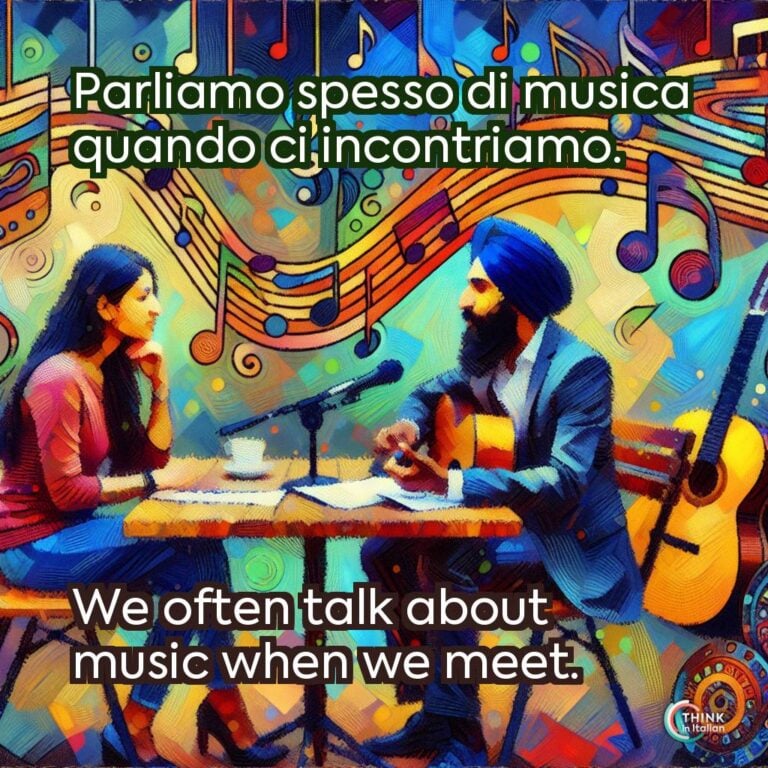
Parliamo spesso di musica quando ci incontriamo.
🔊
Sono felice di vederti dopo tanto tempo!
🔊
Vado al bar con Luca.
Learn on the go
Install the FREE Think In Italian app for faster loading, offline mode, and quick access anytime.
No registration needed. Works on all devices. Ready in 1 click and 3 seconds.

Main Article

Dialogues Between Friends: Examples to Learn Italian

Introductions
Start with the basics. Introducing yourself and greeting others is fundamental in any language.

A) Ciao! Mi chiamo Marco. Come ti chiami?

A) Hi! My name is Marco. What’s your name?

B) Ciao Marco, io sono Luca. Piacere di conoscerti.

B) Hi Marco, I’m Luca. Nice to meet you.

A) Piacere mio! Di dove sei?

A) Nice to meet you too! Where are you from?

B) Sono di Milano. E tu?

B) I’m from Milan. And you?

A) Io sono di Roma.

A) I’m from Rome.

Meeting at a Café

Meeting at a café in Italy is the perfect opportunity for a lively and engaging Italian dialogue between friends. When starting a conversation, make sure you begin with proper opening greetings.

Ciao! Come stai?

Hello! How are you?

Buongiorno! Come va?

Good morning! How are you?

Salve! Tutto bene?

Hello! Is everything good?

Then, it’ll come to ordering food and drinks in Italian. Familiarize yourself with the appropriate phrases and expressions.

Posso avere il menù?

Can I have the menu?

Sono pronto/a per ordinare

I am ready to order.

Vorrei un piatto di pasta

I would like a plate of pasta

Prendo un caffè

I’ll have a coffee.

Per favore, senza formaggio

Please, without cheese

Cosa mi consiglia?

What do you recommend?

Il conto, per favore

The bill, please.

Planning a Weekend Getaway

If there is something that Italians love doing, is being socially active when they are not working. If you have Italian friends, get ready to plan something over the weekend.

A) Ciao Maria, hai programmi per il weekend?

A) Hi Maria, do you have plans for the weekend?

B) Ciao Luca, non ancora. Perché, hai qualcosa in mente?

B) Hi Luca, not yet. Why, do you have something in mind?

A) Stavo pensando di fare una gita al lago. Ti va di venire?

A) I was thinking of taking a trip to the lake. Would you like to come?

B) Sì, sarebbe fantastico! Chi altro viene?

B) Yes, that would be fantastic! Who else is coming?

A) Ho invitato anche Giulia e Marco.

A) I also invited Giulia and Marco.

B) Perfetto, allora ci vediamo sabato mattina?

B) Perfect, so see you on Saturday morning?

A) Sì, ci vediamo alle 9:00 davanti al bar.

A) Yes, see you at 9:00 in front of the bar.

Talking about Work or School

Talking about one’s life is a central topic of conversation among Italian friends, which allows you to share personal updates and gain insights from others. Here are a few friendly suggestions for discussing work or school:

  • Example:

A) Ciao Maria, come va il lavoro?

A) Hi Maria, how’s work going?

B) Ciao Carlo! Il lavoro va bene, grazie. Sono molto impegnata con un nuovo progetto.

B) Hi Carlo! Work is going well, thanks. I’m very busy with a new project.

A) Che tipo di progetto?

A) What kind of project?

B) Stiamo sviluppando una nuova app. È molto interessante ma anche impegnativo.

B) We are developing a new app. It’s very interesting but also challenging.

A) Sembra fantastico! Lavori da casa o in ufficio?

A) Sounds fantastic! Do you work from home or at the office?

B) Principalmente da casa, ma vado in ufficio una volta alla settimana.

B) Mainly from home, but I go to the office once a week.

  • Example:

A) Ehi, Giulia, come va a scuola?

A) Hey Giulia, how’s school going?

B) Ciao Luca, tutto bene! Sto studiando molto per gli esami finali.

B) Hi Luca, everything’s good! I’m studying a lot for the final exams.

A) Quali materie stai studiando?

A) What subjects are you studying?

B) Matematica, storia e biologia. La biologia è la mia preferita.

B) Math, history, and biology. Biology is my favorite.

A) Interessante! Hai già deciso cosa fare dopo la scuola?

A) Interesting! Have you decided what to do after school?

B) Sì, voglio iscrivermi a medicina all’università.

B) Yes, I want to enroll in medicine at the university.

Tips for Practicing Italian with Friends

  • Set Regular Practice Sessions: consistency is key in language learning. Schedule regular practice sessions with your friends to keep the momentum going.
  • Use Italian During Casual Conversations: incorporate Italian into your everyday conversations, even if it’s just a few sentences at a time.
  • Play Italian Language Games: games can make learning fun and engaging and I personally love board games, so for me it is a perfect combination!
  • Watch Italian Movies or TV Shows: watching Italian media together can help improve your listening skills and comprehension.
  • Create a Study Group: form a study group with your friends to review grammar, vocabulary, and practice speaking.
  • Cook Italian Recipes Together: cooking Italian dishes together can be a fun way to practice food-related vocabulary and instructions.
Learn Italian on the go
Learn in the car with Think in Italian

Practicing Italian with friends can transform the learning process into an enjoyable and collaborative experience. By incorporating these tips into your routine, not only will you improve your language skills, but you will strengthen your friendships.

Free Guide
How to Learn Languages Fast

Buona fortuna e buon divertimento! (Good luck and have fun!)

Key Terms and Concepts

Ciao

A common Italian greeting equivalent to "hello" or "hi" used in informal settings with friends or acquaintances.

Piacere di conoscerti

An Italian phrase meaning "nice to meet you," used when meeting someone for the first time.

Buongiorno

An Italian greeting meaning "good morning." It's versatile enough for both formal and informal interactions during the early part of the day.

Il conto, per favore

A phrase used in cafes or restaurants meaning "the bill, please," when asking for the check after dining.

Gita

Refers to a short trip or excursion, often used in contexts of planning leisure activities or outings with friends.

Menù

The list of dishes available at a restaurant or cafe. Used when requesting the menu to order food or drinks.

Buona fortuna

An Italian expression wishing "good luck," used in various contexts to give encouragement or well-wishes.

Test your knowledge in 10 quick questions

Words

ciaohello
amicofriend
caffècoffee
menùmenu
contobill
programmaplan
weekendweekend
lavorowork
scuolaschool
praticapractice

Phrases

Ciao!Hello!
Mi chiamoMy name is
Come ti chiami?What is your name?
Posso avere il menù?Can I have the menu?
Il conto, per favoreThe bill, please
Hai programmi per il weekend?Do you have plans for the weekend?
Come va il lavoro?How's work going?
Come va a scuola?How's school?
Pratichiamo spessoLet's practice often
Guardare film italianiWatch Italian movies

Sentences

Ciao! Mi chiamo Marco, e tu come ti chiami?

Hi! My name is Marco, what's your name?

Posso avere il menù, per favore?

Can I have the menu, please?

Hai programmi per il weekend?

Do you have plans for the weekend?

Come va il lavoro?

How's work going?

Ci vediamo domani per un caffè?

Shall we meet tomorrow for a coffee?

Match the Phrases

Memory game

Flip the cards to find matching pairs!

Crossword

Across
Down
Answers
think in italian reddit

The comments section has moved to the Think In Italian Reddit community. Join today!

Italian word of the day
consegnare
Non potremo consegnare in tempo.
We will not be able to deliver it in time.

What's new

stefano lodola italian teacher (1)
30 Free Courses to Get You Started ($40 Value)
italian audio lesson preview
italian audio reading preview
italian ai tutor preview
"I've tried other apps like Babbel and Memrise. None made me fluent or made me feel like I was making much meaningful progress in learning a language."
testimonial 2
Ecem Topcu
Aug 7, 2025