qlango logo

Qlango expert review + alternatives to master Italian

qlango home

I sift through the plethora of language apps, delivering reviews based on deep expertise in language learning and teaching.

My review process starts with an initial walk-through, using the app for at least 15 minutes to capture first impressions and usability.

I then conduct a criteria-based evaluation focusing on key features like spaced repetition, user customization, and the balance between educational content and gamification.

My reviews are thorough, with a scoring system that emphasizes course quality (70%) over user experience (20%) and price (10%).

Importantly, I do not receive payment for these reviews.

Learn more on my review policy and process page.

Summary

0
/100
A simple and flexible app for learning vocabulary and basic phrases, but lacks depth for developing full language skills.

Course quality

55%
Focuses mainly on vocabulary and repetition, with minimal grammar, structure, or real conversational development.

User experience

65%
Easy to use and flexible, but interface feels dated and can occasionally be repetitive or basic.

Pricing

70%
Affordable with free version available, but limited depth reduces overall value compared to more complete platforms.

Pros

  • Short, quick lessons
  • Wide language selection
  • Flexible learning pace
  • Multiple exercise types
  • Language pair support

Cons

  • No grammar explanations
  • Limited speaking practice
  • Mostly beginner content
  • Repetitive exercises
  • Weak cultural context

Best suited for

Beginners wanting basic vocabulary or casual learners exploring Italian.

At a glance

qlango logo

App name

Qlango

qlango home

Made by

Qlango d.o.o.

User base

Users
0
Average score
0 /100
Reviews
0

Sentiment

  • Easy to use
  • Good for beginners
  • Too repetitive
  • Lacks grammar explanations
  • Limited advanced content

Concept

Vocabulary-based language learning through quizzes and repetition.

Available on

iOS, Android, Web

Levels covered

(A1) Beginner, (A2) Elementary, (B1) Intermediate

50 languages taught

Italian, Spanish, French, German, Portuguese, Dutch, Swedish, Norwegian, Danish, Finnish, Polish, Czech, Slovak, Hungarian, Romanian, Bulgarian, Croatian, Serbian, Slovenian, Estonian, Lithuanian, Latvian, Greek, Turkish, Russian, Ukrainian, Belarusian, Albanian, Icelandic, Filipino, Indonesian, Esperanto

Pricing, free trial, refunds

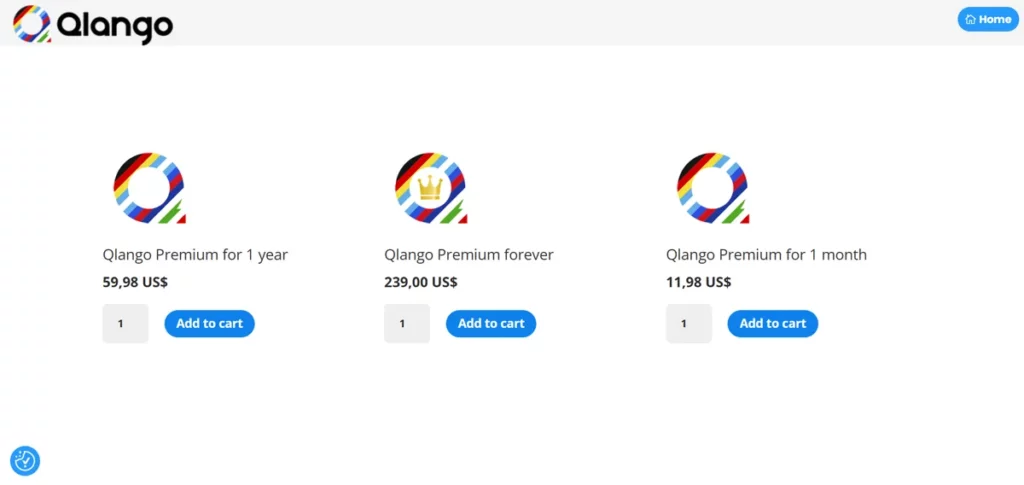
qlango pricing

Pricing

Monthly
0 US$
Yearly
0 $
Lifetime
0 $

Free trial

Available
0 days
Credit card needed

Refunds

Available
0 days

First-hand review

Walk-through

Intro

Hi everyone! Today I’m reviewing Qlango, a language-learning app that’s been around for several years and has a reputation for being simple, game-like, and beginner-friendly. I’ve spent some time testing the Italian course on Qlango, so if you’re here wondering whether this app is a good option to learn Italian, you’re in the right place.

So—let me walk you through how the app works, what stood out to me, and where I think it could improve, especially if your goal is to build a solid foundation in Italian.

What Qlango Is

Qlango is essentially a vocabulary-driven language app with short, bite-sized lessons. It covers dozens of languages, including some very rare ones, and most of its learning system revolves around quizzes, repetition, and phrase recognition. The platform was built mainly for absolute beginners and for people who want to pick up essential words or short phrases without committing to long study sessions.
Qlango walkthrough 1

How Qlango Works for Italian

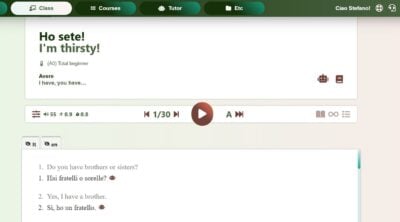
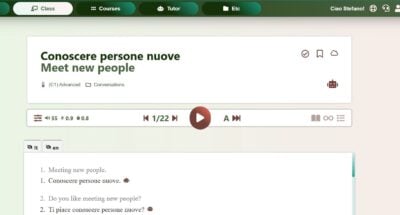
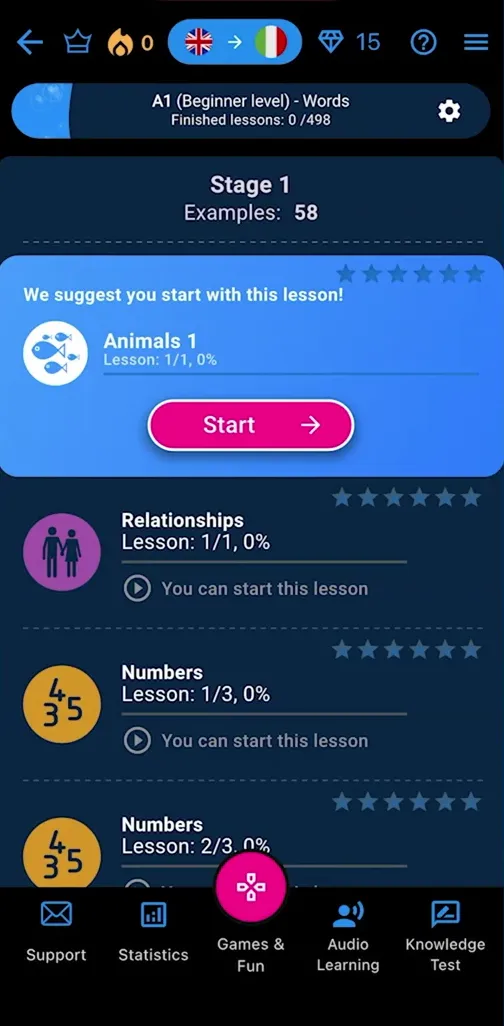
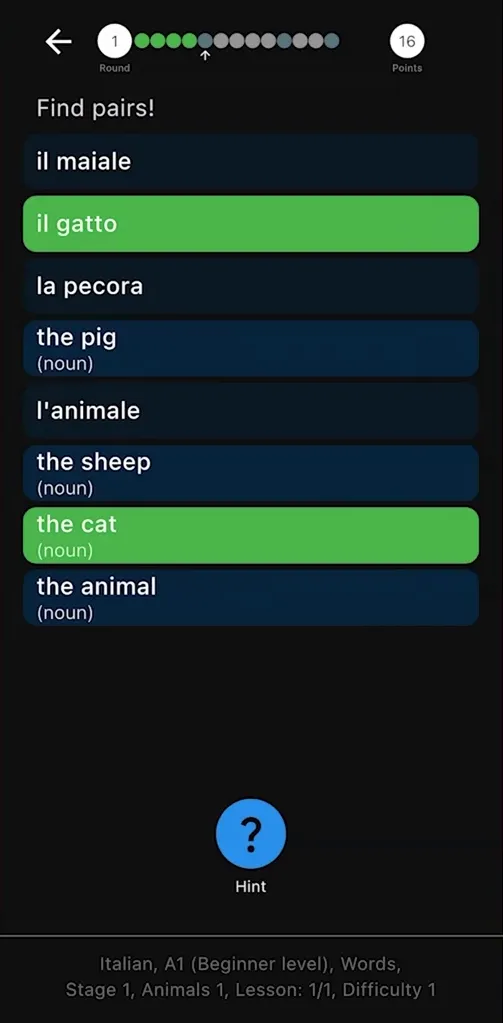
When I started the Italian course, I was immediately taken to the dashboard—there’s no placement test and no “why are you learning?” setup. The app divides vocabulary into themed stages, and I could jump across levels depending on what I wanted to learn. Each lesson is very short, usually a handful of questions paired with audio, so I was able to complete a lesson in just a few minutes.

Exercises vary between multiple-choice questions, dictation, writing answers, matching pairs, or building short phrases. I found that switching between these modes kept things from feeling too repetitive at first.
Qlango walkthrough 2

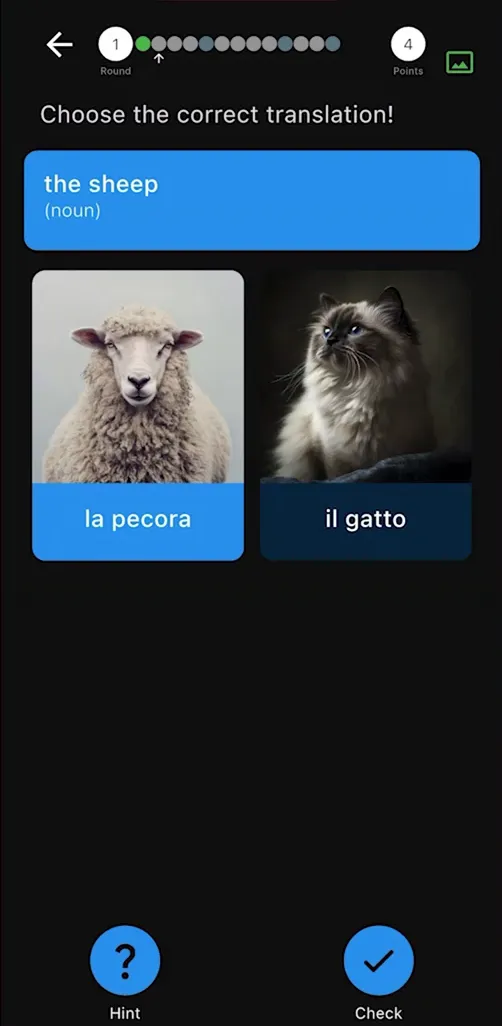
Something I did appreciate is that Qlango makes you answer in Italian only. There’s no bouncing back and forth between languages, which pushes you into a light version of immersion right away.

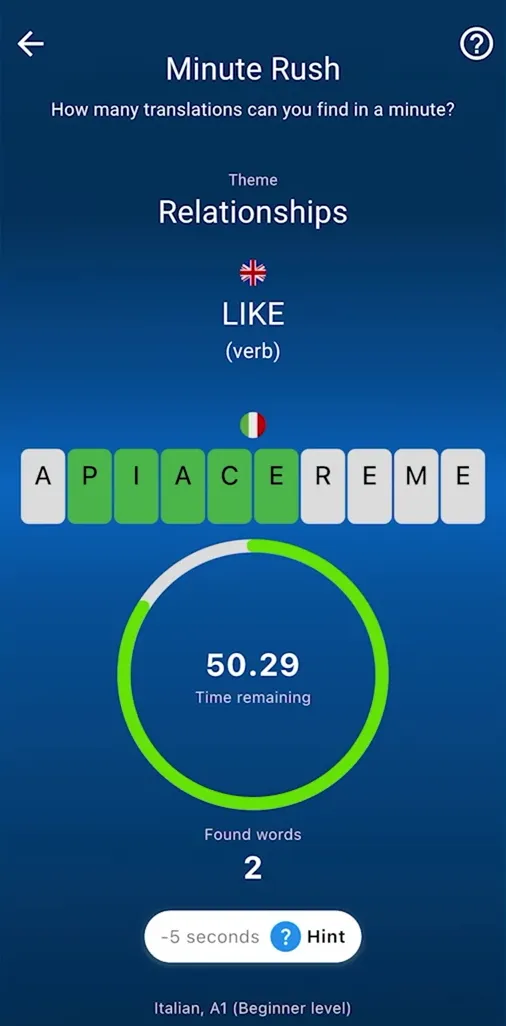
There’s also a system of streaks, peanuts (their internal reward), short games like Minute Rush, and weekly achievements. Nothing too flashy, but enough to keep the experience moving.
Qlango walkthrough 3

What I Liked While Testing Italian

One of my favorite things was the lesson length. The format really works for moments when you only have a few minutes to study. I could learn a few new Italian words or refresh older ones while waiting in line or during a short break.

I also liked the language-pair flexibility. I tried learning a bit of Italian from Spanish, and the transitions were smooth. This is a thoughtful feature that many apps still don’t offer.

The app also gives gentle hints when I didn’t remember a word, and I liked that I wasn’t just given the answer immediately. It made it easier to stay focused without feeling frustrated.
Qlango walkthrough 4

Where Qlango Feels Limited

Now, while testing Italian more deeply, I also noticed some limitations.

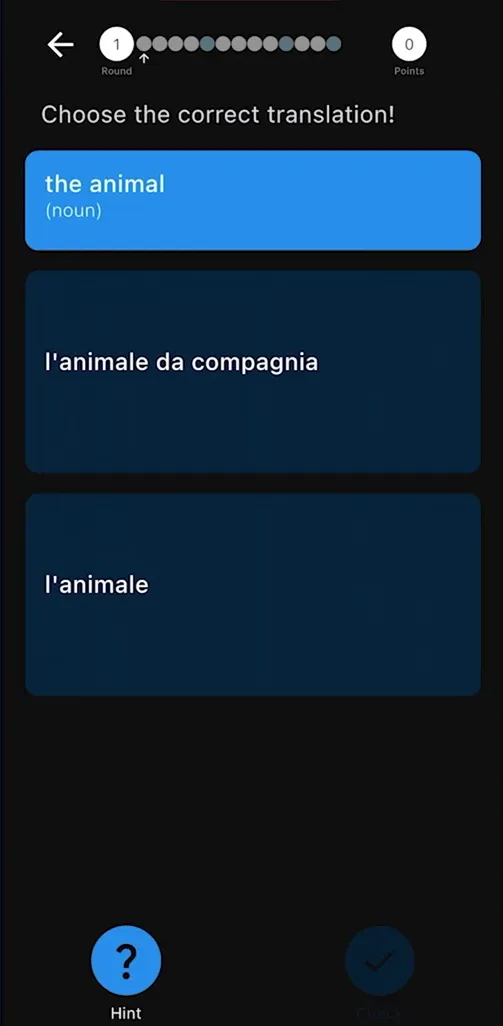
Most importantly, Qlango is really just a vocabulary app. There isn’t much grammar, structure, or explanation behind the phrases. After several sessions, I could recognize lots of individual words, but I didn’t feel I was learning how to actually use them in a conversation.

Another thing is that the content caps out pretty early. Many languages—including Italian—mostly stay around the beginner level. You can absolutely learn basic phrases and foundational vocabulary, but if your goal is to go beyond A1 or A2, you’ll eventually hit a wall.

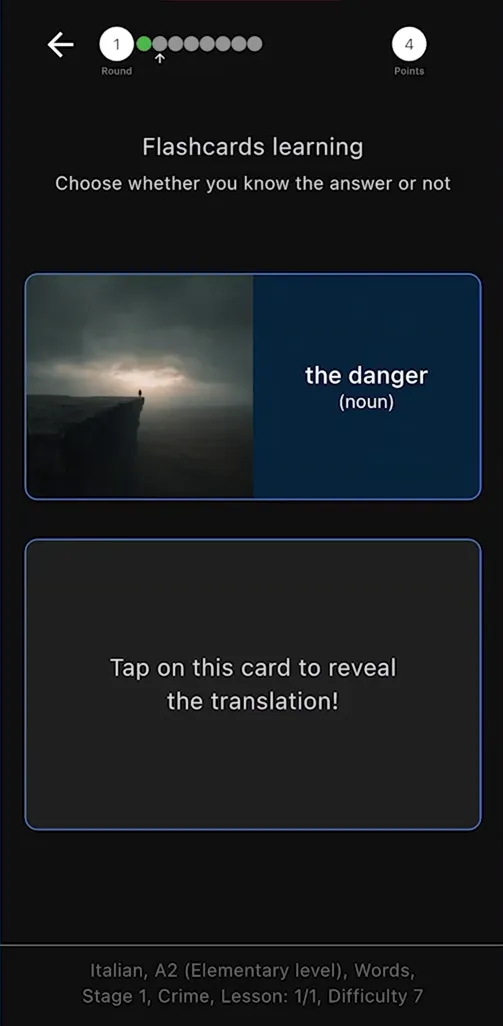
I also noticed the images in the lessons look like generic AI-generated pictures, and sometimes they don’t really add context—which could be a missed opportunity, especially for a language like Italian where cultural nuance is so important.

And depending on the device, some users have reported occasional glitches or a dated interface. I didn’t experience anything major myself, but the design does feel a bit older compared to other modern apps.
Qlango walkthrough 5

Who I Think Qlango Is Best For

After using Qlango for Italian, I feel like it works best for:

  • Complete beginners just starting from zero
  • People who mainly want to learn words and phrases
  • Busy learners who prefer super short sessions
  • Casual learners preparing for a trip
  • Or anyone curious and not ready to fully commit yet

If you want to build strong conversational Italian, understand grammar, or move beyond beginner levels, you’ll likely need to pair Qlango with another learning resource.
Qlango walkthrough 6

Final Thoughts

Overall, Qlango is light, simple, and easy to use. I liked how quick the lessons were, and I can see how it can help you get familiar with Italian vocabulary in a stress-free way. But because it stays very focused on memorization and doesn’t offer much structure, I wouldn’t rely on it alone if you’re aiming for real-world comprehension or long-term progress in Italian.

Features

Does the app offer plenty of repetition to acquire vocab and grammar naturally?

Can users customize settings, interface, content, etc.?

Is the interface and content focused on the course content instead of fluff and gamification?

Are the materials automatically tailored to the user’s profile?

Are sentences free from typos, grammar errors? Do they sound natural?

Are sentences realistic and useful?

Is there enough variety of materials in terms of topics, formats and levels?

Are audio materials easy to listen to in terms of recording  quality and speech rate?

Do speakers speak correctly, clearly and naturally?

Does the app offer plenty of speaking practice?

Is the app easy to set up, use and navigate?

Is the user interface neat and visually appealing?

Does the app load fast? Is it free from glitches and crashes?

Do the courses come with grammar notes?

No

Do the courses follow a well defined path?

No

Does the app recognize user speech?

No

Can users actively generate materials from their interests?

No

Are the courses available offline?

Yes

Conclusions

Would I take these courses?

I would use it as a quick vocabulary tool, but not as a main resource for learning Italian.

How to get the most out of the app

Use it for daily vocabulary practice and combine it with a platform focused on speaking and grammar.

Alternatives

Qlango is useful for vocabulary practice, but platforms focused on speaking and real-life Italian may offer a more complete learning experience.

Think In Italian is better than Qlango to master Italian

Think In Italian is the only app that gets your to speak Italian all the time. It comes with hundreds of grammar lessons and readings to listen and repeat, plus an AI tutor to review the  courses and practice conversation. See the full review.

FAQs

Is Qlango good for learning Italian?

Good for vocabulary, limited for full language development.

Can I become fluent with Qlango?

No, it lacks speaking and grammar depth.

Does Qlango teach grammar?

No, it mainly focuses on vocabulary.

Is Qlango free?

Yes, with limited daily lessons.

Is Qlango good for beginners?

Yes, especially for basic vocabulary and phrases.

A better choice: Think In Italian

Follow me to fluency​

Create a free lifetime account to get access to all the free courses and other resources.

Rave Reviews

"I've tried other apps like Babbel and Memrise. None made me fluent or made me feel like I was making much meaningful progress in learning a language."
testimonial 2
Ecem Topcu
Aug 7, 2025
"While other courses rely heavily on translation, grammar exercises, or memorization, Think in Italian makes you comfortable speaking Italian like an Italian."
testimonial 1
Deborah Hause
Jul 11, 2025
"While other courses rely heavily on translation, grammar exercises, or memorization, Think in Italian makes you comfortable speaking Italian like an Italian."
testimonial 3
Dom Scott
Jun 21, 2025
"Absolutely marvelous course. I have been using other learning apps, good enough, but I was getting fed up of the monotony and lack of stimuli. I found this course by accident, good accidents do happen."
testimonial 6
Bernard Evans
Jun 2, 2025
"This course is excellent. It's well organized and teaches Italian sentence structure and vocabulary in a logical progression. I've made good progress with Think In Italian."
testimonial 4
George Dielemans
May 27, 2025
"Think in Italian is brilliant. It is the basis of my Italian leaning. I use it everyday. I have researched and tried many other learning methods, but THIS ONE IS THE BEST most integrated, complete and truly current."
testimonial 5
Mark Kohr
May 3, 2025

★★★★★

Rated 4.9/5 based on 170+ reviews

What's new

Social signup
"I've tried other apps like Babbel and Memrise. None made me fluent or made me feel like I was making much meaningful progress in learning a language."
testimonial 2
Ecem Topcu
Aug 7, 2025