How I test and score
I sift through the plethora of language apps, delivering reviews based on deep expertise in language learning and teaching.
My review process starts with an initial walk-through, using the app for at least 15 minutes to capture first impressions and usability.
I then conduct a criteria-based evaluation focusing on key features like spaced repetition, user customization, and the balance between educational content and gamification.
My reviews are thorough, with a scoring system that emphasizes course quality (70%) over user experience (20%) and price (10%).
Importantly, I do not receive payment for these reviews.
Learn more on my review policy and process page.
Summary
Course quality
User experience
Pricing
Pros
- Strong focus on real-life conversations
- High-quality native speaker audio
- Helpful color coding for sentence structure
- Cultural and grammar notes included
- Clean and distraction-free interface
Cons
- Limited content beyond intermediate level
- Repetitive lesson structure
- Minimal grammar practice
- No real speech recognition feedback
- Content depth varies by language
Best suited for
Beginners learning Italian who want structured, conversation-based practice
At a glance

App name
Mango Languages
Made by
Mango Languages Inc.
User base
Sentiment
- Easy to use and intuitive
- Good for beginners
- Lessons feel repetitive
- Lacks advanced content
- Audio quality is excellent
Concept
Conversation-based language learning through structured dialogues and cultural insights.
Available on
Web, iOS, Android
Levels covered
(A1) Beginner, (A2) Elementary, (B1) Intermediate
70 languages taught
Italian, Spanish, French, German, Portuguese, Russian, Arabic, Chinese, Japanese, Korean
Pricing, free trial, refunds
Pricing
Free trial
Refunds
First-hand review
Walk-through
Intro
Hi everyone! In today’s video, I’m reviewing Mango Languages — an app that promises to help you speak Italian naturally through real-life conversations and cultural insights. I’ve spent some time using Mango to learn Italian, so I’ll walk you through how it works, what I liked, what could be better, and who it’s really for.
What it is
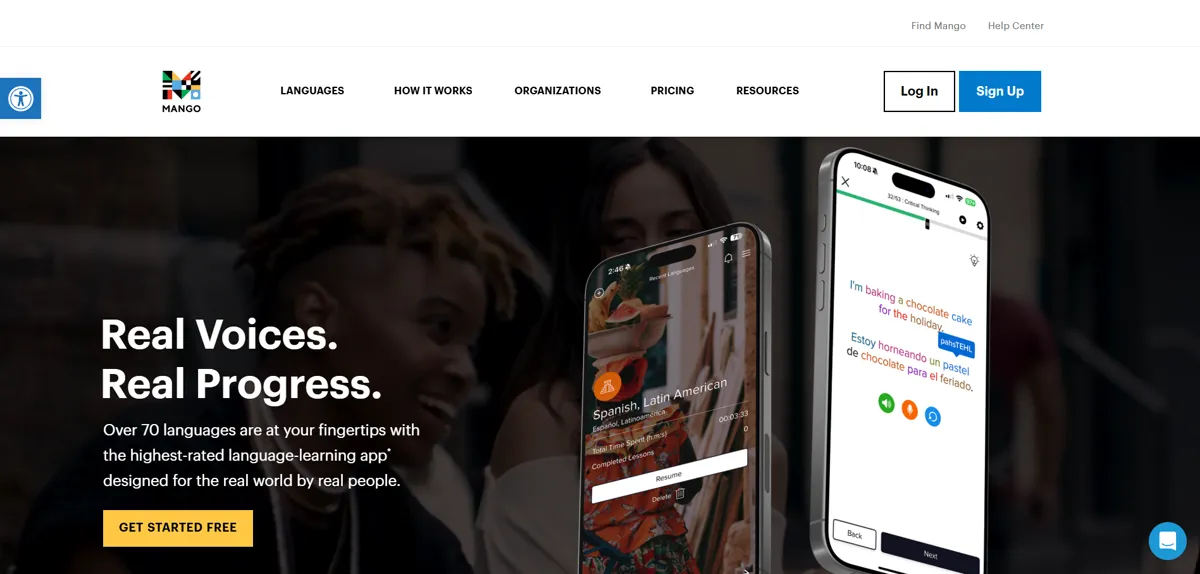
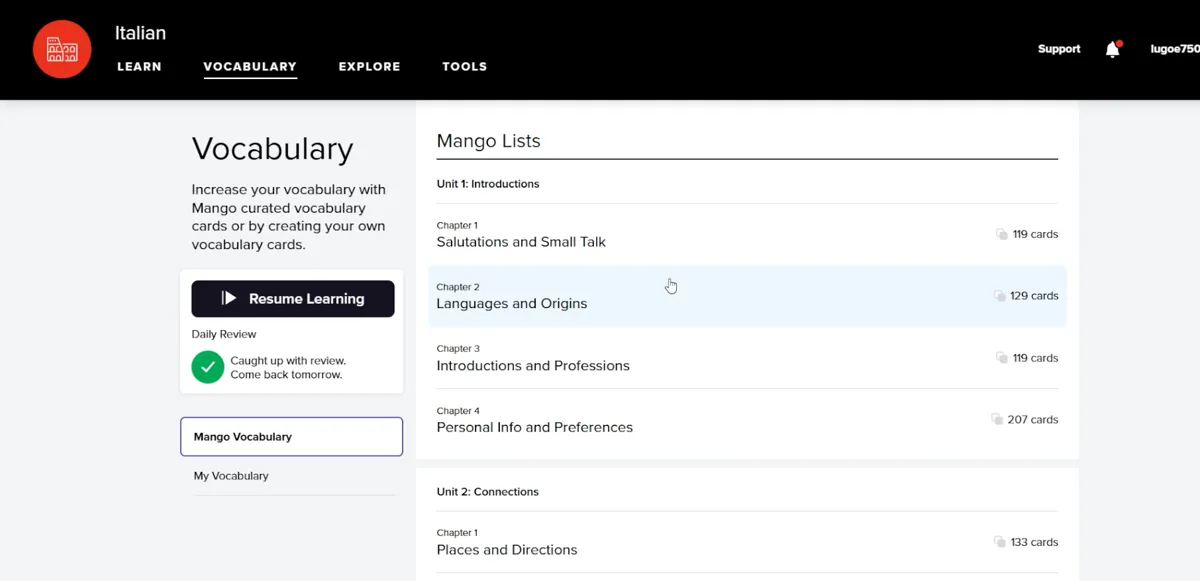
So, Mango Languages is an online platform and mobile app where you can learn over 70 languages — including Italian, of course. It’s often available for free through public libraries, but you can also subscribe directly for around 12 dollars a month for one language or 20 dollars for all of them. The interface is really clean, easy to use, and it feels more professional than some of the overly gamified apps out there.
How it works
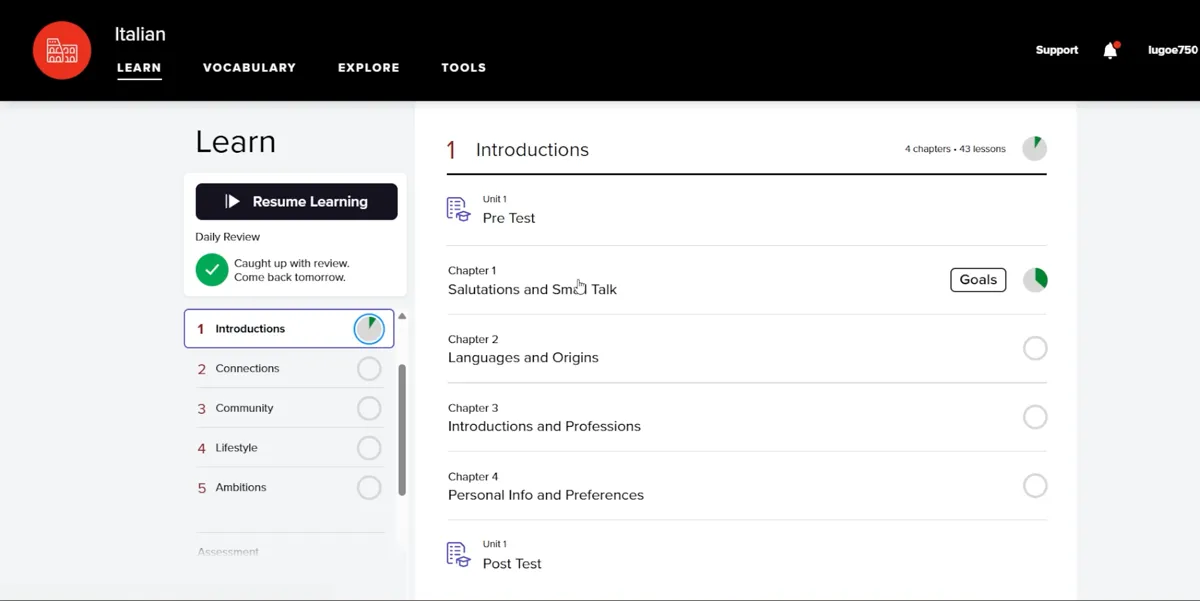
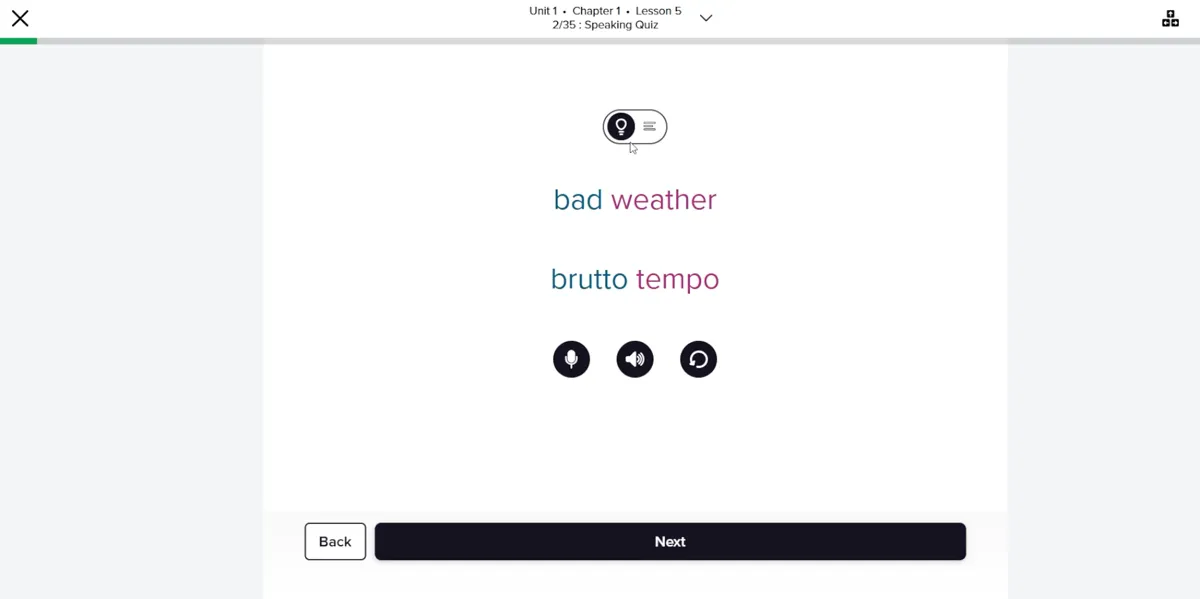
Each Italian course is divided into units, chapters, and lessons. The lessons are built around short conversations — for example, greetings at a café, meeting someone new, or asking for directions in Rome. Every lesson starts with a quick dialogue between native speakers, and then it breaks it down step by step. I could listen to each sentence, see both the Italian and English translation, and even toggle between a literal translation and a natural one. That’s actually one of my favorite features — it helps you understand the real structure of Italian sentences. There’s also color coding — words in Italian are highlighted to match their English equivalents. It’s a small thing, but it really helps when you’re trying to get used to Italian word order.
Pronunciation & speaking tools
For pronunciation, Mango lets you record your voice and compare your waveform to a native speaker’s. It’s not automatic voice recognition like in Babbel or Rosetta Stone, but it’s still helpful for hearing how close you sound. I also liked that you can hover over words to see phonetic spellings, which is great when you’re still figuring out how Italian vowels actually sound.
Learning experience
The app walks you through each lesson with prompts like “How do you say…?” or “Let’s try this again…” so it feels interactive, though after a while, the constant narration can get a bit repetitive. Luckily, you can turn the narrator off in the settings. Cultural and grammar notes are sprinkled throughout, which I found really helpful. For example, it explains when to use tu versus Lei — the informal and formal “you” in Italian — or gives little cultural insights about greetings and customs. I think that’s one of Mango’s strengths — it connects language learning with culture without overwhelming you with long explanations.
Pros
What I really like about Mango Languages is how approachable it feels. It’s perfect for beginners who want to start speaking right away without feeling lost in grammar rules. The audio quality is excellent — native speakers sound clear and natural — and the combination of color coding and literal translations really helps make sense of Italian sentence structure. I also appreciated the clean, minimal interface that keeps you focused on learning instead of chasing points or streaks.
Cons
That said, Mango isn’t perfect. Once you get past the basics, you’ll probably notice that it doesn’t go much beyond the intermediate level, so more advanced learners might find it a bit shallow. The lessons can also start to feel repetitive since the format doesn’t really change from one chapter to another, and while the pronunciation tools are helpful, there’s no real speaking feedback — you have to rely on your own judgment. It’s also missing deeper grammar explanations and writing practice, so you may need to supplement your studies with other materials as you progress.
Conclusion
Overall, I’d say Mango Languages is a solid choice if you’re just starting Italian and want something structured but simple. It’s especially good if your local library offers it for free. But if you’re looking for something more immersive or advanced… there’s another tool I’d recommend checking out — one that helps you truly connect with the Italian language and culture in a deeper way.
Features
Spaced repetition
Does the app offer plenty of repetition to acquire vocab and grammar naturally?
Customization
Can users customize settings, interface, content, etc.?
Focus on learning
Is the interface and content focused on the course content instead of fluff and gamification?
Personalization
Are the materials automatically tailored to the user’s profile?
Sentence accuracy
Are sentences free from typos, grammar errors? Do they sound natural?
Sentence relevance
Are sentences realistic and useful?
Variety and depth
Is there enough variety of materials in terms of topics, formats and levels?
Audio quality
Are audio materials easy to listen to in terms of recording quality and speech rate?
Speaker's quality
Do speakers speak correctly, clearly and naturally?
Speaking practice
Does the app offer plenty of speaking practice?
Ease of use
Is the app easy to set up, use and navigate?
Interface and design
Is the user interface neat and visually appealing?
Performance
Does the app load fast? Is it free from glitches and crashes?
Grammar notes
Do the courses come with grammar notes?
Learning path
Do the courses follow a well defined path?
Speech recognition
Does the app recognize user speech?
User-generated courses
Can users actively generate materials from their interests?
Offline access
Are the courses available offline?
Conclusions
Would I take these courses?
I would use it as a beginner tool to build a foundation in Italian, but I would not rely on it as my only resource long-term.
How to get the most out of the app
Follow lessons in order, focus on speaking exercises, and combine it with additional grammar and conversation practice outside the app.
Alternatives
Think In Italian is better than Mango Languages to master Italian
Think In Italian is the only app that gets your to speak Italian all the time. It comes with hundreds of grammar lessons and readings to listen and repeat, plus an AI tutor to review the courses and practice conversation. See the full review.
FAQs
Is Mango Languages good for beginners?
Yes, it's especially helpful for building basic conversation skills.
Does Mango Languages teach grammar?
Yes, but only basic explanations integrated into lessons.
Can I learn Italian fluently with Mango?
It helps build a foundation, but additional resources are needed.
Is Mango Languages free?
It can be free through libraries; otherwise it's subscription-based.
Does Mango Languages have speaking practice?
Yes, but without automatic pronunciation feedback.
A better choice: Think In Italian
Create a free lifetime account to get access to all the free courses and other resources.
Rave Reviews
★★★★★
Rated 4.9/5 based on 170+ reviews