
falou logo

Falou expert review + alternatives to master Italian

falou home

I sift through the plethora of language apps, delivering reviews based on deep expertise in language learning and teaching.

My review process starts with an initial walk-through, using the app for at least 15 minutes to capture first impressions and usability.

I then conduct a criteria-based evaluation focusing on key features like spaced repetition, user customization, and the balance between educational content and gamification.

My reviews are thorough, with a scoring system that emphasizes course quality (70%) over user experience (20%) and price (10%).

Importantly, I do not receive payment for these reviews.

Learn more on my review policy and process page.

Summary

0
/100
Falou is a solid app for building speaking confidence through structured dialogues, but it lacks depth in grammar, writing, and advanced content.

Course quality

83%
Strong focus on speaking and pronunciation, but limited grammar explanations and depth for advanced learners.

User experience

80%
Clean and simple interface, easy to use, but repetition and ads can affect the experience.

Pricing

75%
Premium unlocks full access, but the free version is limited and pricing may feel high compared to alternatives.

Pros

  • Strong focus on speaking practice
  • Real-life conversation scenarios
  • Native speaker audio
  • Short, manageable lessons
  • Clean and simple interface

Cons

  • Limited grammar explanations
  • Minimal writing practice
  • Repetitive lesson structure
  • Voice recognition can be inconsistent
  • Many features locked behind paywall

Best suited for

Beginners wanting structured speaking practice and pronunciation improvement.

At a glance

falou logo

App name

Falou

falou home

Made by

Moymer

User base

Users
0
Average score
0 /100
Reviews
0

Sentiment

  • Easy to use interface
  • Good for speaking practice
  • Too many ads in free version
  • Voice recognition issues
  • Lessons feel repetitive

Concept

Speaking-focused app using real-life conversations and voice recognition.

Available on

iOS, Android

Levels covered

(A1) Beginner, (A2) Elementary, (B1) Intermediate

25 languages taught

Italian, English, Spanish, French, German, Portuguese, Japanese, Korean, Chinese, Russian, Turkish, Dutch, Polish, Swedish, Danish, Norwegian, Croatian, Greek, Romanian, Ukrainian, Malay, Hungarian, Indonesian

Pricing, free trial, refunds

Pricing

Monthly
0 US$
Yearly
0 $

Free trial

Available
0 days
Credit card needed

Refunds

Not available

First-hand review

Walk-through

Intro

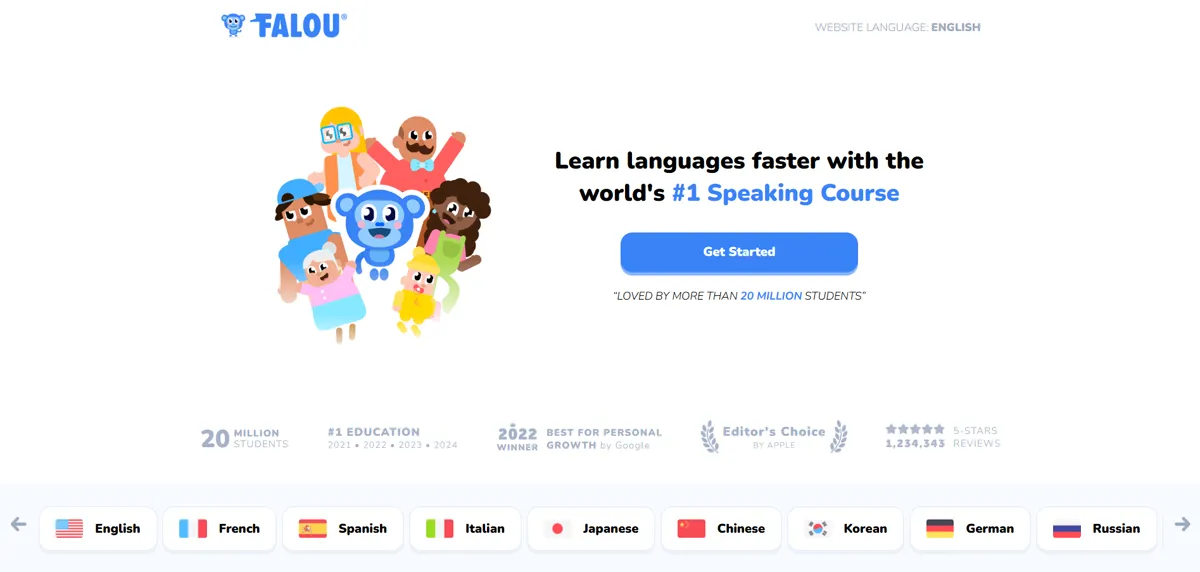
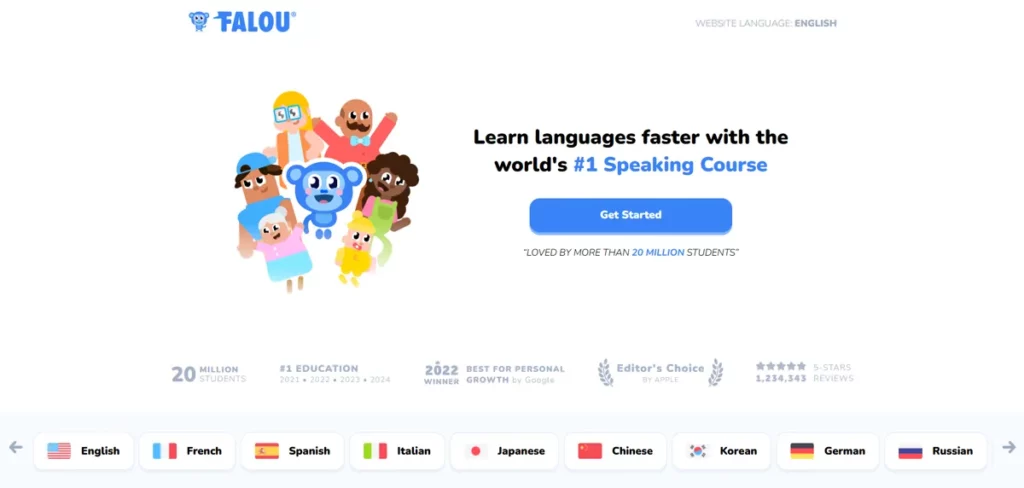
Today I’m reviewing Falou, a mobile language learning app that focuses heavily on speaking practice.

If you’ve been searching for tools to practice Italian and actually say things out loud instead of just tapping answers, you’ve probably come across this app.

I was curious about how Falou handles Italian specifically, so I spent some time using it to see what the experience feels like in practice and what kind of learning it really supports.

Setup

I’ve tried many language apps that promise fast results, but most of them follow a familiar pattern: vocabulary lists, short translations, and a lot of tapping.

With Falou, the setup already points in a different direction.

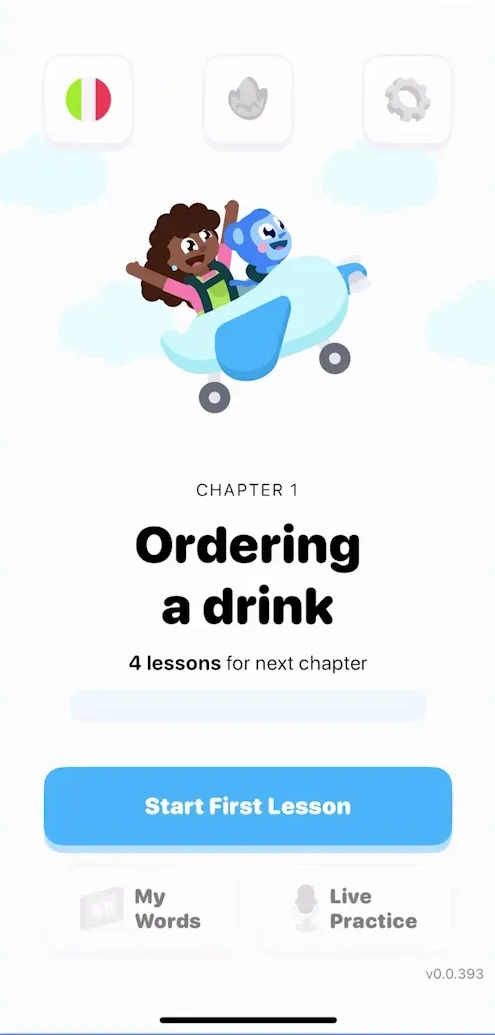
As soon as I chose Italian, the app locked that choice in and guided me straight into speaking-based lessons. There’s no long placement test or menu to explore first. The idea is to start practicing immediately, and everything is built around short, scenario-based lessons.

Right from the beginning, Falou explains that the focus is on listening and speaking, not grammar rules or writing. That expectation is set very early, which helped me understand what the app is — and what it isn’t.
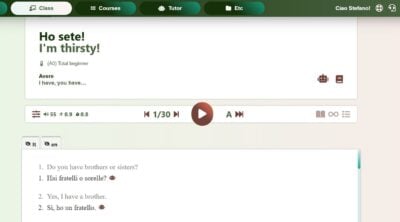
Falou walkthrough 1

Overall Thoughts

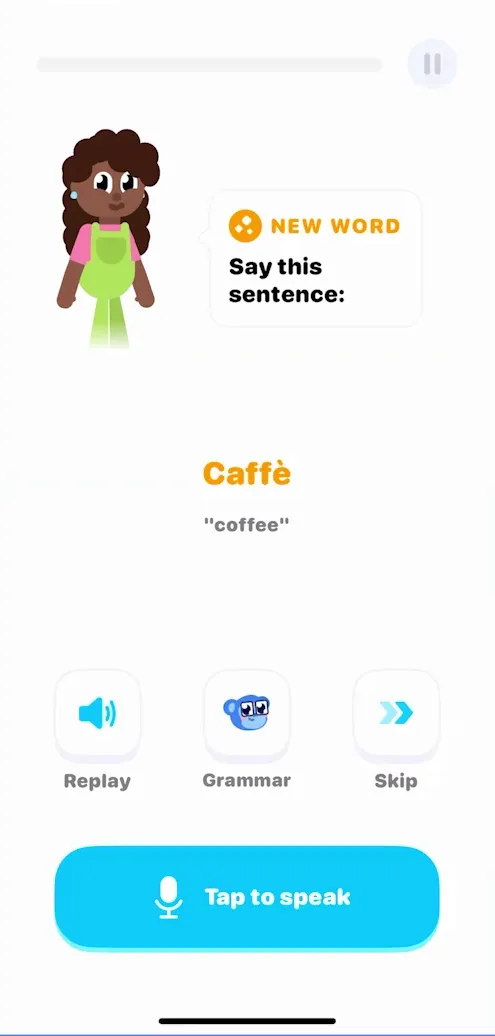
The first thing I noticed while using Falou is that almost every lesson requires me to speak out loud.

I listen to a native Italian speaker, then I repeat the sentence, and the app checks my pronunciation before letting me continue.

This makes the experience feel very active. Instead of recognizing answers, I’m constantly producing Italian, even at a basic level. I found myself repeating common phrases related to everyday situations, like introductions, ordering food, or asking simple questions.
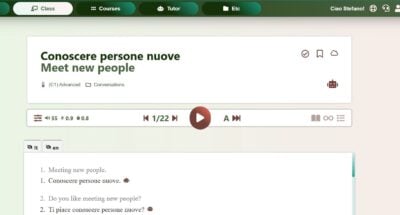
Falou walkthrough 2

I also noticed that lessons are broken into very small chunks. A dialogue gets divided into individual phrases and words, so I can focus on pronunciation step by step. This made the sessions feel manageable, especially when I only had a few minutes to practice.

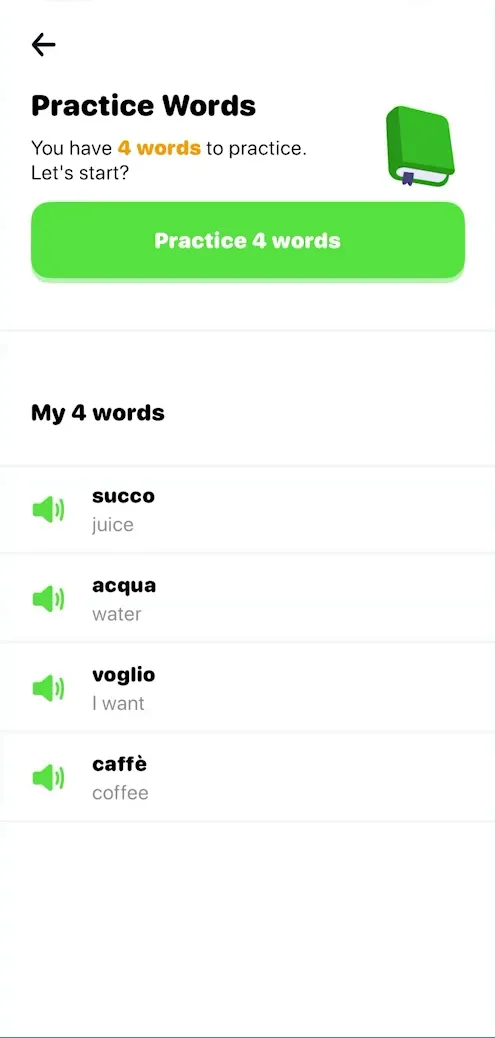
From a design point of view, the app is very minimal. There aren’t many tabs or features competing for attention. I mainly see the lessons, a vocabulary section where words I struggled with are stored, and a progress area that tracks what I’ve practiced. Everything feels straightforward and easy to navigate.

Falou walkthrough 3

That said, the experience is very structured. The conversations are scripted, and I’m following a fixed path through the content. I’m not creating my own sentences freely — I’m practicing predefined ones. For pronunciation and confidence, this works well, but it does limit how creative the practice can be.

Another thing I noticed is that Falou doesn’t spend much time explaining Italian grammar. I’m learning by repetition and exposure rather than by understanding rules. For some learners, that’s ideal. For others, it may feel like something is missing.
Falou walkthrough 4

As for pricing, Falou works on a freemium model. The free version is quite limited, and most of the content is behind a subscription. Whether that feels worth it really depends on how much you value guided speaking practice and how often you plan to use the app.

Outro

Overall, Falou offers a very clear approach to practicing Italian: short lessons, real-life situations, and constant speaking from the first day.

It’s not a complete system for every aspect of the language, but it does provide structured pronunciation and speaking practice in a very focused way.

Falou walkthrough 5

Features

Does the app offer plenty of repetition to acquire vocab and grammar naturally?

Can users customize settings, interface, content, etc.?

Is the interface and content focused on the course content instead of fluff and gamification?

Are the materials automatically tailored to the user’s profile?

Are sentences free from typos, grammar errors? Do they sound natural?

Are sentences realistic and useful?

Is there enough variety of materials in terms of topics, formats and levels?

Are audio materials easy to listen to in terms of recording  quality and speech rate?

Do speakers speak correctly, clearly and naturally?

Does the app offer plenty of speaking practice?

Is the app easy to set up, use and navigate?

Is the user interface neat and visually appealing?

Does the app load fast? Is it free from glitches and crashes?

Do the courses come with grammar notes?

No

Do the courses follow a well defined path?

Yes

Does the app recognize user speech?

Yes

Can users actively generate materials from their interests?

No

Are the courses available offline?

Yes

Conclusions

Would I take these courses?

I would use it for speaking practice and pronunciation, but not as a complete solution for learning Italian.

How to get the most out of the app

Use it daily for speaking practice and combine it with other tools for grammar, writing, and deeper learning.

Alternatives

Falou is useful for speaking practice, but platforms with more structured content can offer a more complete path to learning Italian.

Think In Italian is better than Falou to master Italian

Think In Italian is the only app that gets your to speak Italian all the time. It comes with hundreds of grammar lessons and readings to listen and repeat, plus an AI tutor to review the  courses and practice conversation. See the full review.

FAQs

Is Falou good for learning Italian?

Good for speaking practice, but limited for full fluency.

Does Falou teach grammar?

No, grammar explanations are very limited.

Can you become fluent with Falou?

Not alone, it needs to be combined with other resources.

Does Falou require speaking?

Yes, speaking is required in most lessons.

A better choice: Think In Italian

Follow me to fluency​

Create a free lifetime account to get access to all the free courses and other resources.

Rave Reviews

"I've tried other apps like Babbel and Memrise. None made me fluent or made me feel like I was making much meaningful progress in learning a language."
testimonial 2
Ecem Topcu
Aug 7, 2025
"While other courses rely heavily on translation, grammar exercises, or memorization, Think in Italian makes you comfortable speaking Italian like an Italian."
testimonial 1
Deborah Hause
Jul 11, 2025
"While other courses rely heavily on translation, grammar exercises, or memorization, Think in Italian makes you comfortable speaking Italian like an Italian."
testimonial 3
Dom Scott
Jun 21, 2025
"Absolutely marvelous course. I have been using other learning apps, good enough, but I was getting fed up of the monotony and lack of stimuli. I found this course by accident, good accidents do happen."
testimonial 6
Bernard Evans
Jun 2, 2025
"This course is excellent. It's well organized and teaches Italian sentence structure and vocabulary in a logical progression. I've made good progress with Think In Italian."
testimonial 4
George Dielemans
May 27, 2025
"Think in Italian is brilliant. It is the basis of my Italian leaning. I use it everyday. I have researched and tried many other learning methods, but THIS ONE IS THE BEST most integrated, complete and truly current."
testimonial 5
Mark Kohr
May 3, 2025

★★★★★

Rated 4.9/5 based on 170+ reviews

What's new

Social signup
"I've tried other apps like Babbel and Memrise. None made me fluent or made me feel like I was making much meaningful progress in learning a language."
testimonial 2
Ecem Topcu
Aug 7, 2025