
How I test and score
I sift through the plethora of language apps, delivering reviews based on deep expertise in language learning and teaching.
My review process starts with an initial walk-through, using the app for at least 15 minutes to capture first impressions and usability.
I then conduct a criteria-based evaluation focusing on key features like spaced repetition, user customization, and the balance between educational content and gamification.
My reviews are thorough, with a scoring system that emphasizes course quality (70%) over user experience (20%) and price (10%).
Importantly, I do not receive payment for these reviews.
Learn more on my review policy and process page.
Summary
Course quality
User experience
Pricing
Pros
- Highly effective spaced repetition system
- Fully customizable flashcards
- Large library of shared decks
- Works offline
- Free on most platforms
Cons
- Steep learning curve
- Outdated interface design
- No structured lessons
- Requires manual setup
- iOS app is paid
Best suited for
Learners who want to memorize Italian vocabulary efficiently
At a glance

App name
Anki
Made by
Anki
User base
Sentiment
- Very effective for memorization
- Difficult to learn at first
- Highly customizable
- Interface feels outdated
- Requires discipline and consistency
Concept
Flashcard app using spaced repetition to memorize vocabulary efficiently
Available on
Web, iOS, Android
Levels covered
(A1) Beginner, (A2) Elementary, (B1) Intermediate, (B2) Upper-intermediate, (C1) Advanced
50 languages taught
Italian, English, Spanish, French, German, Japanese, Chinese
Pricing, free trial, refunds
Pricing
Free trial
Refunds
First-hand review
Walk-through
Intro
Hey everyone! In today’s video, I’m reviewing one of the most popular tools language learners use around the world — Anki. If you’re studying Italian, you’ve probably heard people say, “You have to use Anki!” So, I finally gave it a proper try, and in this video, I’ll share what it actually does, how it works, and what I liked — and didn’t like — about using it for Italian.
What Anki Is
So, what exactly is Anki? In simple terms, it’s a flashcard app that helps you remember vocabulary using something called spaced repetition. Basically, Anki shows you a flashcard — for example, “la mela” — and you try to recall the meaning. If you remember it easily, Anki will wait longer before showing it again. But if you struggle, it’ll bring it back sooner. The idea is to review words just before you forget them, which makes them stick in your long-term memory. Anki is available for computers and mobile devices — it’s free on desktop and Android, but if you’re on iPhone, the app costs around $25.
How It Works
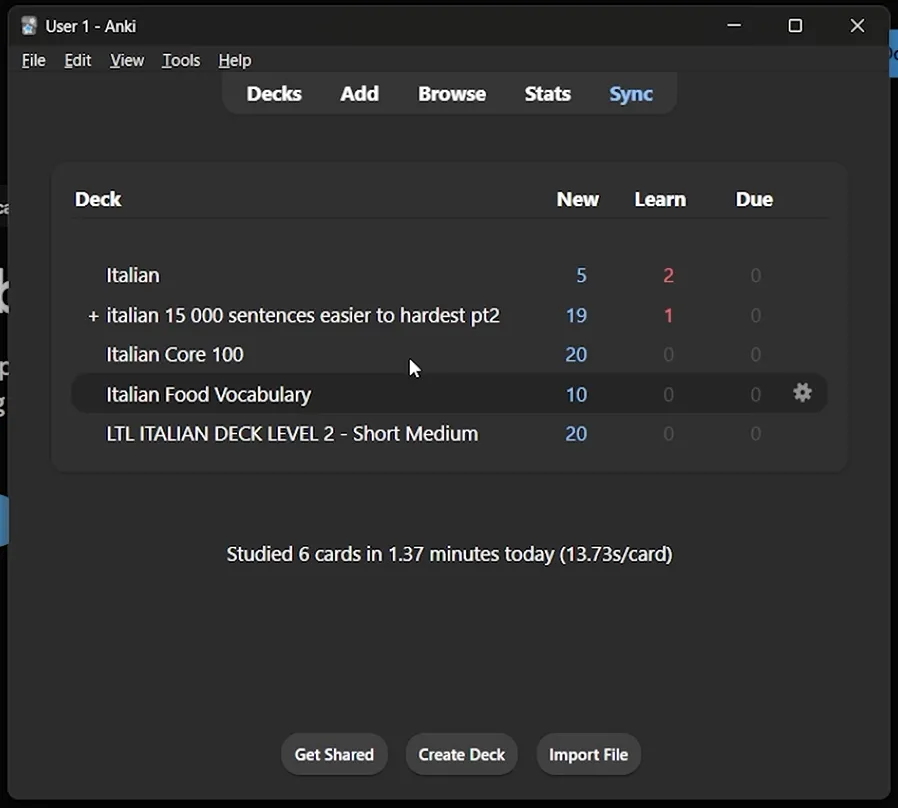
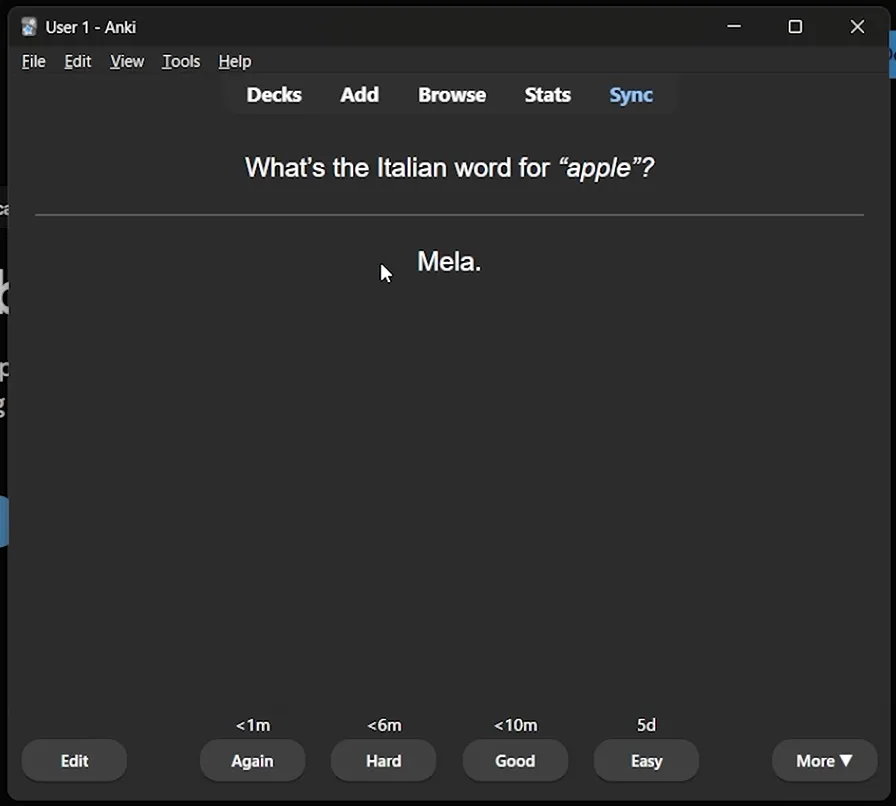
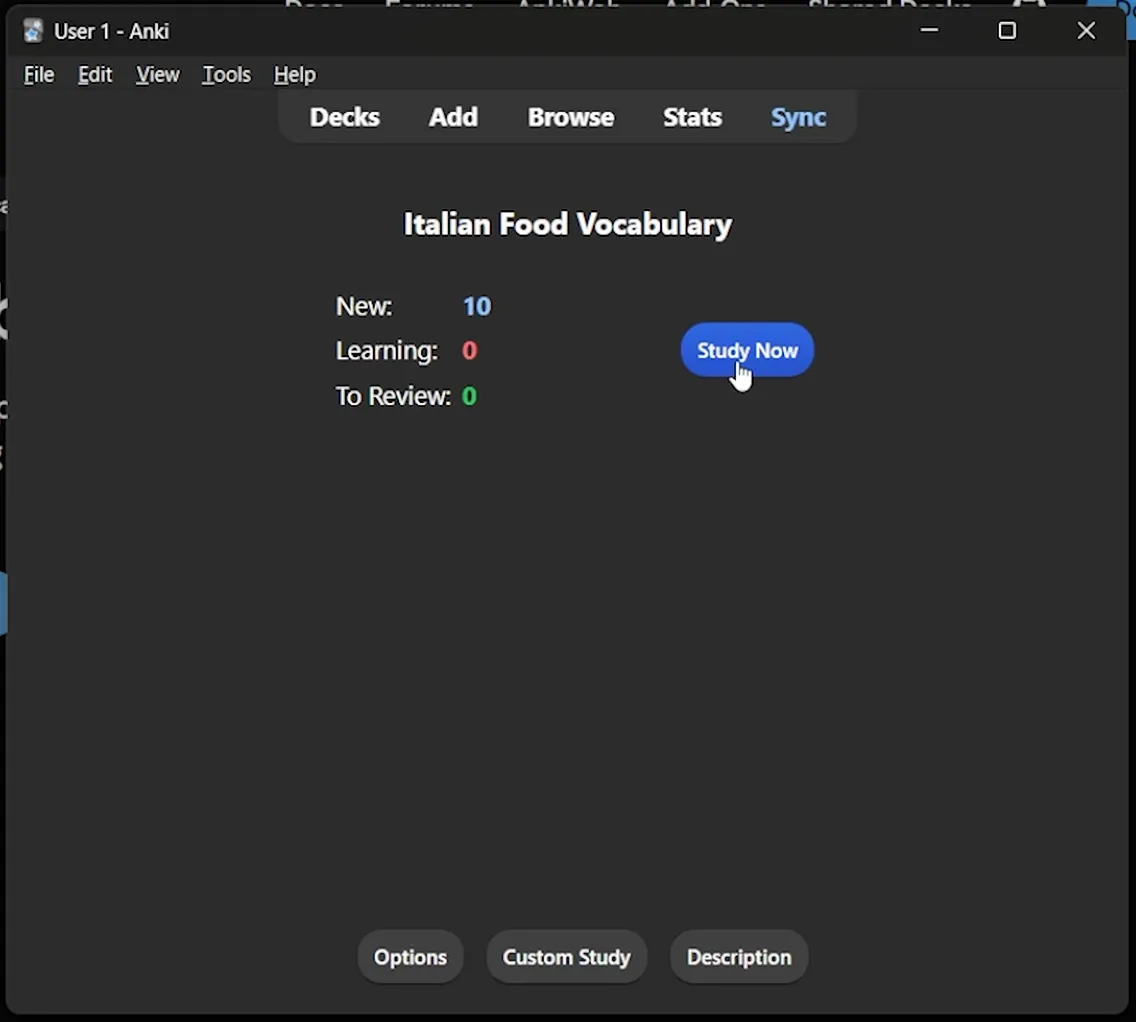
When you open Anki, you’ll see “decks,” which are basically groups of flashcards. You can create your own deck — for example, “Italian Food Vocabulary” — and add cards like pane → bread, formaggio → cheese, and prosciutto → ham. Or you can download shared decks made by other learners. Each card has a front and a back — the front is the question and the back is the answer — and it can be about anything: an Italian word, a translation, an example sentence, or even an audio clip. When you study, you flip the card and tell Anki how well you remembered it by pressing Again, Hard, Good, or Easy. Behind the scenes, Anki’s algorithm uses that feedback to schedule when you’ll see the word again — maybe in a few minutes, a day, or a week.
My Experience
At first, I have to admit — it took me a bit of time to get used to. The interface feels pretty old-school, and there are lots of settings that can be confusing if you’re new. But once I got my decks set up, it became a really efficient way to memorize Italian words I come across every day. I especially like that I can add audio and images to each card. It’s a small detail, but combining words, sounds, and visuals makes everything much easier to remember. I also love how fast the review sessions are. I can review 50 or 60 cards in less than 15 minutes — it’s perfect for short breaks or commuting.
Pros & Cons
On the bright side, Anki has a lot going for it. It’s incredibly powerful, completely customizable, and it truly delivers results. Once you get into the rhythm of using it, it’s one of the most effective ways to build and retain your Italian vocabulary. I also love that it’s free, and there’s a massive community creating add-ons and shared decks — so you’ll never run out of content or ideas to improve your setup. But on the flip side, Anki can be a little intimidating at first. The interface looks outdated, the setup takes time, and figuring out all the settings can feel like learning a mini software course on its own. It also doesn’t actually teach you Italian — it’s more of a memorization system than a full learning platform. And if you’re using an iPhone, you’ll need to pay for the mobile app, which isn’t ideal when you’re just getting started.
Final Thoughts
So, is Anki worth it? If you’re already learning Italian and want to expand your vocabulary faster, absolutely — it’s a fantastic tool once you know how to use it. But if you’re a total beginner looking for more structure or conversation practice, it might feel too technical at first.
Features
Spaced repetition
Does the app offer plenty of repetition to acquire vocab and grammar naturally?
Customization
Can users customize settings, interface, content, etc.?
Focus on learning
Is the interface and content focused on the course content instead of fluff and gamification?
Personalization
Are the materials automatically tailored to the user’s profile?
Sentence accuracy
Are sentences free from typos, grammar errors? Do they sound natural?
Sentence relevance
Are sentences realistic and useful?
Variety and depth
Is there enough variety of materials in terms of topics, formats and levels?
Audio quality
Are audio materials easy to listen to in terms of recording quality and speech rate?
Speaker's quality
Do speakers speak correctly, clearly and naturally?
Speaking practice
Does the app offer plenty of speaking practice?
Ease of use
Is the app easy to set up, use and navigate?
Interface and design
Is the user interface neat and visually appealing?
Performance
Does the app load fast? Is it free from glitches and crashes?
Grammar notes
Do the courses come with grammar notes?
Learning path
Do the courses follow a well defined path?
Speech recognition
Does the app recognize user speech?
User-generated courses
Can users actively generate materials from their interests?
Offline access
Are the courses available offline?
Conclusions
Would I take these courses?
Yes, especially to reinforce Italian vocabulary, but not as a standalone learning tool.
How to get the most out of the app
Create your own Italian flashcards from real content and review daily for best results.
Alternatives
Think In Italian is better than Anki to master Italian
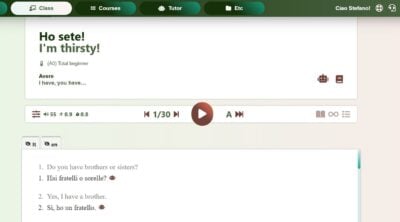
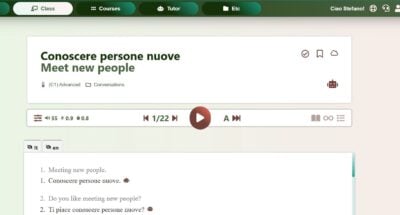
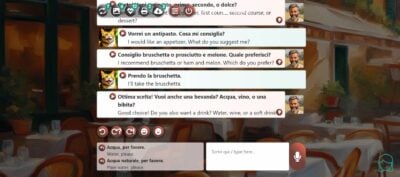
Think In Italian is the only app that gets your to speak Italian all the time. It comes with hundreds of grammar lessons and readings to listen and repeat, plus an AI tutor to review the courses and practice conversation. See the full review.
FAQs
Is Anki good for learning Italian?
Yes, especially for vocabulary memorization.
Is Anki free?
Yes, except for the iOS app.
Can beginners use Anki?
Yes, but it may feel complex at first.
Does Anki teach grammar?
No, it focuses on memorization.
Do I need internet to use Anki?
No, it works offline.
A better choice: Think In Italian
Create a free lifetime account to get access to all the free courses and other resources.
Rave Reviews
★★★★★
Rated 4.9/5 based on 170+ reviews